Kami-Igusa Station: A Quiet Railfan Crossing in West Tokyo (with a Gundam at the Gate)
Many visitors know the little green Enoden train in Kamakura, which slips so close to houses and passers-by that you can almost touch it. But it is not the only place near Tokyo where a train comes within an arm’s length of you.
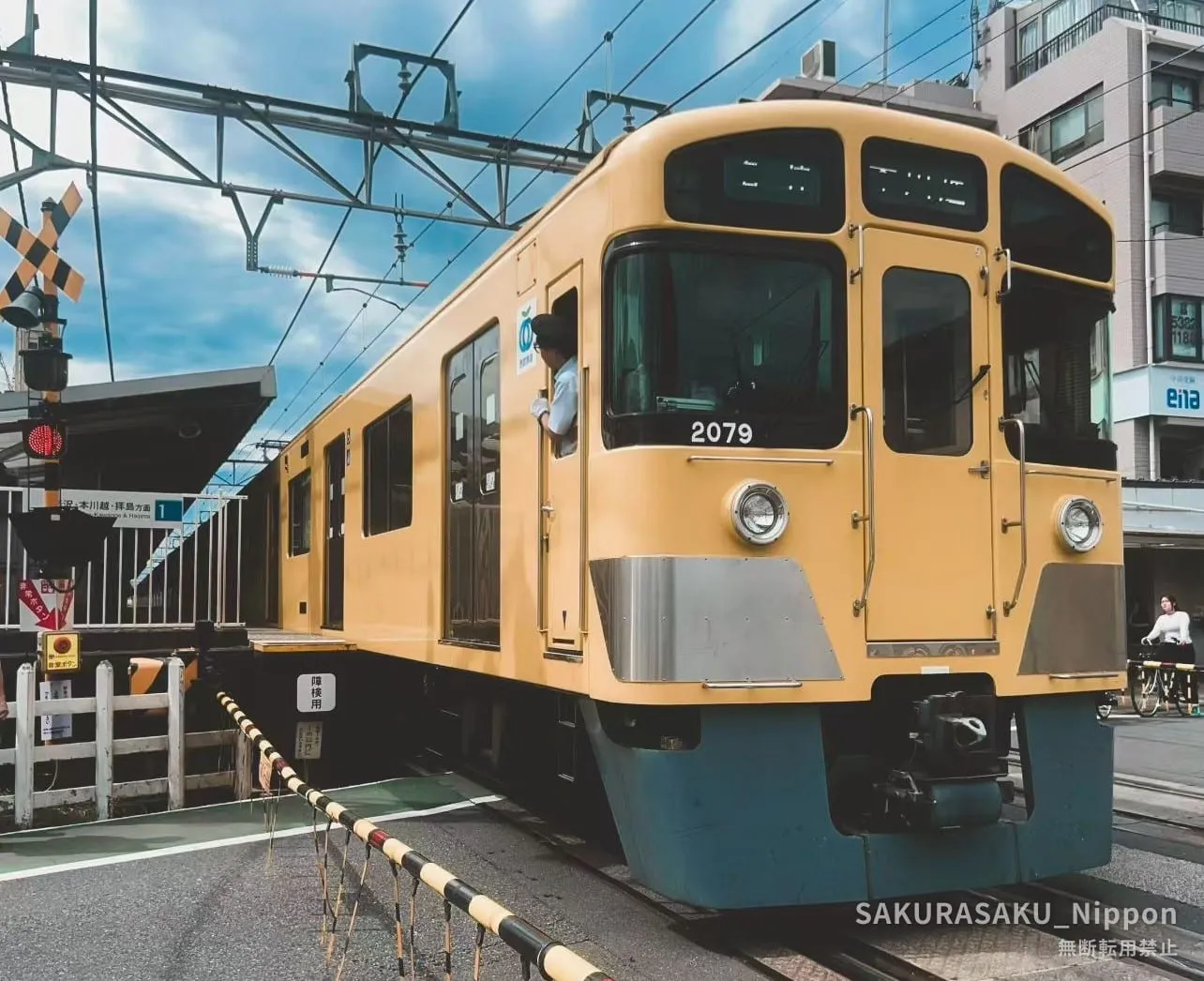
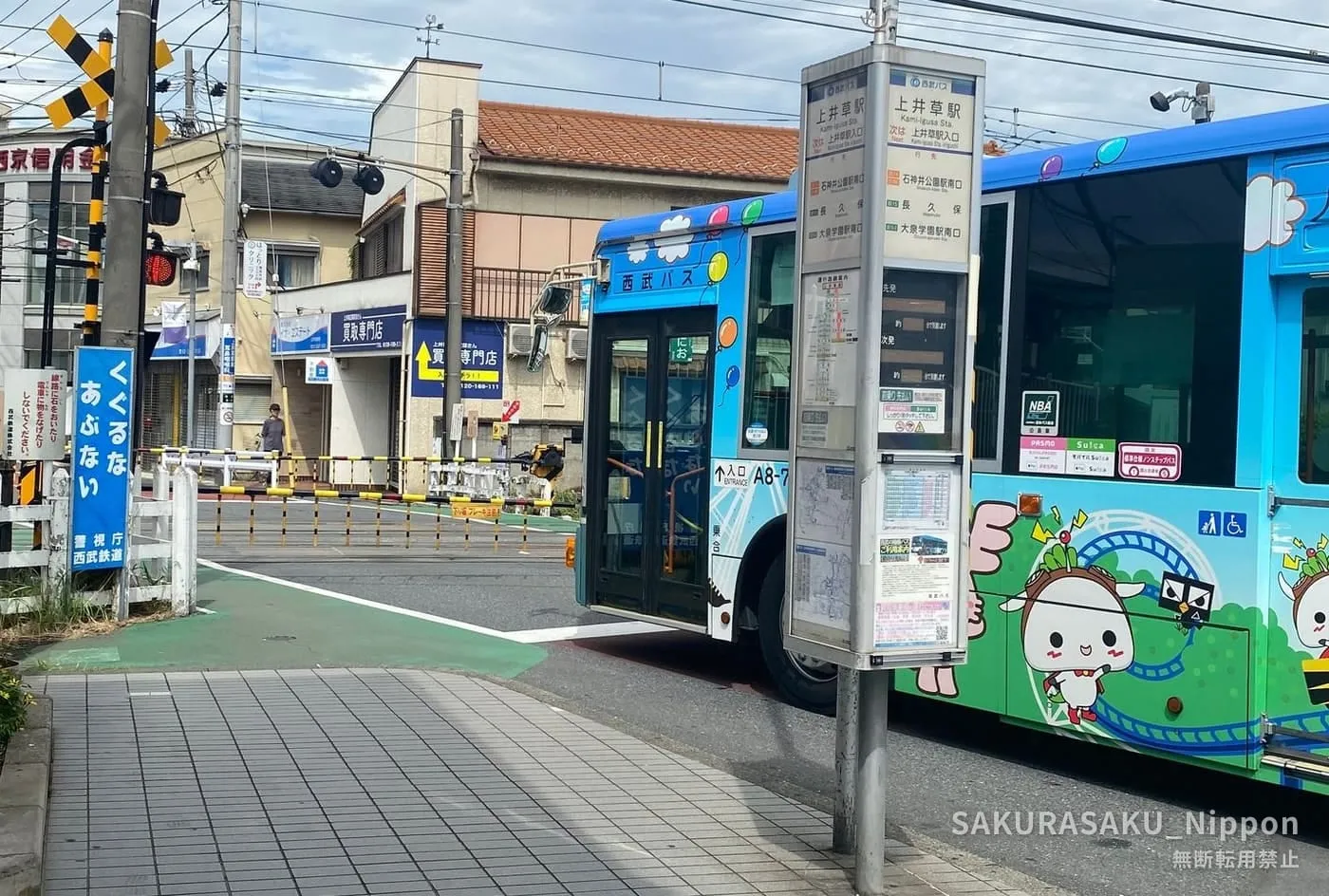
On the west side of the city, a small, ordinary-looking station called Kami-Igusa (上井草) has quietly become a favorite photo spot for Japanese rail fans. Here, at a level crossing right beside the platform, the trains stop and pass just a few meters in front of you.
A Crossing Right at the Platform’s Edge
Kami-Igusa is a modest station in Suginami, on the Seibu Shinjuku Line. What makes it special is its old-fashioned design: the two platforms have no footbridge and no underpass between them. To change platforms, everyone — including local passengers — has to use the level crossing just outside the ticket gates.
That crossing sits so close to the end of the platform that a long, eight-car train actually stops with its nose overhanging the road. Stand safely on the pedestrian crossing, and the front of the train halts right there, almost close enough to reach — the classic cream-and-yellow Seibu commuter train, filling your whole field of view.
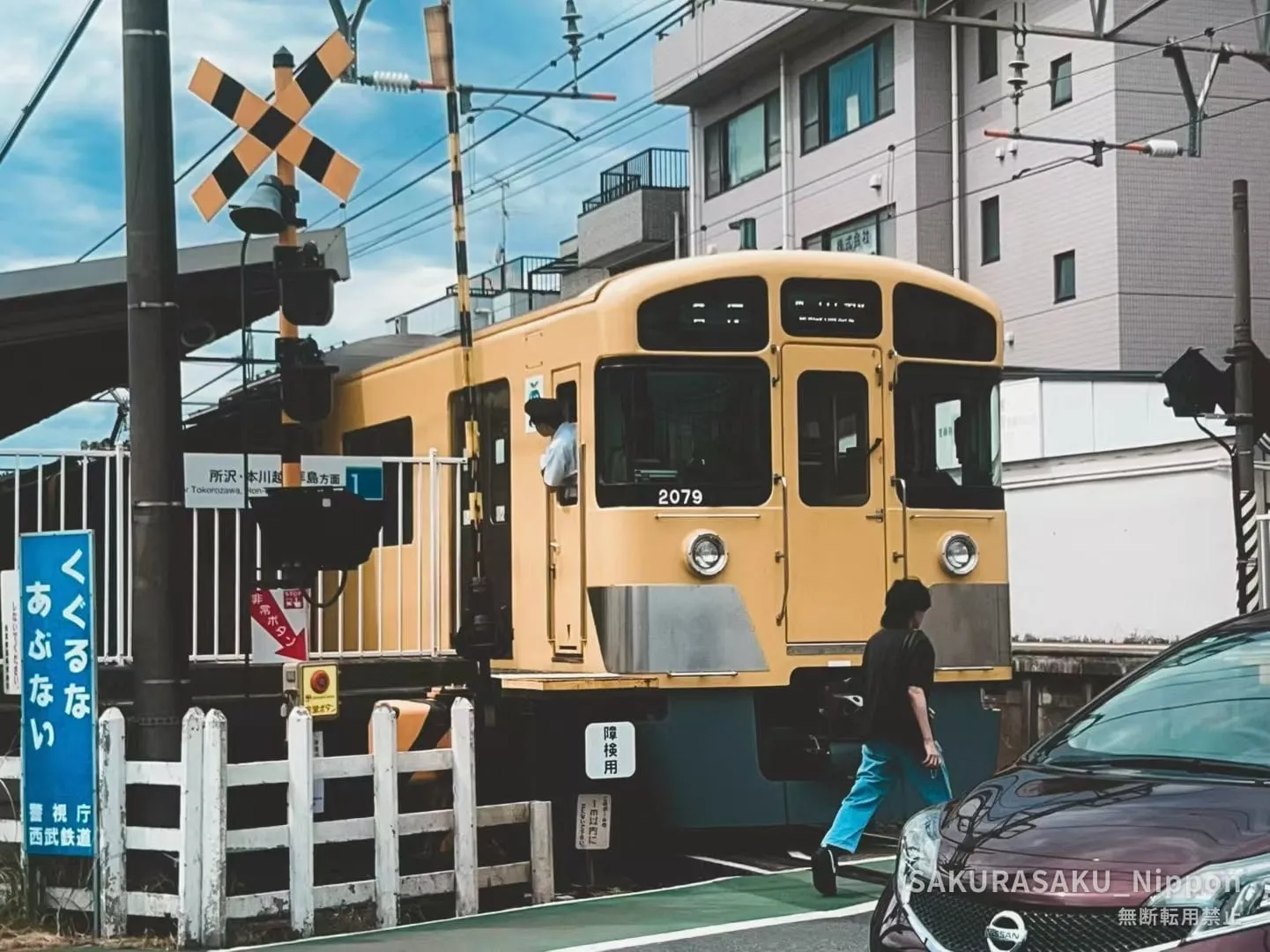
It is also famous among locals as one of Tokyo’s akazu-no-fumikiri — a “crossing that never opens” — because trains pass so frequently that the barriers seem to stay down forever. For a rail fan, of course, that is exactly the appeal: wait a few minutes and another train will always come.
Safety First — Please Read This
This is a working railway crossing, used every day by residents, schoolchildren, and people changing platforms. It is a wonderful place to watch and photograph trains, but only if you follow the rules completely. Please treat these as absolute:
- Never step onto the tracks, and never leave the paved crossing surface toward the rails. Entering the tracks is prohibited and extremely dangerous.
- When the warning bell sounds, leave the crossing at once. Do not linger for “one more photo.”
- Once the barrier begins to lower, do not enter the crossing. Wait for the next opening.
- Do not block the crossing. Local people are trying to get to work and school — keep to the side and never stop in the middle for a picture.
Please remember why this matters. If your exit is delayed and a driver has to brake hard, passengers inside the train can be injured. And in the worst case, a collision could leave you facing compensation costs far beyond the limit of any travel insurance. No photograph is worth that. Enjoy the trains calmly, from where it is safe.
What You’ll See
Part of the fun is the variety. On the Seibu Shinjuku Line you can watch:
- Frequent yellow commuter trains — the traditional Seibu colour, and the real star of this spot.
- The “Koedo” Limited Express, running express toward Hon-Kawagoe, the gateway to the old castle town of Kawagoe.
- Special wrapped trains, if you are lucky. On our visit, a limited-time “Showa Train” came through — its carriages decorated with covers of vintage Showa-era manga magazines, part of a Seibu retro campaign.
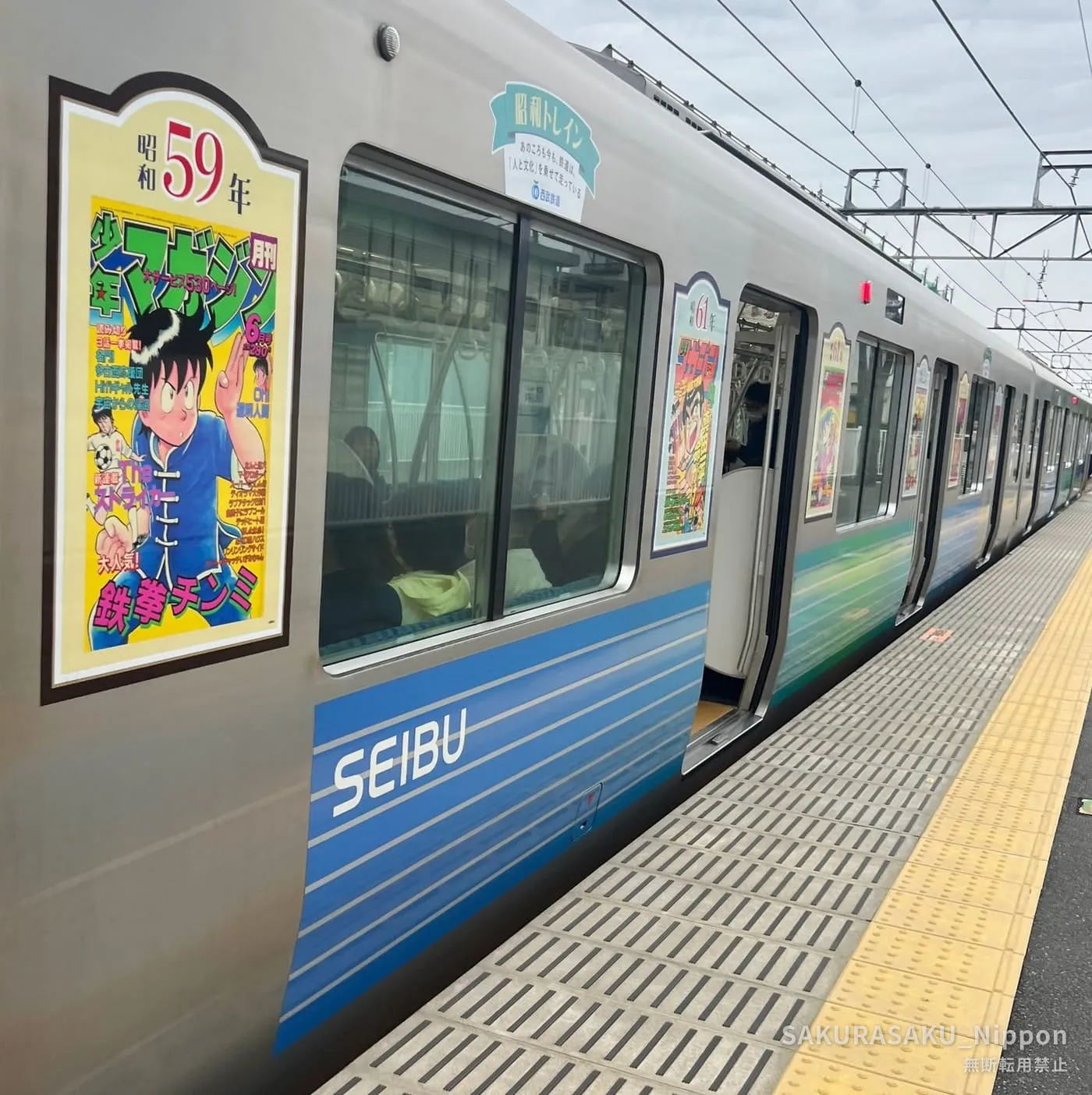
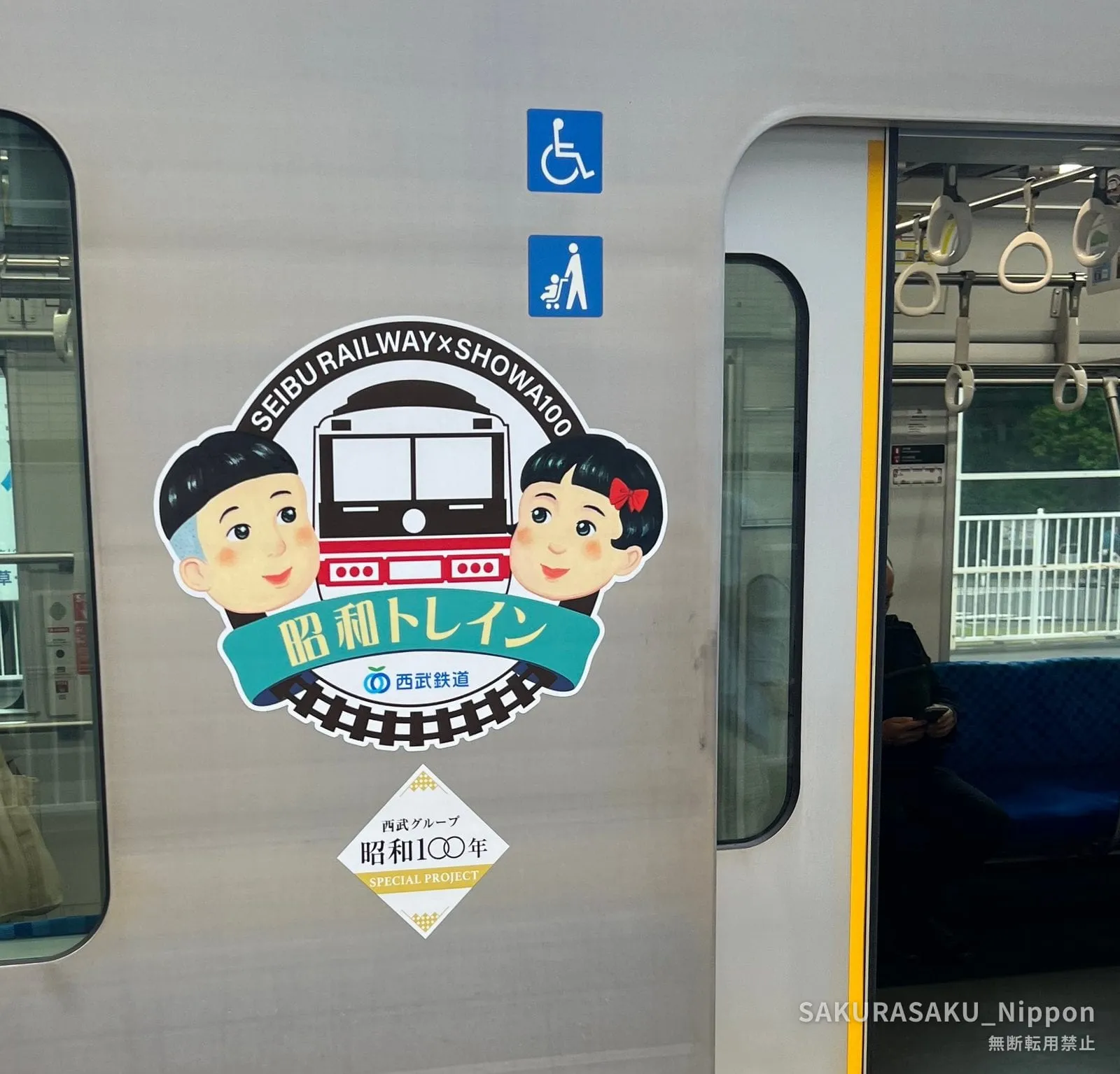
You never quite know what will roll in next, which is why fans are happy to stand and wait.
If you would like to know more about the trains you photographed here — and where else along the line people go to photograph them — there is a Japanese railway mook that does exactly that: A souvenir for railfans: “The World of Seibu Railway”.
A Gundam at the South Exit
Step out of the south exit and you will meet an unexpected guardian: a bronze statue of Gundam, one arm raised to the sky.
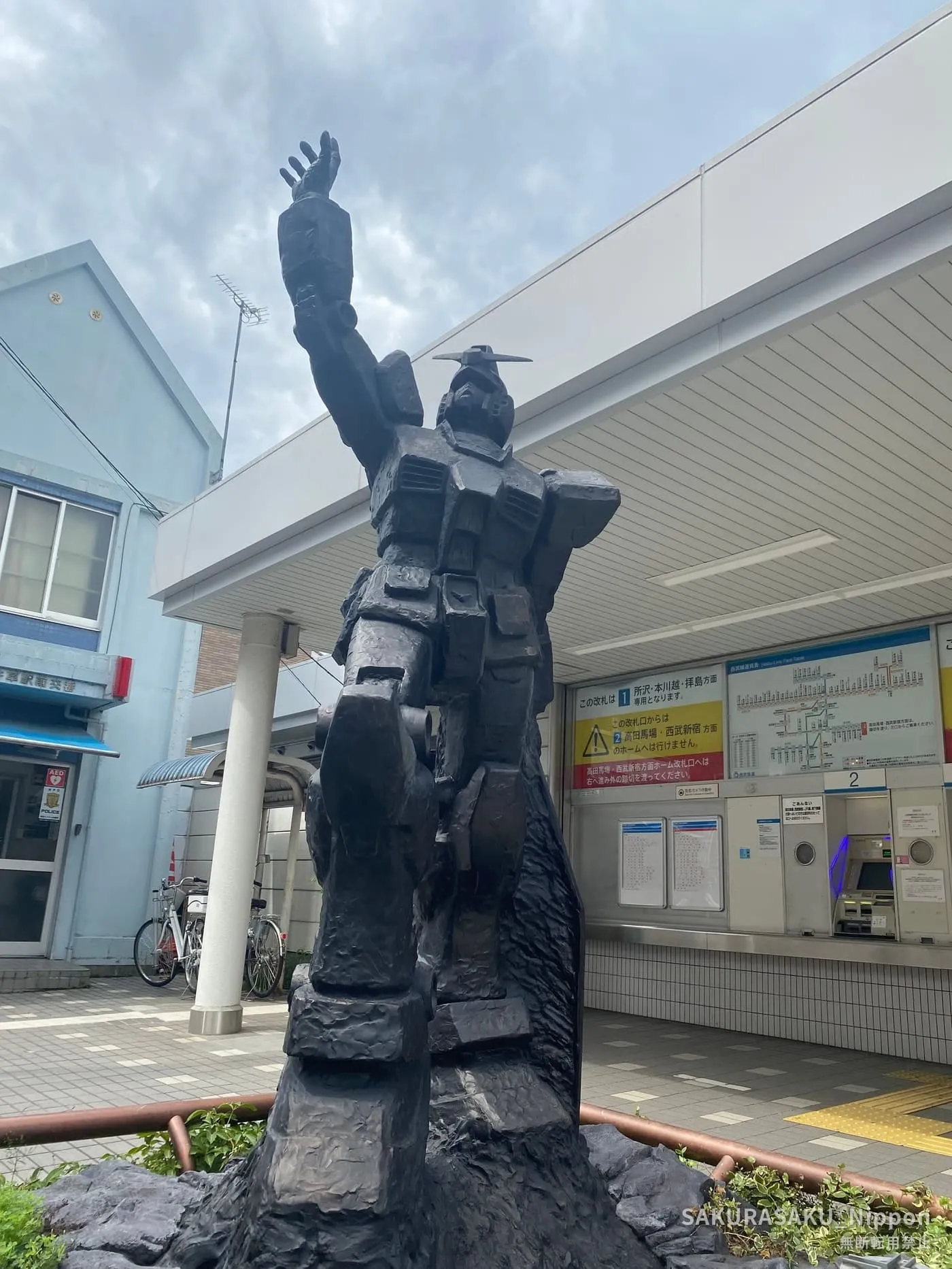
There is a good reason it stands here. This part of Suginami is a hub of Japan’s animation industry, and Sunrise — the studio that created Mobile Suit Gundam — has long been based nearby. The connection runs deep: since 2008, the platform’s departure melody has been “Fly! Gundam,” the theme song from the original series. Listen for it while you wait for your train.
Kami-Igusa is, in other words, a little “anime town” as well as a railway one — and it deserves an article all its own, which we will write another time.
One more thing worth knowing about this neighbourhood: about fourteen minutes on foot from the station is Kansen-ji, a Zen temple whose gate frames the maples like a picture. In late November it looks like Kyoto, and it is free.
Getting There
Kami-Igusa is easy to reach from central Tokyo on the Seibu Shinjuku Line:
- From Seibu-Shinjuku Station (next to Shinjuku): around 20 minutes on a local train
- From Takadanobaba (on the Yamanote Line and Tokyo Metro Tozai Line): around 15 minutes
Please use a Suica or Pasmo IC card — it makes these small local trips effortless. Note that only local trains stop at Kami-Igusa, so if you catch an express, change to a local along the way.
While You’re Here
If you visit in the morning, there is one more local secret nearby: Karina, a long-loved neighbourhood sandwich shop that opens at 6 a.m. and often has a small queue of regulars before most cafés have even unlocked their doors. Twenty-four kinds of soft, hand-made sandwiches from about ¥150 — and they sell out early. See Karina: the sandwich shop that opens at six in the morning.
Practical Info
- Station: Kami-Igusa Station (上井草駅)
- Line: Seibu Shinjuku Line (local trains only)
- Ward: Suginami, Tokyo
- Best for: Rail photography, an easy and unusual half-hour detour from Shinjuku
- At the south exit: Bronze Gundam statue; departure melody “Fly! Gundam”
- Please note: The level crossing is a public road. Obey all barriers and warning bells, and never step onto the tracks.
Further Up the Same Line
The Seibu Shinjuku Line does not stop being interesting here. Ride it to the far end and you reach Kawagoe, the “Little Edo” — a street of fireproof merchant warehouses, a bell tower that has kept time since the 1600s, and a shrine that gives away twenty charms a morning.
The Limited Express “Koedo” that runs there still uses the 10000 series New Red Arrow, which Seibu has announced will be replaced from spring 2027. If you would like to photograph one, or ride one, that is worth knowing now.
Who Is This For?
This is a spot for the curious traveller who enjoys the small, real corners of Tokyo — a rail lover, a photographer, or an anime fan looking for a gentle pilgrimage away from the crowds. Come with patience, respect the crossing, and you will leave with a photograph, and a memory, that very few other visitors ever think to collect.
Note: Train liveries, departure melodies, and special campaigns can change. Please enjoy this spot safely and responsibly, always following the crossing signals and railway staff.