Karina: The Sandwich Shop That Opens at Six in the Morning
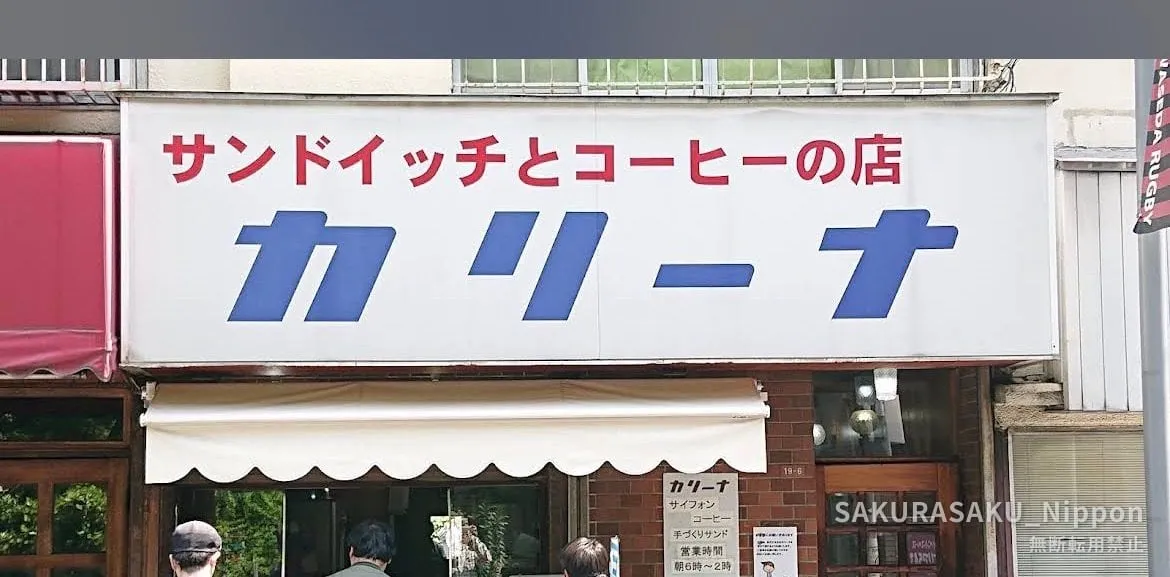
There is a particular kind of Japanese shop that does one thing, does it for forty years, and never feels the need to mention it. Karina (カリーナ) — “the sandwich and coffee shop” — is one of those.
It stands about a three-minute walk straight north of Kami-Igusa Station, on the Seibu Shinjuku Line, and it has been making sandwiches by hand since the 1980s. The shutters go up at six in the morning. On a weekend, there are people waiting before they do.
The Sandwich Itself
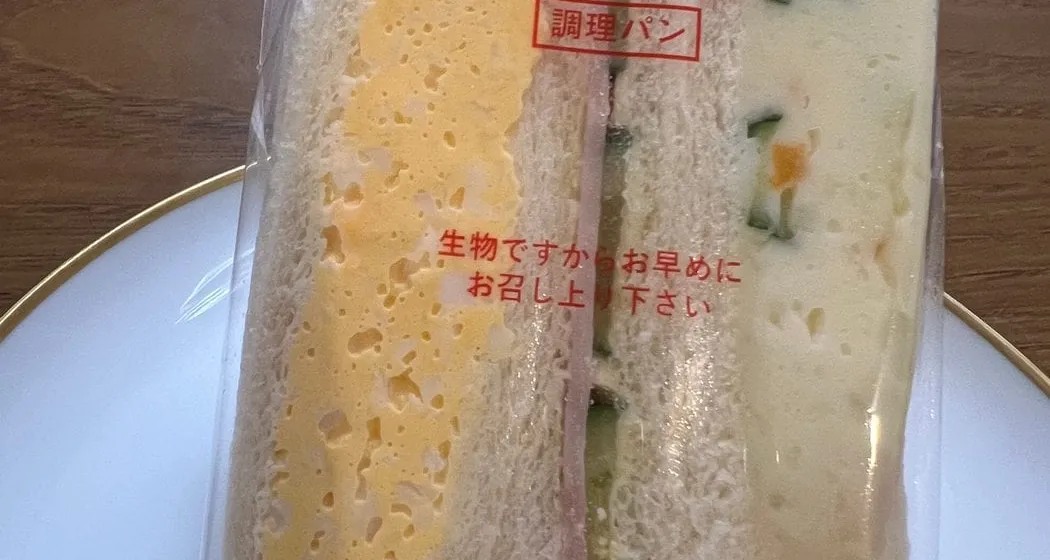
Japanese sandwiches are their own thing entirely, and Karina makes the classic version beautifully: crustless white bread, so soft it barely resists, cut into neat fingers and wrapped in cellophane printed with a cheerful red sandoicchi.
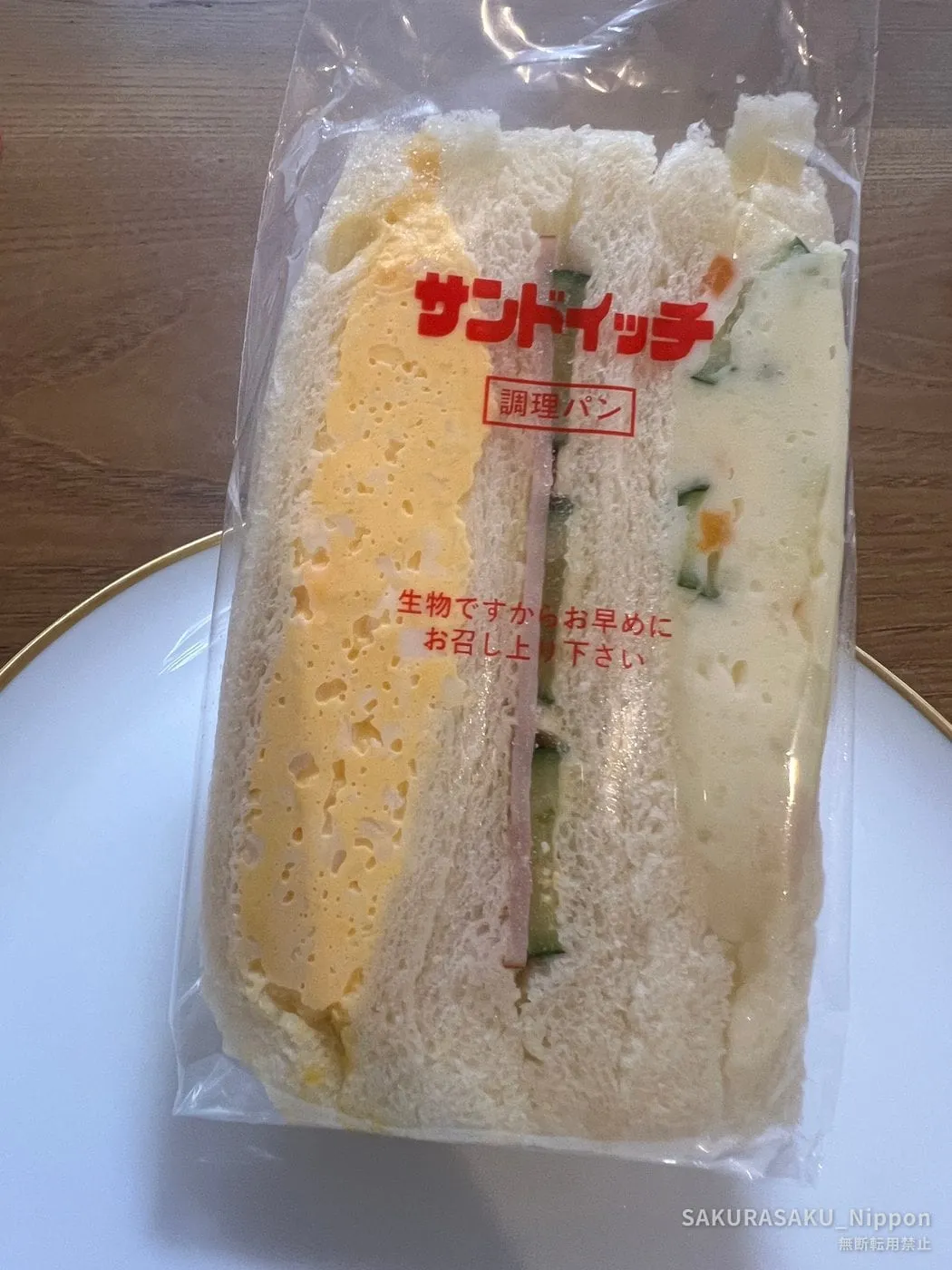
The egg sandwich is the one to start with. It is made fresh in the shop every single day: a thick, pale, faintly sweet Japanese omelette, still soft, laid into that pillowy bread. Nothing about it is complicated. It is simply made properly, by hand, every morning.
After that, the fruit sandwich — whipped cream and fruit between the same soft bread — is very much worth your curiosity. It sounds strange to many visitors, and then it converts them.
Twenty-four Kinds, from ¥150
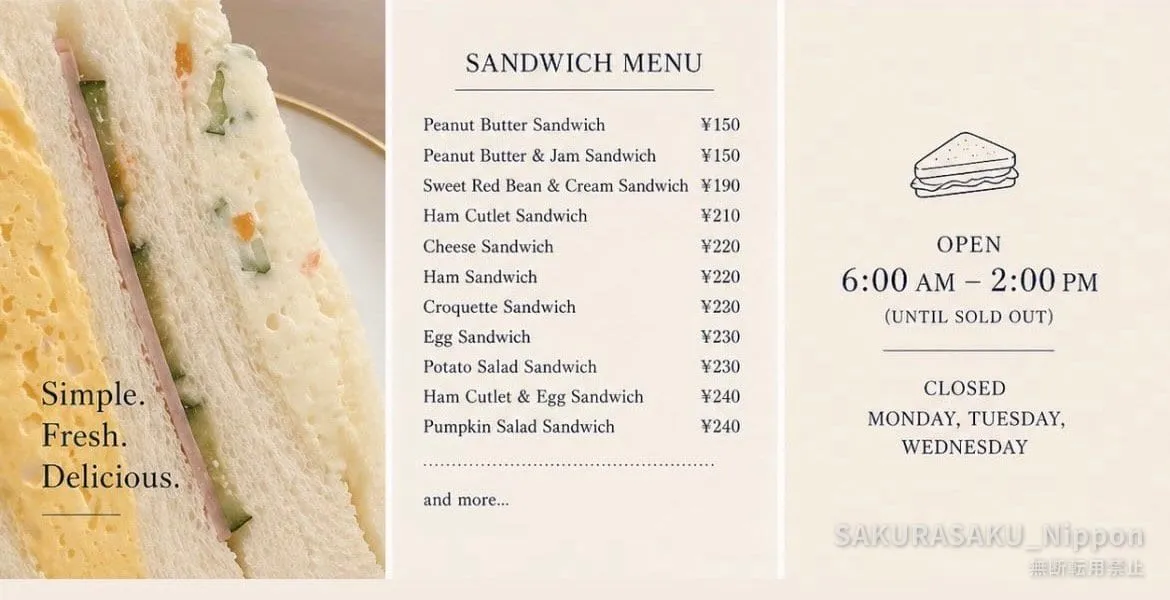
There are twenty-four varieties, and the prices are from another era: peanut butter at ¥150, ham or cheese at ¥220, egg or potato salad at ¥230.
The savoury ones are the local favourites — ham cutlet (hamu-katsu) and croquette, both deep-fried and tucked straight into the soft bread, which is a far better idea than it has any right to be.
A Small Piece of Luck
One more thing, if the timing is kind. Because the bread is trimmed by hand as the sandwiches are made, there are offcuts — and when there are plenty, the shop will sometimes give away the crusts, free, in a bag.
They are soft, faintly sweet, and rather wonderful. You cannot ask for them and you cannot count on them; you can only be lucky.
How to Actually Get One
This is the part that matters, because Karina is genuinely easy to miss.
- Open 6:00 a.m. – 2:00 p.m., but only until they sell out. On Saturdays and Sundays they can be gone before noon.
- Closed Monday, Tuesday and Wednesday. Please do check this before making the trip — it catches people out.
- Takeaway only at present. The little counter inside is not currently serving, so plan to carry your sandwiches away rather than to sit with a coffee.
- Go early. Before nine on a weekday is comfortable. On a weekend, before the doors open is not excessive.
Making a Morning of It
Karina sits in a quiet, ordinary corner of Suginami, and there are three good reasons to linger once you have your paper bag.
Fourteen minutes on foot is Kansen-ji, a Zen temple with a garden that turns spectacular in late November — a very good place to eat a sandwich on a bench.
A three-minute walk away is the level crossing at Kami-Igusa Station, a much-loved spot for railway photographers, with a bronze Gundam standing at the south exit — we wrote about it in Kami-Igusa Station: a quiet railfan crossing. Nearby too are the Chihiro Art Museum, dedicated to the beloved children’s illustrator Chihiro Iwasaki, and the Waseda University rugby ground.
A sandwich at six, a train at seven, and a gallery when it opens: it is a very pleasant, very local sort of morning.
Making It at Home
Karina is closed three days a week and sells out early, so there will be mornings when you simply cannot have one. On those mornings, there is a book.
Tamago to Pan no Kumitate-kata (“How Egg and Bread Are Put Together”) by Yui Nagata is devoted entirely to this subject: the Japanese egg sandwich, explored properly, and then extended into other dishes and desserts.
The text is in Japanese only, and I would rather say so plainly. But this is very much a book to look at: it is full of photographs, step by step, of eggs and bread being assembled — the thick folded omelette, the soft mashed filling, the way the bread is cut. Much of it can be followed with your eyes alone, and it makes a rather lovely souvenir for anyone who cooks.
This one ships outside Japan. Amazon.jp will send it overseas; the international postage is shown at checkout, and your own country may add customs charges.
And if it was the fruit sandwich that won you over, the same author has written its companion — Kajitsu to Pan no Kumitate-kata, “How Fruit and Bread Are Put Together.” Cream, fruit, and that soft white bread, photographed in the same careful way.
The egg version needs no special equipment — a pan of water will do. Bring the eggs to the boil, then take them off the heat: about seven minutes gives you a soft centre, and about eleven a firm one. Cool them in cold water at once, which makes the shells come away cleanly, and mash them while they are still slightly warm.
A note, in case you see them in a Tokyo kitchen shop: Japan sells some very tempting microwave egg cookers, but the makers state that they are designed for Japanese domestic microwaves and should not be used in other countries. They are best left where they are.
Though the best method, of course, remains getting to Kami-Igusa by six in the morning.
Practical Information
- Name: Karina (カリーナ) — sandwiches and coffee
- Where: About three minutes straight north of Kami-Igusa Station (Seibu Shinjuku Line), on the right
- Hours: 6:00 – 14:00, or until sold out
- Closed: Monday, Tuesday, Wednesday
- Service: Takeaway only at present
- Menu: 24 kinds of sandwich, from about ¥150 (at the time of writing)
- Official site: kar-na.la.coocan.jp
Who Is This For?
Early risers, and anyone who likes the idea of eating exactly what the neighbourhood eats. Bring small change, arrive before the queue, and take your paper bag to a bench somewhere. It is not a destination restaurant — it is better than that. It is somebody’s local, and for one morning it can be yours.
Note: Hours, closing days, prices and the menu can change, and the shop closes when it sells out. Please check the official site before you go.
Affiliate note: This article contains Amazon affiliate links. As an Amazon Associate, we earn from qualifying purchases at no extra cost to you.