Kansen-ji: Kyoto-Style Autumn Colour, Inside Tokyo, for Nothing
Everyone knows where to see autumn leaves in Japan. You go to Kyoto, with several million other people, and you queue.
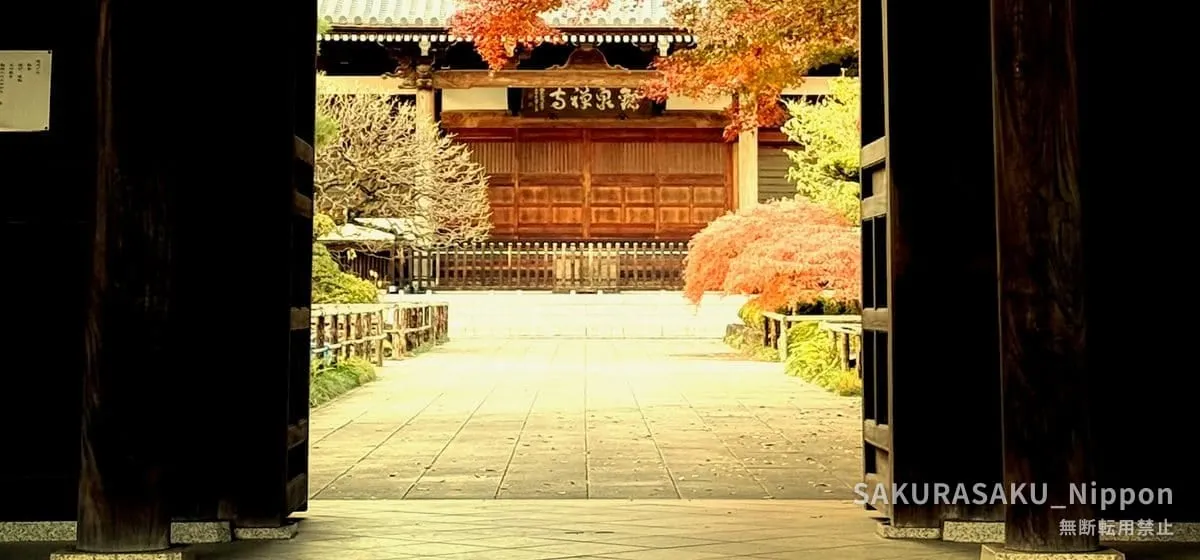
But there is a temple in an ordinary Tokyo suburb where you can stand in the gateway, look through it, and see the maples framed against a wooden hall exactly as though someone had composed the picture for you. It is called Kansen-ji (観泉寺), it is free, and on a weekday morning in late November you may well have it to yourself.
The Framed Maples
The Japanese have a name for this: gakubuchi-momiji, “framed autumn leaves” — the effect of a dark temple gateway acting as a picture frame around the colour beyond.
Kansen-ji is one of Tokyo’s finest examples. Stand under the sanmon gate, and the heavy timber and tiled roof close in around a bright rectangle of red maple and the main hall behind it. The frame is dark, the picture is lit. It photographs almost by itself.
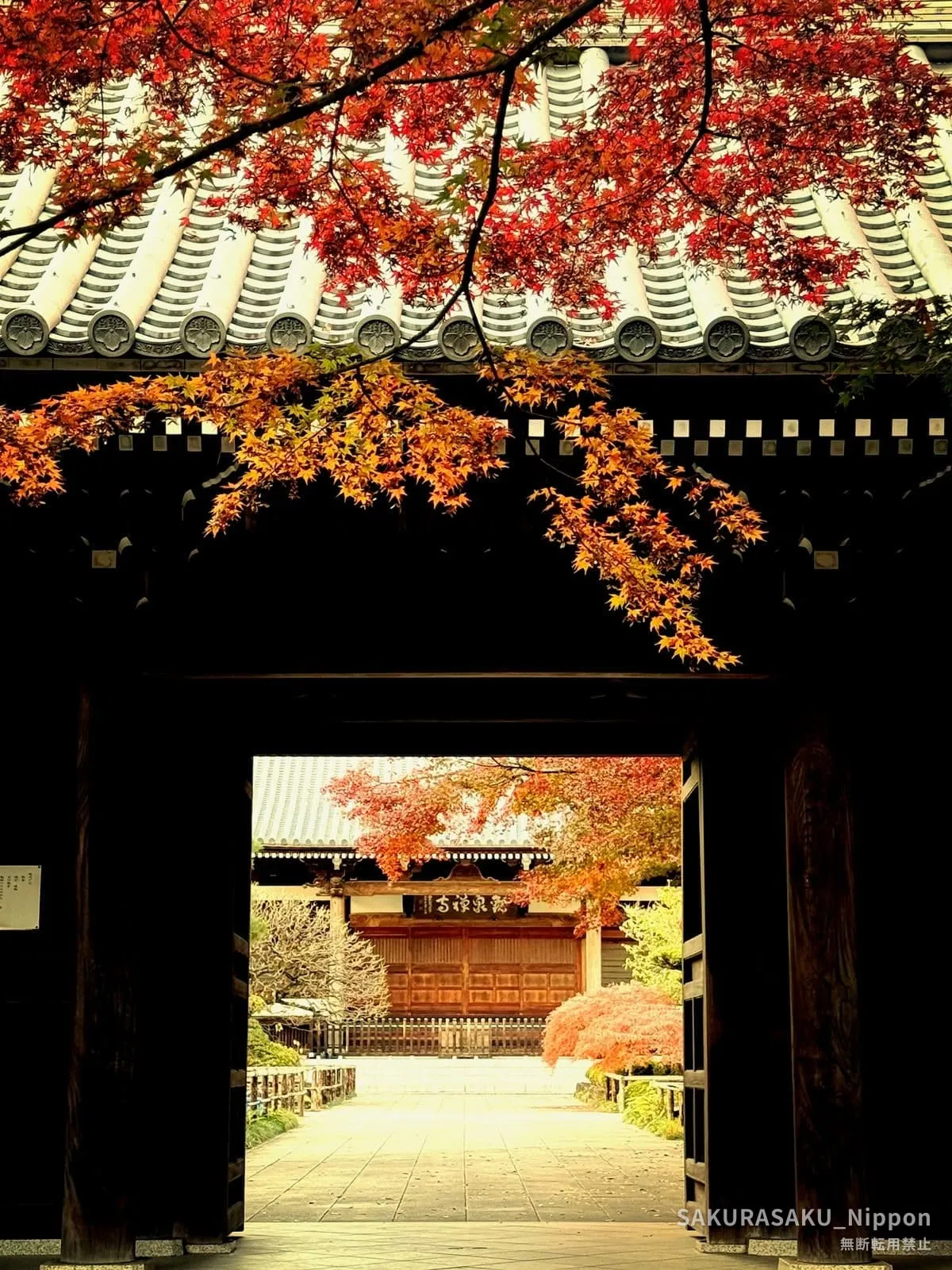
Walk through, and the garden opens out — a pond-viewing garden with clipped pines, curved lawns and stone lanterns, the sort of thing you travel to Kyoto or Nara to see. It is genuinely difficult to believe you are still inside the twenty-three wards of Tokyo.
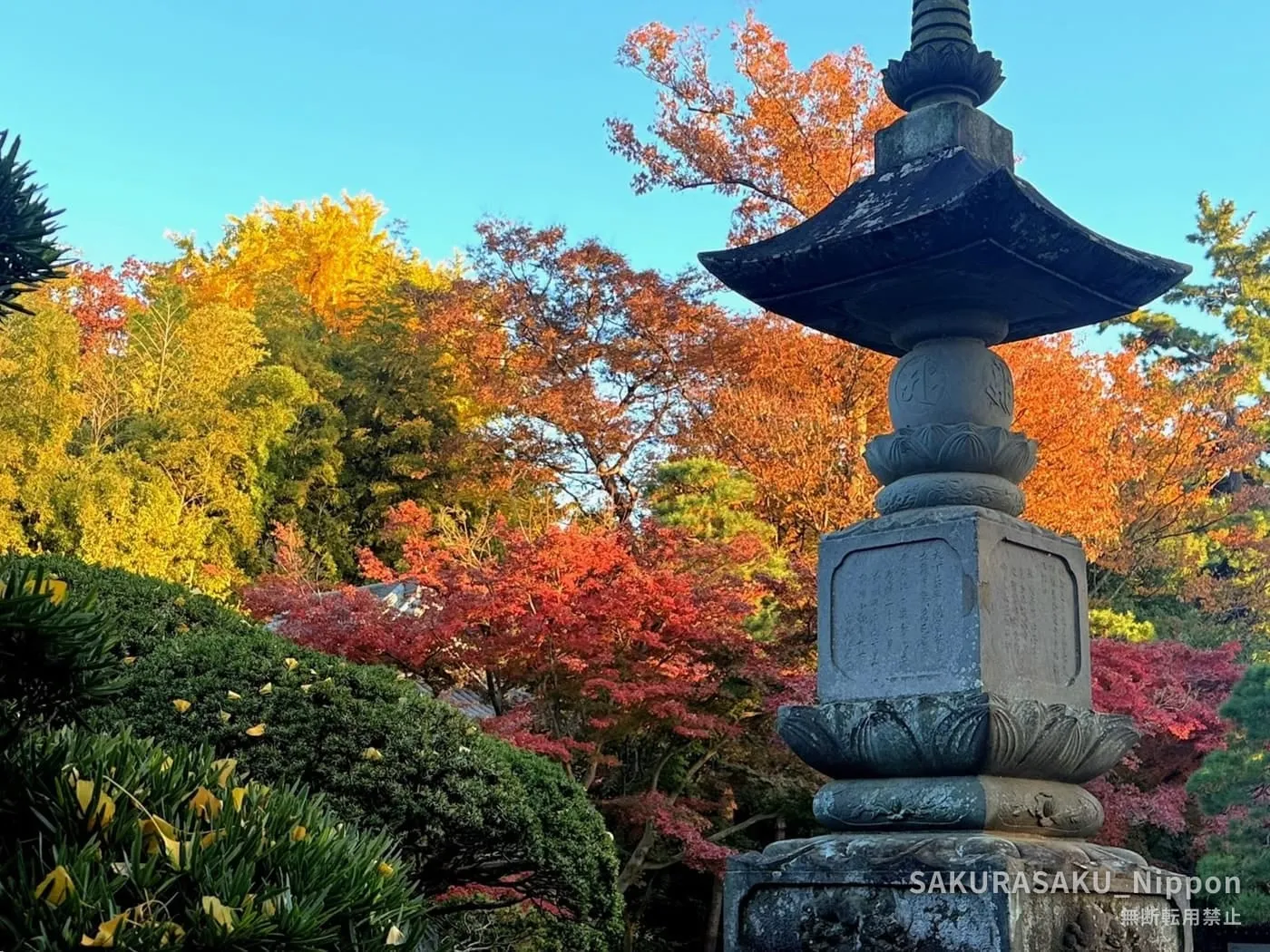
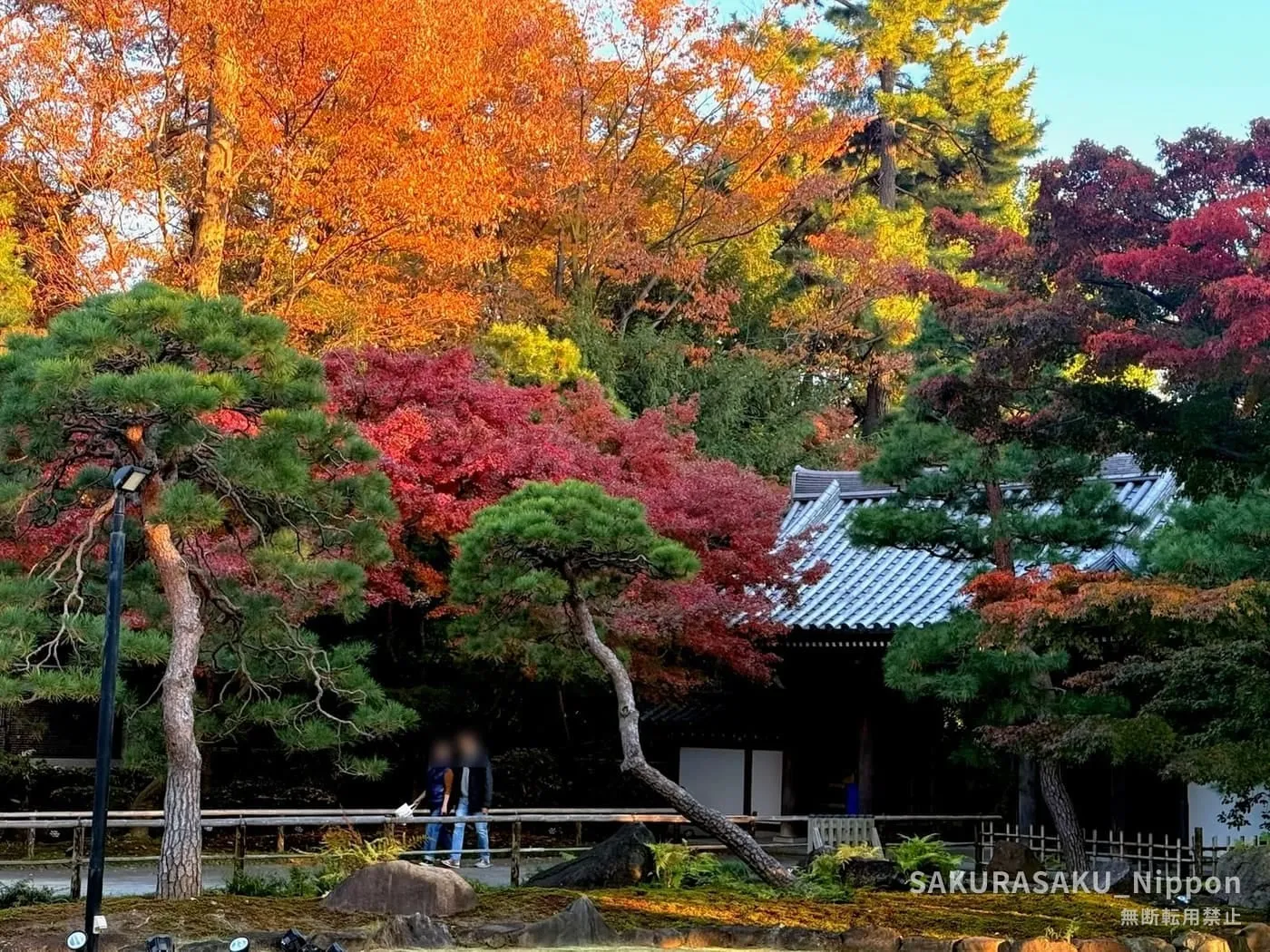
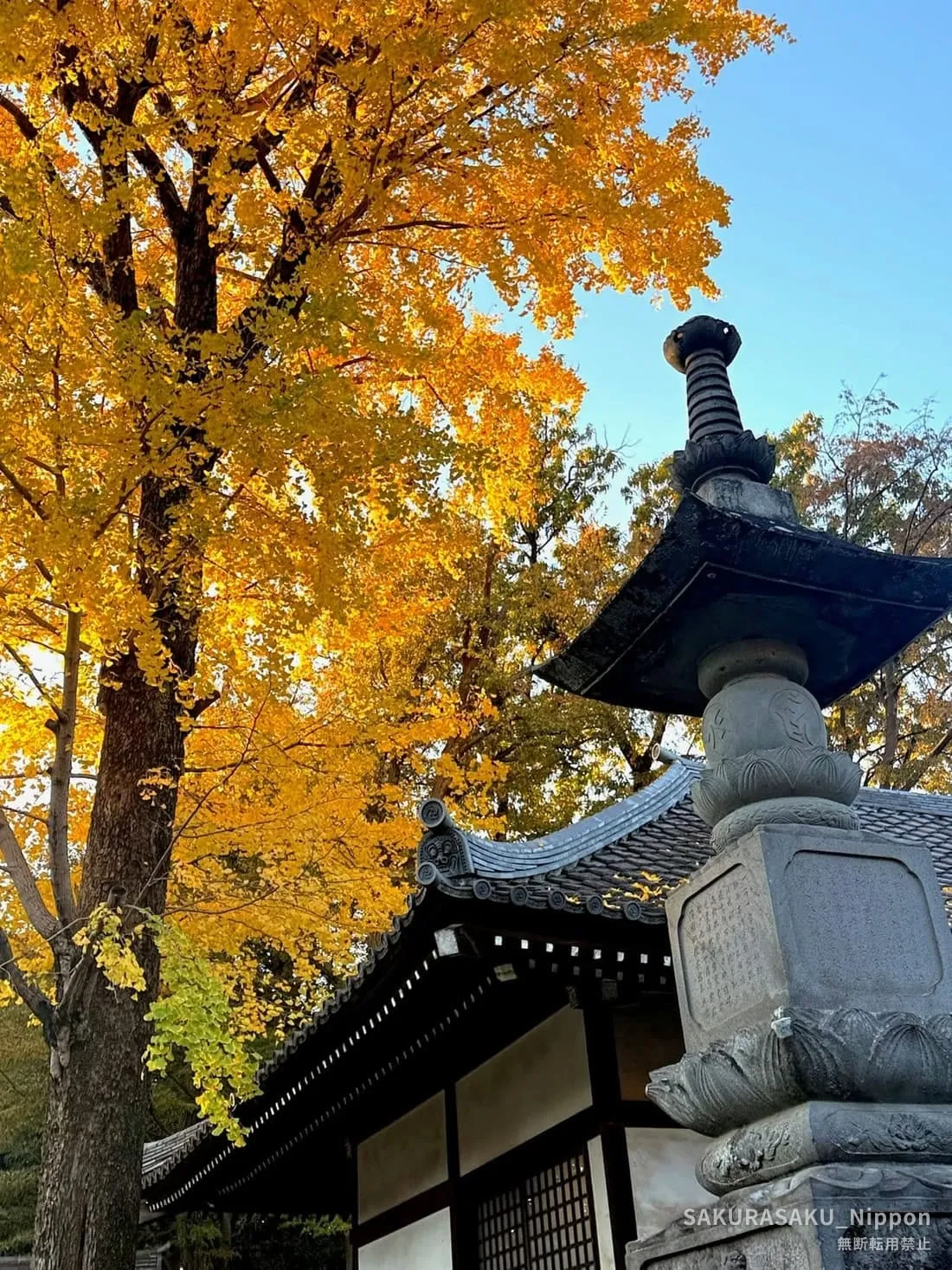
The ginkgo turns too, a little later and a lot more yellow.
When to Come
- Peak colour: late November to early December. This is a fortnight, not a season — check before you travel.
- Early summer is the other good time: the maples come into fresh green, and there is a small bamboo path that is beautifully cool.
- Any quiet morning in between, honestly. It is a working temple with a very good garden, and no one minds you walking slowly.
In late November the temple has in recent years also held an evening illumination, free of charge. Dates are announced each year, so please check locally.
The Warlord in the Graveyard
Here is the part that surprises people.
This temple is the family temple of the Imagawa, one of the great warrior houses of the Sengoku era — and the man buried here as its founder is Imagawa Ujizane.
His father was Imagawa Yoshimoto, who in 1560 marched on Kyoto with an army that everyone expected to win, and was killed at the Battle of Okehazama by a young and greatly outnumbered Oda Nobunaga. It is one of the most famous upsets in Japanese history. Ujizane inherited what was left, and then lost it: Suruga to the Takeda and Hōjō, Tōtōmi to the young Tokugawa Ieyasu.
He did not, however, die in battle. He lived on into old age, and his descendants served the Tokugawa shogunate as masters of court ceremony. In 1597 this temple was founded, and the thirteenth-generation head of the house made it the family temple and named it Kansen-ji.
And here is the lovely detail: the district around it is called Imagawa — the family gave its name to the neighbourhood, and the name is still on the street signs and the bus stop today.
Getting There
Kansen-ji is not on a tourist route, which is exactly why it is quiet.
- Kami-Igusa Station (Seibu Shinjuku Line) — about 14 minutes on foot
- Nishi-Ogikubo Station (JR Chūō Line) — about 2 km, or a bus
- By bus from Nishi-Ogikubo or Ogikubo — get off at Imagawa Ni-chōme, Nōgei Kōkō or Chūō Daigaku Suginami Kōkō, then 2–3 minutes
If you are coming by Seibu line, the same trip can take in the railfan level crossing at Kami-Igusa and Karina, the sandwich shop that opens at six — buy breakfast, watch a train, walk to the temple.
Please Visit Quietly
Kansen-ji is an active Sōtō Zen temple with a working graveyard, not an attraction. Admission is free precisely because it is not a business.
Keep your voice down, stay on the paths, follow any notices, and do not photograph inside the halls or among the graves. Come in that spirit and it is one of the most generous free hours in Tokyo.
Practical Information
- Name: Kansen-ji (宝珠山 観泉寺) — Sōtō Zen
- Address: 2-16-1 Imagawa, Suginami-ku, Tokyo
- Admission: Free
- Grounds open: roughly 06:40–16:30
- Autumn peak: late November to early December
- Nearest station: Kami-Igusa (Seibu Shinjuku Line), about 14 minutes on foot
- Founded: 1597; family temple of the Imagawa clan
Bringing the Colour Home
If the maples were the reason you came, two things are worth knowing about.
The photographer Katsuhiko Mizuno has spent a career on Kyoto’s gardens, and his volume on autumn colour, Kyoto no Ishō: Kōyō, is a beautiful piece of bookmaking — and, usefully, it carries both Japanese and English text.

Kyoto no Ishō: Kōyō (Katsuhiko & Hidehiko Mizuno, Mitsumura Suiko Shoin)
View Kyoto no Ishō: Kōyō (autumn colours photobook) on Amazon.jp
View Kyoto no Ishō: Kōyō (autumn colours photobook) on Rakuten Books (Japanese site)
This one ships outside Japan. Amazon.jp will send it overseas; the international postage is shown at checkout, and your own country may add customs charges.
Price and stock may change. Figures are from the time of writing.
→ I have written about this book separately: A Kyoto Autumn in 144 Pages: Kyoto no Ishō — Kōyō
Or, for a wall: a print of Kōyō Shōkin-zu, “Maples and Small Birds,” from an Edo-period painter. Autumn leaves and birds are one of the oldest pairings in Japanese art, and it hangs happily in a Western room.

Kōyō Shōkin-zu (Maples and Small Birds), after Itō Jakuchū
View the Kōyō Shōkin-zu framed print on Amazon.jp
View the Kōyō Shōkin-zu framed print on Rakuten (Japanese site)
Price and stock may change. Figures are from the time of writing.
Who Is This For?
Anyone who wants the Kyoto autumn without the Kyoto crowds; anyone staying in west Tokyo with a free morning in late November; and anyone who likes the idea that a defeated warlord’s family temple has quietly become the best-kept garden in the neighbourhood — and still lets you in for nothing.
Note: Opening hours, illumination dates and peak colour vary each year. Kansen-ji is a place of worship first; please visit with respect.
Affiliate note: This article contains Amazon and Rakuten affiliate links. As an Amazon Associate, we earn from qualifying purchases at no extra cost to you.