Utsunomiya: Gyoza, and Japan's Newest Tram Line
Tokyo Station to Utsunomiya is 109.5km, and the Tohoku Shinkansen covers it in 49 minutes. That is closer than Nikko, and about the same effort as going to Kamakura.
And yet you will hardly see another foreign visitor there.
Tochigi Prefecture means Nikko and Nasu to most people, and Utsunomiya is the station they pass through on the way. I think that is a small waste, which is why I am writing this.
If You Are Not in a Hurry, Take the Slow Train
The shinkansen is fast. But I would argue the local train is the better ride.
The Ueno-Tokyo Line and the Shonan-Shinjuku Line both run direct, with no change, from Tokyo, Shinjuku and Ikebukuro to Utsunomiya. It takes about two hours, and the fare is ¥2,090 from Tokyo — less than half the shinkansen, which comes to about ¥4,600 with a non-reserved seat.
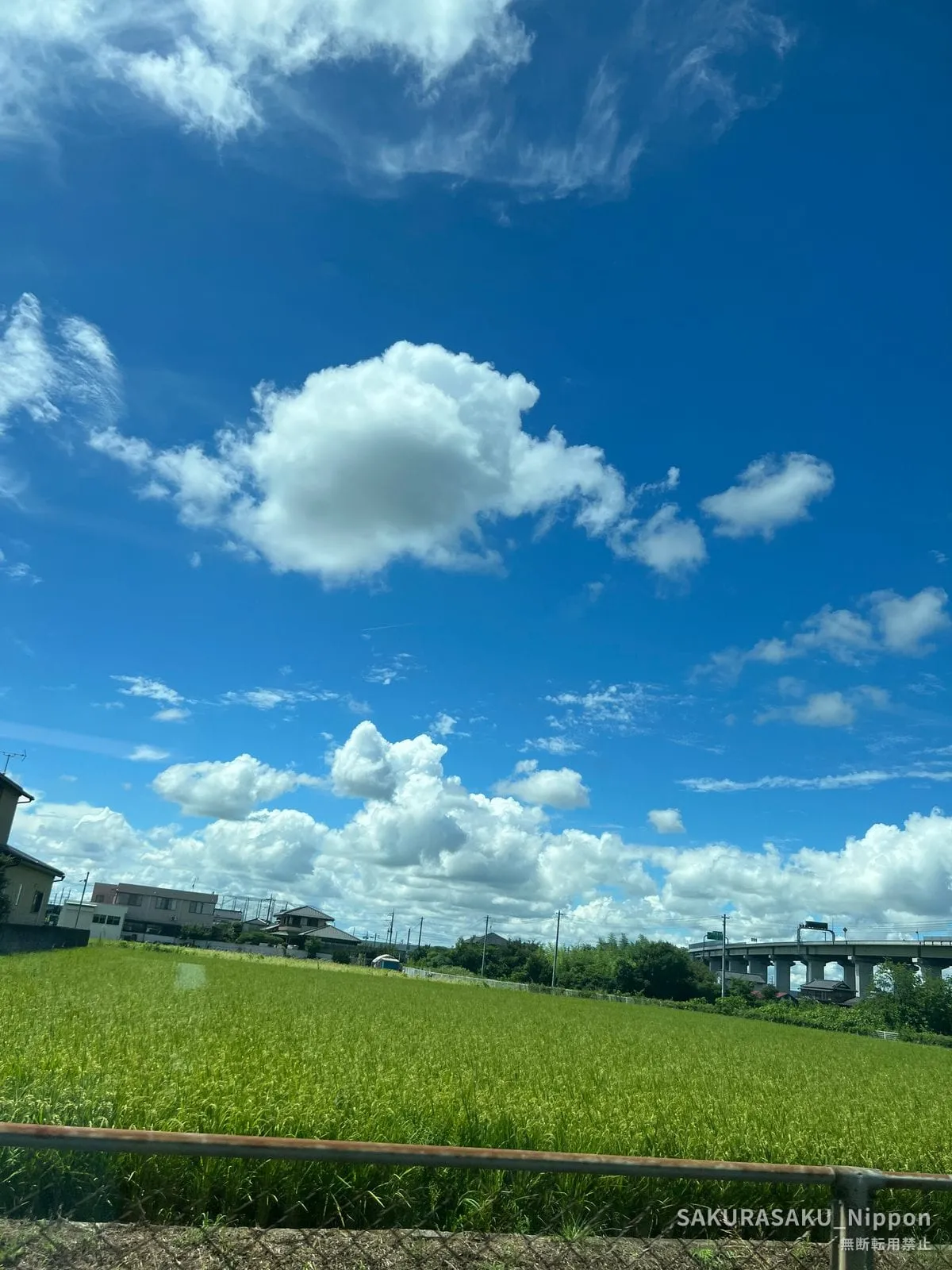
Somewhere past Omiya, the view out of the window changes. The gaps between stations grow longer, the houses thin out, and rice fields open up on both sides. Two hours from Tokyo, this is what the country still looks like.
There is a way to spend those two hours sitting down. Local and rapid trains on this route carry a Green Car — a double-decker first-class carriage. Tokyo to Utsunomiya falls in the “over 101km” band, so a Green ticket bought with a Suica costs ¥1,550. Together with the fare, that is ¥3,640: about ¥1,000 less than the shinkansen, and two hours in a proper seat.
Buying one has a catch — the machines on the platform accept plastic IC cards only. I have written that up separately.
→ How to ride a JR Green Car on an ordinary train
The Tram That Opened in 2023
From the east exit of Utsunomiya Station runs the Utsunomiya Light Rail, known as LIGHTLINE.
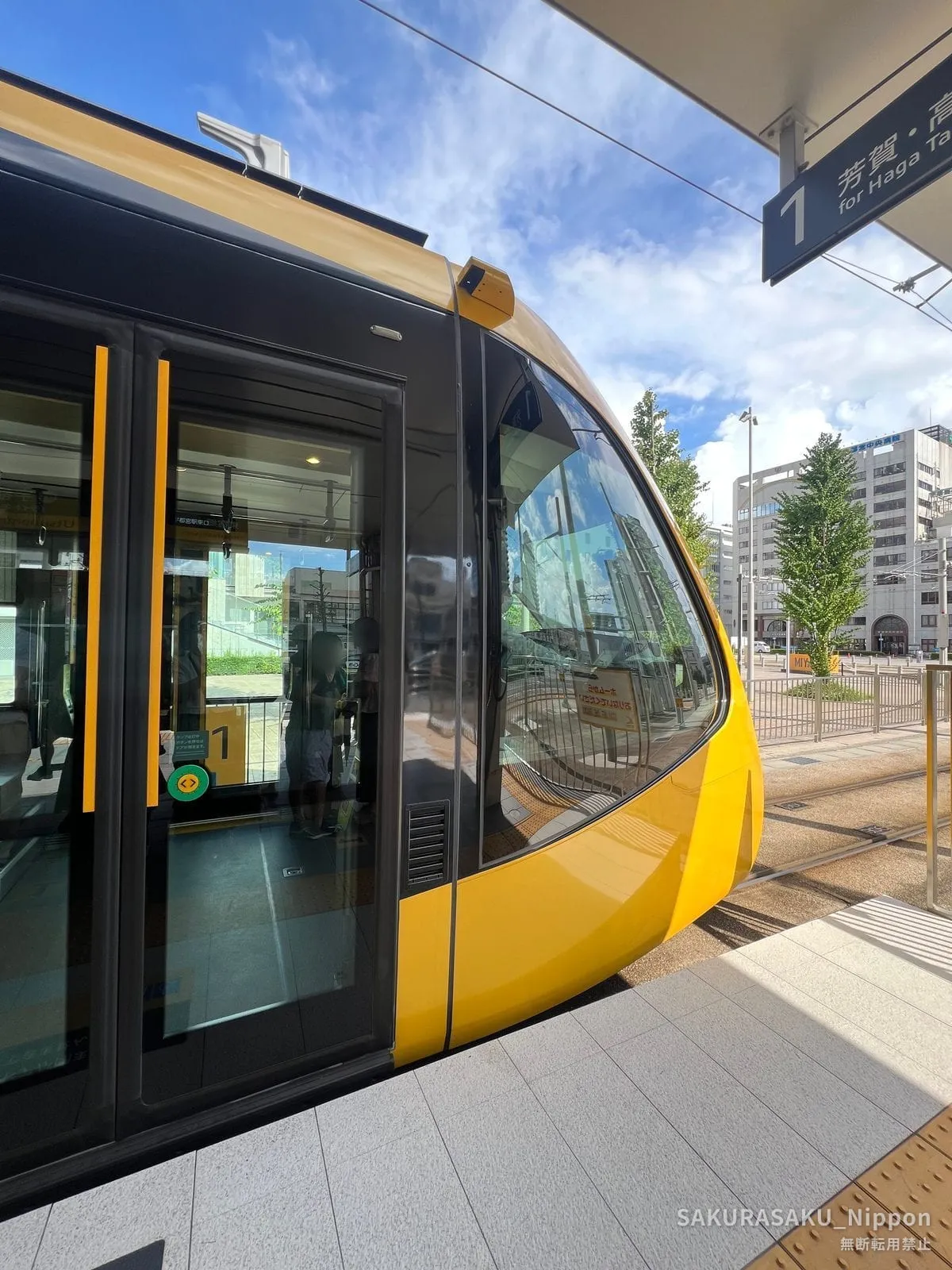
It opened on 26 August 2023 — the first completely new tram line built in Japan in 75 years. Not an extension of something existing: new track, on ground that had none.
- Route: Utsunomiya Station East Exit — Haga/Takanezawa Industrial Park
- Length: 14.6km, with 19 stops
- End to end: about 44 minutes (42 by rapid service)
- Fare: ¥150 to ¥400, by distance
- Payment: the local “totra” card, and Suica and PASMO also work. Cash passengers take a numbered ticket on boarding
The vehicles are HU300 series three-section articulated trams.
An honest note: this is not a tourist line. The name of the far terminus — Haga/Takanezawa Industrial Park — tells you everything. What this tram carries every morning is people going to work.
Along the route are Honda research and development facilities and a Canon plant. You are riding through the part of Japan that still makes things.
That is exactly why I find it worth an hour. It will not deliver you to a temple. But it is the clearest window I know onto what a Japanese provincial city is trying to build right now.
The full round trip takes about an hour and a half. If you are short of time, ride a few stops and come back; you will still get the idea.
About Being “The Gyoza City”
Utsunomiya is famous for gyoza. That is true, but it needs a footnote.
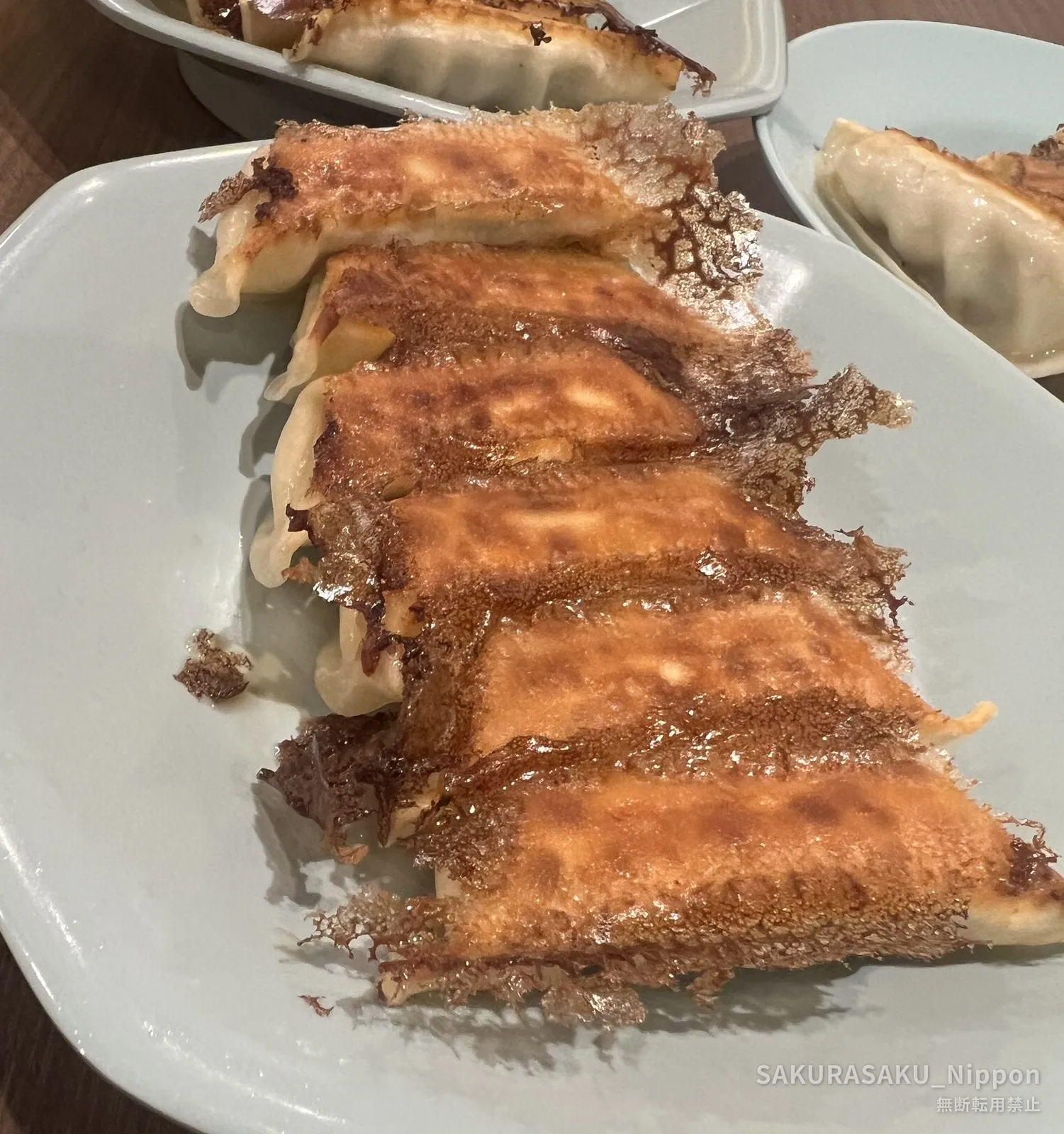
The claim rests on a government household survey of how much each household spends on gyoza per year. Utsunomiya, Hamamatsu and Miyazaki trade the top places between them, and in 2025 Hamamatsu came first and Utsunomiya second.
So “number one” depends on the year. What does not change is the density: the dumpling shops, the statue outside the station, the fact that people here genuinely discuss the subject.
One note for visitors from China. In China, gyoza — especially boiled ones — are the main dish. In a Japanese diner they almost always arrive as a teishoku set: dumplings, a bowl of rice and miso soup. Here, gyoza are a side dish that happens to be the star.
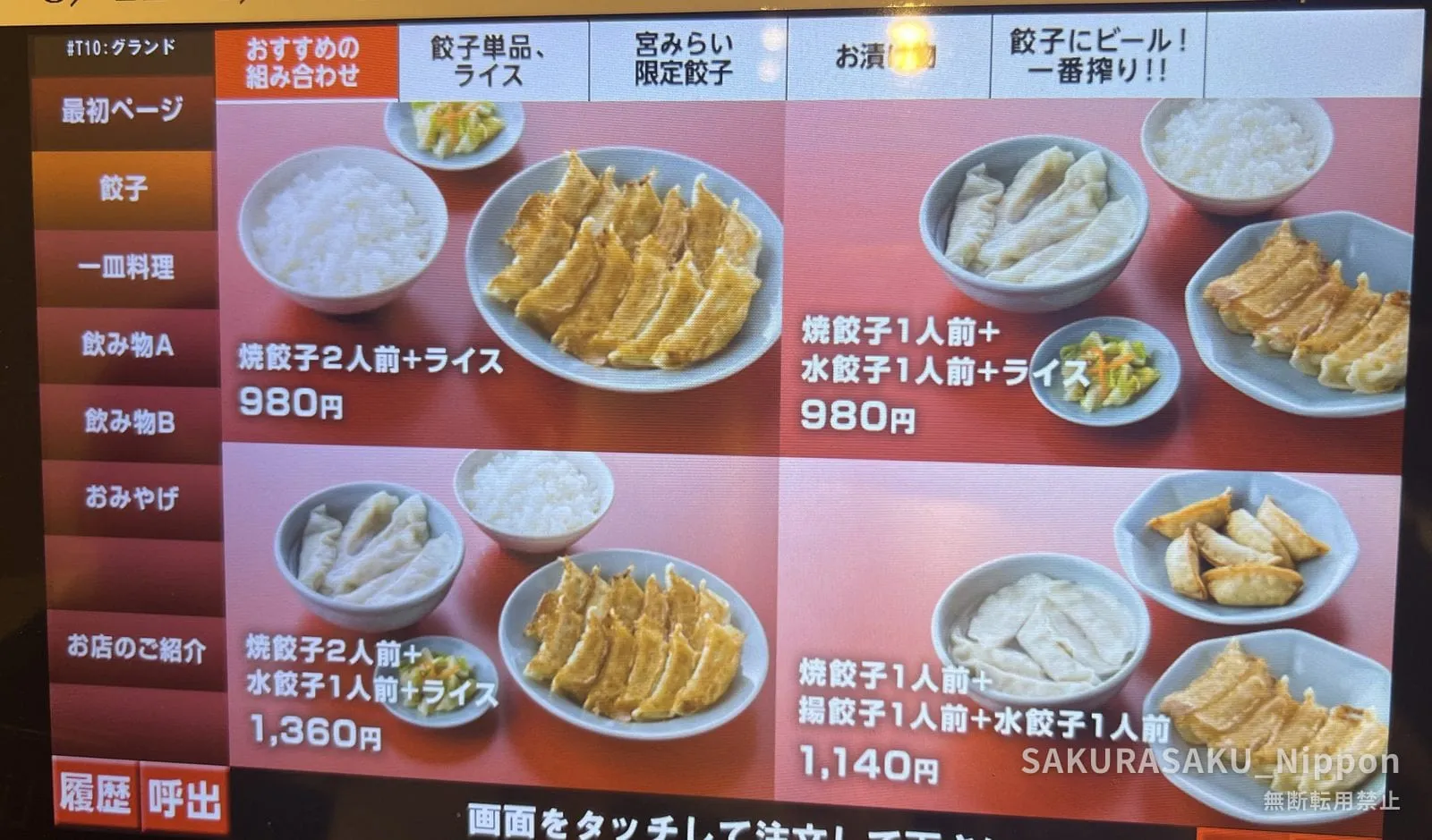
Ticket machines and touch screens usually offer combinations like “fried gyoza + rice” or “fried + boiled + rice”. They carry photographs, so you can order without reading Japanese.
When it is busy: queues form around midday. Before noon, or after 2pm, you will walk in.
Shaved Ice, Made from Nikko Ice
Attached to the station’s east exit deck is a shopping complex, Utsunomiya Terrace. On the second floor is COCONOJI MARCHE, run by Nisshodo, an old confectioner from Nikko. Open 10:00–20:00.
What you come here for is shaved ice made with Nikko natural ice.
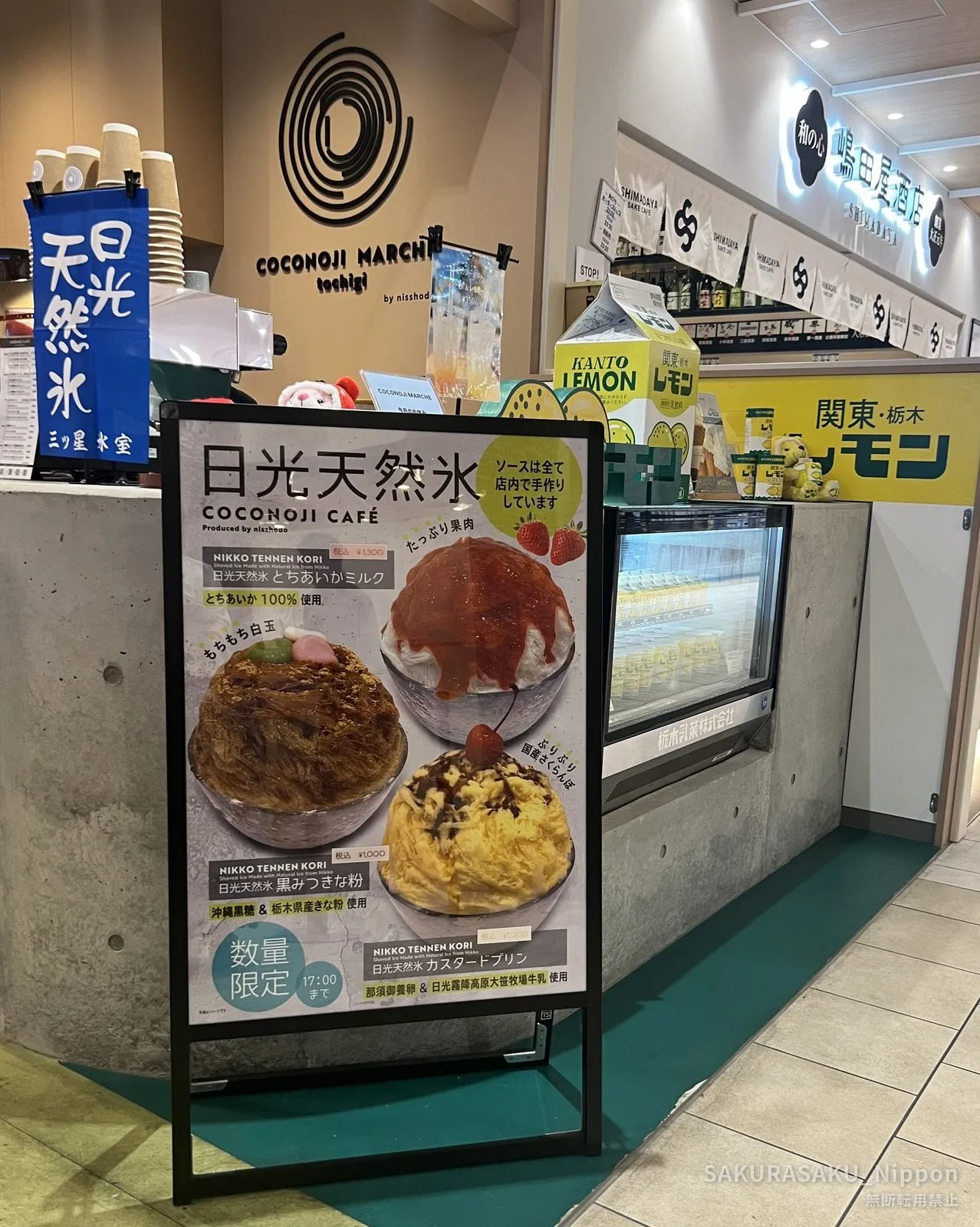
Natural ice means pond water frozen by the winter cold alone, then stored in an ice house until summer. A few of these ice houses still operate in Nikko. The ice collapses differently in the mouth from machine ice, and is said to be less likely to give you a headache.
According to the signboard, Tochiaika strawberry with milk was ¥1,300 including tax and brown sugar syrup with roasted soy flour ¥1,000, with the sauces made in the shop.
Please note: the sign said “limited quantity, until 17:00”. Arrive in the evening and it is gone. There is only as much natural ice as last winter produced.
→ If you are going on to Nikko itself, here is the Nikko day-trip guide.
If You Are Staying Until Evening: Tochigi Beef
On the west side of the station, on Ekimae-dori, is Yakiniku Great Ekimae-ten.
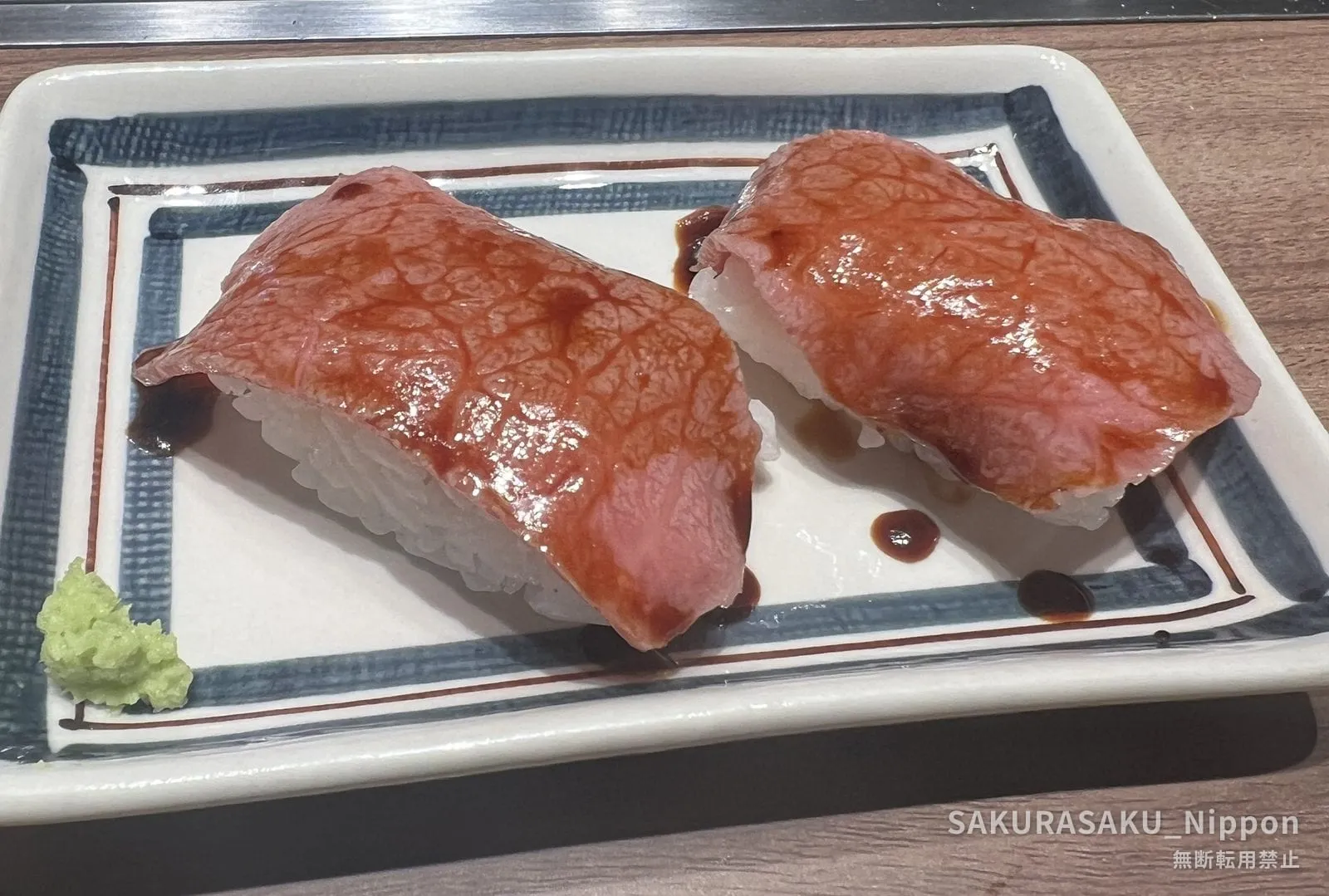
It is a kuroge wagyu grill house, and a chart of the cuts is posted on the wall. Tongue, misuji, chateaubriand, zabuton, ichibo — most people are surprised that one animal is divided quite so finely.
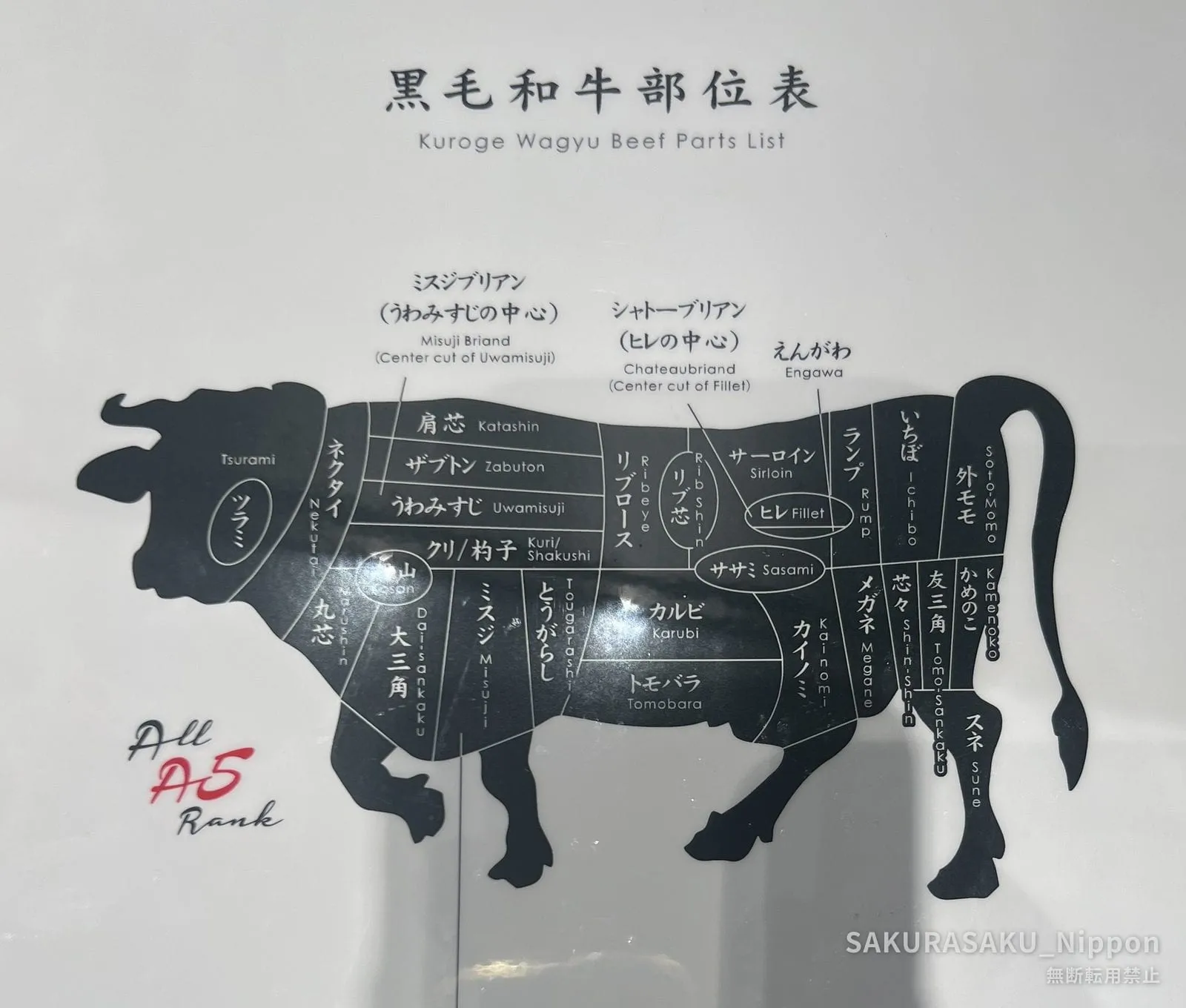
Honestly, about the timing. This place opens in the late afternoon — 5pm on weekdays, 4pm at weekends. It is not open at lunchtime.
So eating here means building the day as “dinner, then the evening train home”. That still works as a day trip: two hours back to Tokyo on the local train, under an hour by shinkansen.
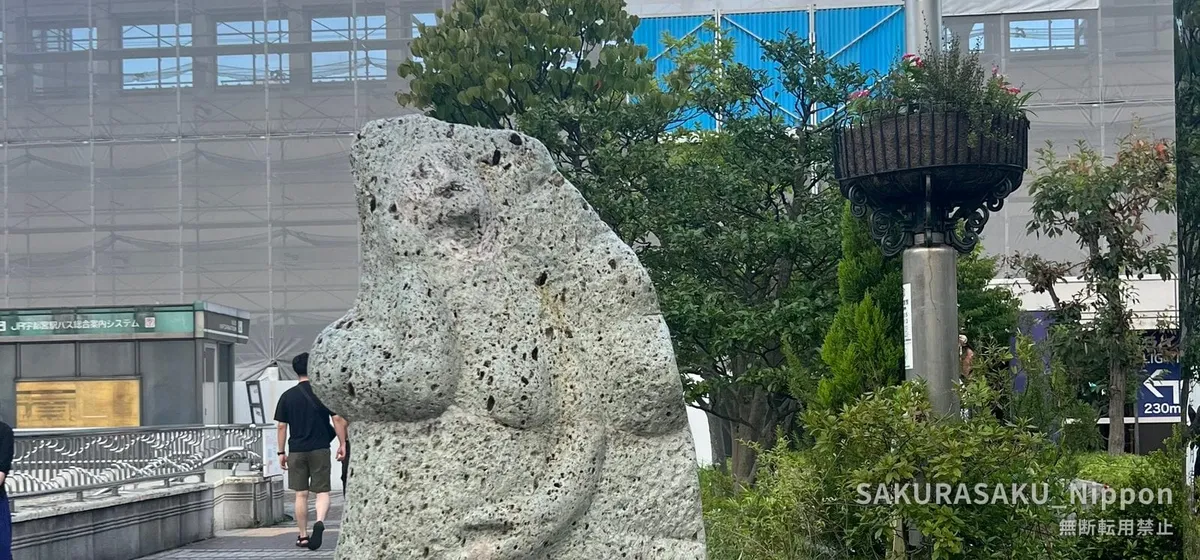
The Gyoza Statue
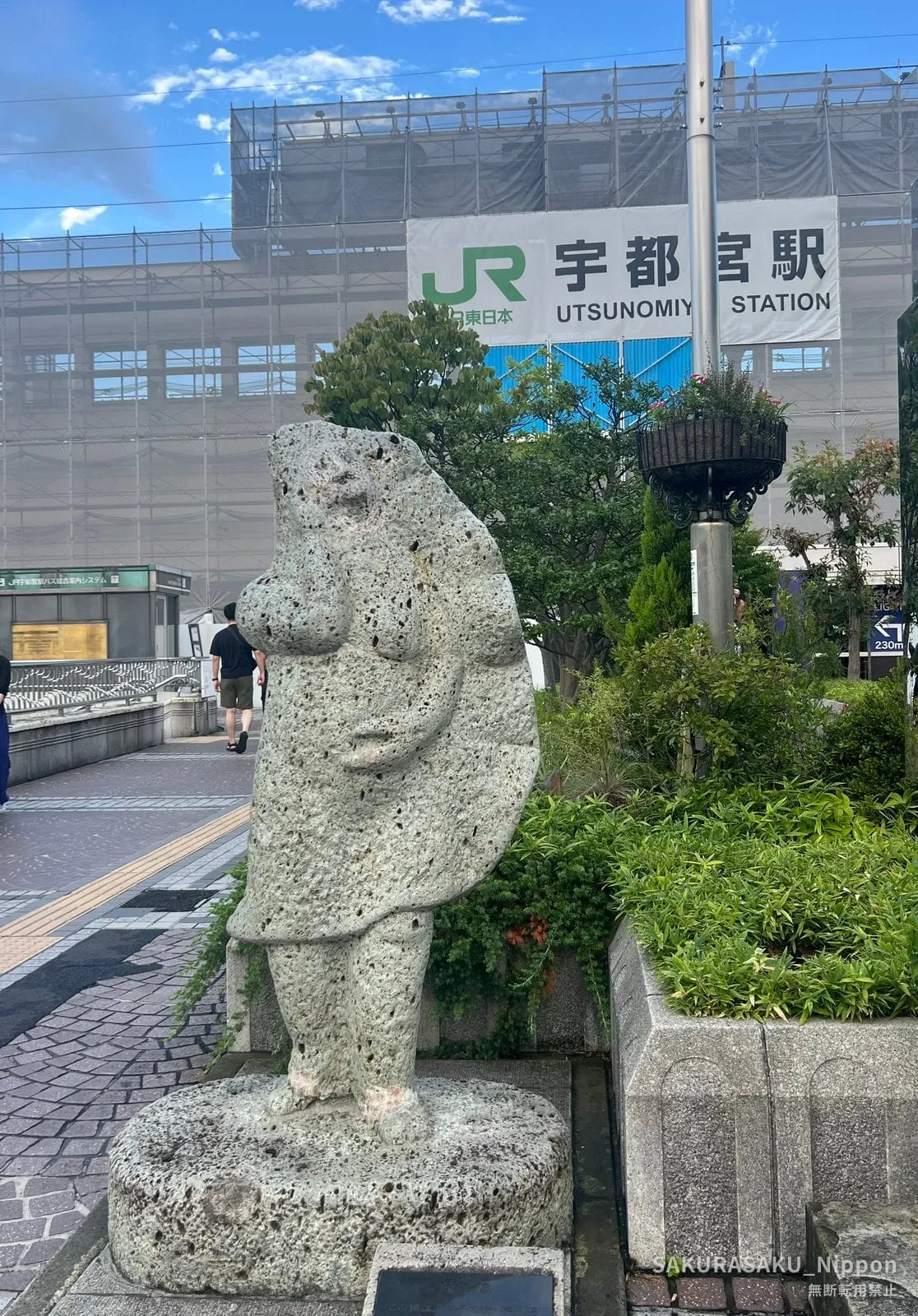
On the west side, on the deck at the same level as the ticket gates, stands the gyoza statue.
It is carved from Oya stone — the light, soft volcanic stone quarried just outside the city — and stands 1.6m tall and weighs 1.7 tonnes. The design is a Venus wrapped in a dumpling skin. It was made in 1994 for a television programme’s town-promotion feature.
It has had bad luck. In 2008, while being moved from the east exit to the west, a wire came loose and it broke (it was glued back together). When it was moved again in 2014, it was first installed facing the wrong way.
You would never guess any of that now. Take your photograph here first.
The Oya Stone Quarry
A short way outside the city are the underground quarries where Oya stone was cut — vast pillared chambers left behind by the digging.
That deserves its own article, so I will leave it here as a note: it exists, and it is close.
Getting There
From Tokyo:
- Tohoku Shinkansen (Yamabiko / Nasuno) — about 49 minutes from Tokyo Station; roughly ¥4,600 with a non-reserved seat
- Ueno-Tokyo Line / Shonan-Shinjuku Line (local and rapid) — no change of train, about two hours, ¥2,090 from Tokyo
- Add ¥1,550 for a Green Car seat (Suica price, over 101km)
Which exit:
- East — LIGHTLINE stop, Utsunomiya Terrace
- West — the gyoza statue, the dumpling restaurants, Yakiniku Great, the city centre and buses
Half a Day, in Order
- Arrive in the morning (leave Tokyo before 9:00 if you are taking the slow train)
- East exit — LIGHTLINE, a few stops or the full run
- Gyoza before noon, on the west side, ahead of the queue
- Shaved ice at Utsunomiya Terrace (limited numbers, until 17:00)
- The gyoza statue, for the photograph
- Staying into the evening? Yakiniku. Otherwise, the late-afternoon train
Practical Information
- Area: Utsunomiya, Tochigi Prefecture
- Station: Utsunomiya (Tohoku Shinkansen; Utsunomiya Line via the Ueno-Tokyo and Shonan-Shinjuku Lines)
- From Tokyo: about 49 minutes by shinkansen (about ¥4,600); about 2 hours by local train (¥2,090)
- LIGHTLINE: Utsunomiya Station East Exit to Haga/Takanezawa Industrial Park, 14.6km, 19 stops, about 44 minutes end to end, ¥150–¥400
- COCONOJI MARCHE: Utsunomiya Terrace 2F, connected to the east deck; 10:00–20:00; shaved ice in limited numbers until 17:00
- Yakiniku Great Ekimae-ten: 1-4-6 Ekimae-dori (west side); from 17:00 on weekdays, 16:00 at weekends. Closed at lunchtime
- Time needed: half a day, or a full day with dinner
Taking Utsunomiya Home
If the tram is what stays with you, there is a model of it. Tomytec’s Railway Collection has produced the HU302 — the same unit, in 1/150 scale.
The yellow body fits in your hand, and the box is flat enough to disappear into a suitcase.

Railway Collection Utsunomiya Light Rail HU300 Series HU302 LIGHTLINE (1/150 display model)
View the Utsunomiya LIGHTLINE HU302 model on Amazon.jp
View the Utsunomiya LIGHTLINE HU302 model on Rakuten (Japanese site)
Price and stock may change (list price ¥6,820 including tax at the time of writing)
→ More about the Utsunomiya LIGHTLINE model
Who Is This For?
For travellers who want the Japan that is not on the poster — an ordinary city going about an ordinary day and evening.
And for anyone curious about a provincial city that is still building things. LIGHTLINE is one of the few places where a Japanese city has answered the question “what do we do next?” with actual money and actual track.
Note: train times and fares, opening hours and the availability of shaved ice all change. Please check before you travel. The shaved ice prices are those on the signboard when the photograph was taken.
Affiliate note: This article contains Amazon and Rakuten affiliate links. As an Amazon Associate, we earn from qualifying purchases at no extra cost to you.