The Green Car: A Double-Decker First Class on an Ordinary Commuter Train
An ordinary commuter train in the Tokyo suburbs. Bench seats along the walls, rows of hanging straps, and at eight in the morning no room to turn around.
And then, in the middle of those ten carriages, two of them are completely different. They have two floors. The seats face forward, there are tables, and they are half empty.
These are the Green Cars. Anyone can sit in one, for a small extra fare.
What This Actually Is
If you are used to railways elsewhere, the arrangement looks strange.
In most countries, if you want a paid seat, you take an express. On JR East around Tokyo, the ordinary local and rapid trains themselves carry two first-class carriages. The same train, the same line of doors, with a paid section inside it.
You will find them on the Tokaido, Yokosuka, Sobu Rapid, Utsunomiya, Takasaki and Joban lines, on the Shonan-Shinjuku and Ueno-Tokyo lines, and on the Chuo Rapid and Ome lines.
Two things make them unusual.
- They are double-deckers. The upper floor gives you a raised view, over walls and across rivers. The lower floor sits close to the ground, sways less, and has a view of its own. At each end there are also a few single-level seats, which feel almost like a compartment
- No seat is reserved. You simply sit in an empty one
The Fare
The fare depends on distance — and, importantly, on how you buy it.
| Distance | Bought with a Suica | Paper ticket, or bought on board |
|---|---|---|
| Up to 50km | ¥750 | ¥1,010 |
| Up to 100km | ¥1,000 | ¥1,260 |
| Over 101km | ¥1,550 | ¥1,810 |
This is on top of the ordinary fare. Your normal ticket or IC fare is exactly the same as it would be without the Green Car.
Buying with an IC card saves ¥260 in every band. Buying from the conductor after you board costs the higher price, so buy before you get on.
Three Ways to Buy One
1. The green machine on the platform (the usual way)
On platforms served by Green Cars, you will find a green machine marked “Suica グリーン券専用 / Green Car Ticket for Suica”, with a green four-leaf symbol on top.
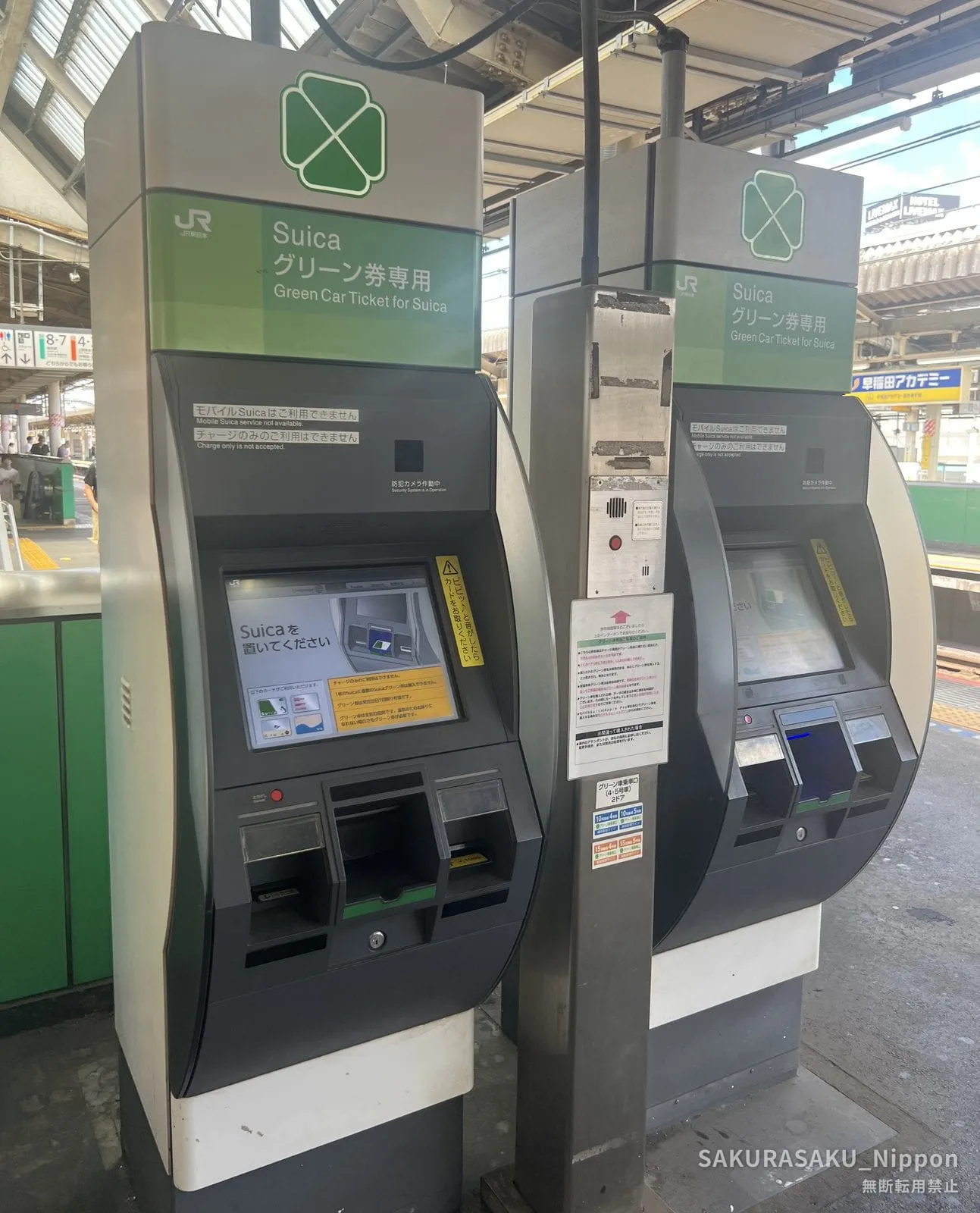
This is the easiest route, and it has two traps for visitors. Both are printed on the machine itself.
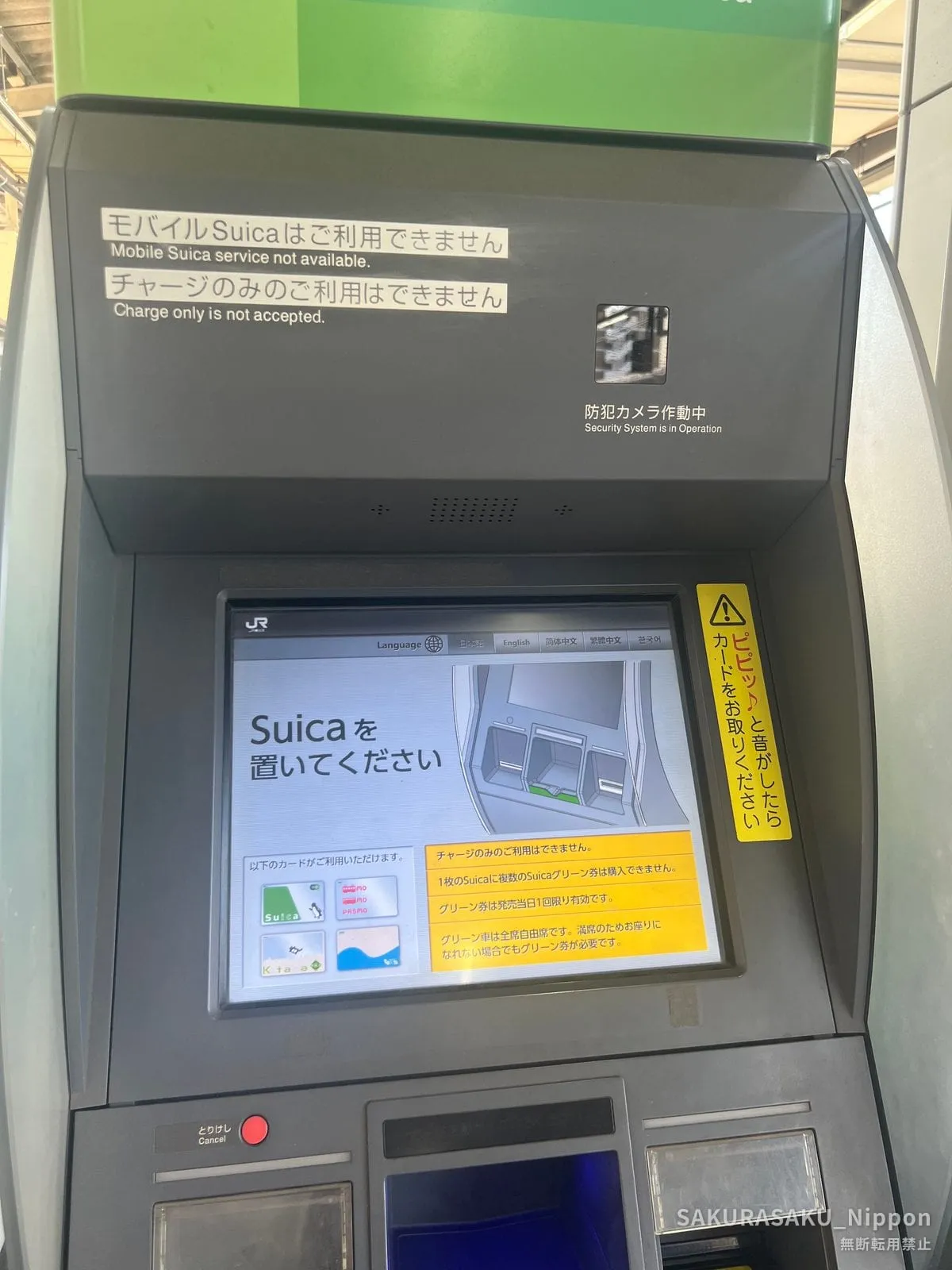
First: “Mobile Suica service not available.” The Suica on your phone — in Apple Pay or Google Wallet — will not work at this machine. You need a plastic IC card: a physical Suica, PASMO, Kitaca or TOICA.
Second: “Charge only is not accepted.” This machine is not there to top up your balance with cash. The Green Car fare is deducted from the balance already on the card you place on it. So check your balance first.
The screen does have a language selector — English, 简体中文, 繁體中文 and 한국어 — so you can work through it without Japanese.
The other notices on that screen matter too.
- One Suica cannot hold more than one Green ticket. Travelling as a pair means you need two IC cards. This is where families come unstuck
- A Green ticket is valid for one journey, on the day of purchase only
- No seat is reserved. If the car is full and you have to stand, you still need the ticket
2. Mobile Suica (everything on the phone)
If you use Mobile Suica, you can buy the Green ticket inside the app. It cannot be used at the platform machine, but it can buy the ticket itself — an odd split, but that is how it works.
Buy it in the app, board, sit where you like, and hold the phone up to the reader in the ceiling.
3. An ordinary ticket machine or ticket office, outside the gates (paper)
Without an IC card, you can buy a paper Green ticket from a normal ticket machine or a Midori-no-Madoguchi ticket office outside the gates. This is the way to pay in cash. The fare is the higher one.
If you are already through the gates, tell the staff at the gate that you are stepping out to buy a Green ticket before you leave.
With a paper ticket, the ceiling reader is of no use to you — it reads IC cards. The lamp above your seat will stay red, and that is correct. Show the ticket to the conductor when they come through.
Once You Sit Down, Touch the Ceiling
This is the part that surprises people.
If you bought the ticket with an IC card, there is no gate to pass through. The ticket lives inside the card.
What you do is this:
- Board the Green Car
- Sit in an empty seat — sitting down first is fine
- Touch your card or phone to the reader directly above your seat
- The lamp turns from red to green
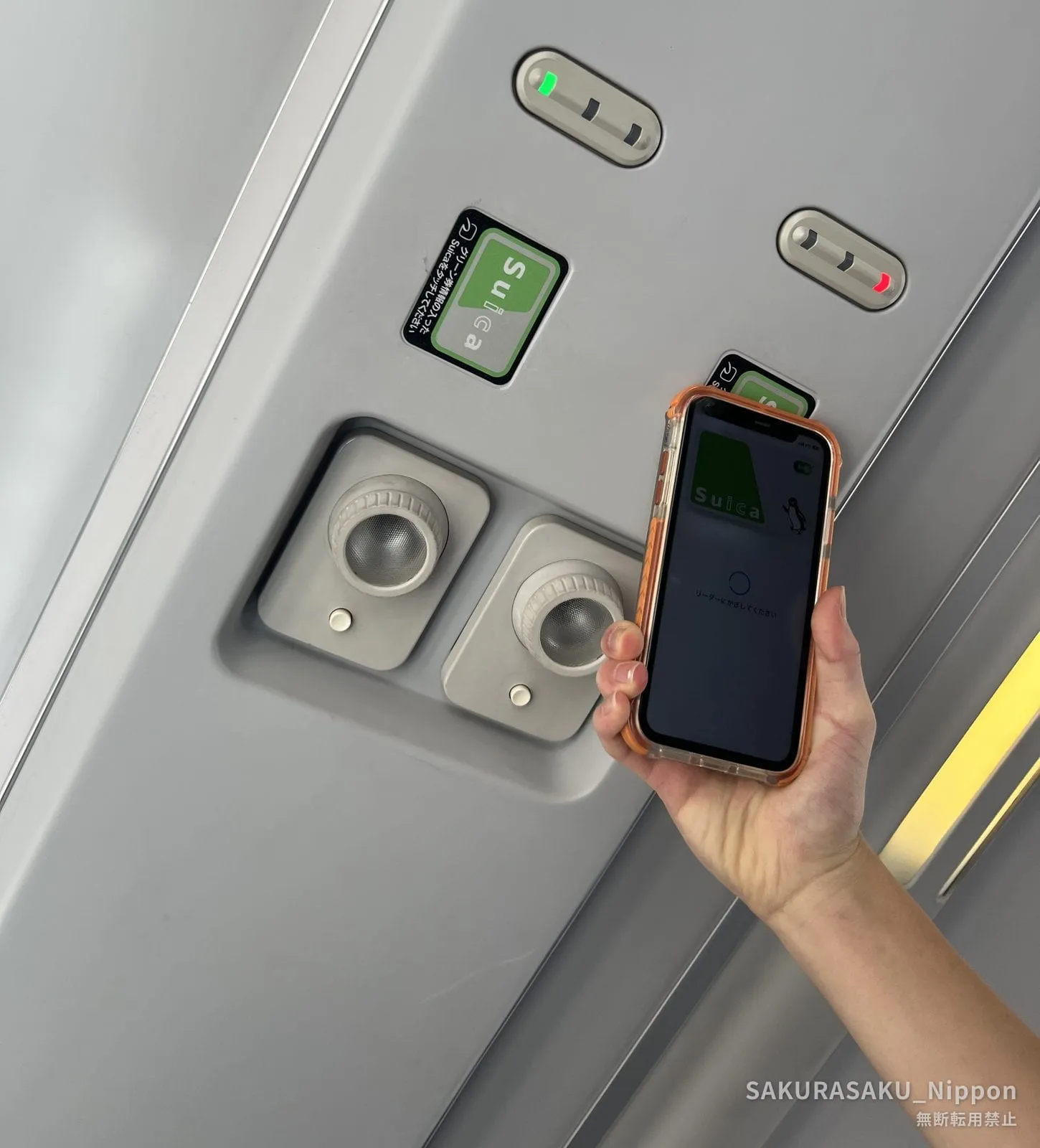
Red means “this seat is empty”. Green means “the person here has paid”. The conductor can check the whole carriage by walking down it.
If you change seats, touch again at the new one. The lamp at the old seat resets after a while.
Being Honest About It
Whether ¥1,550 is worth it depends entirely on how long you are on board.
- Worth it: journeys over an hour; travelling with large luggage; Friday evenings and Sunday afternoons, when the ordinary cars fill up; long runs out to Utsunomiya, Takasaki or Odawara
- Not worth it: a twenty-minute hop; the middle of a weekday, when the ordinary cars are half empty anyway
On a busy day, the Green Car is busy too. Nothing is reserved, so if it is full you stand, and there is no refund. On holiday evenings, board at the originating station or shift your timing.
There is no trolley service. Buy your drink before you board.
About the Train in the Photograph
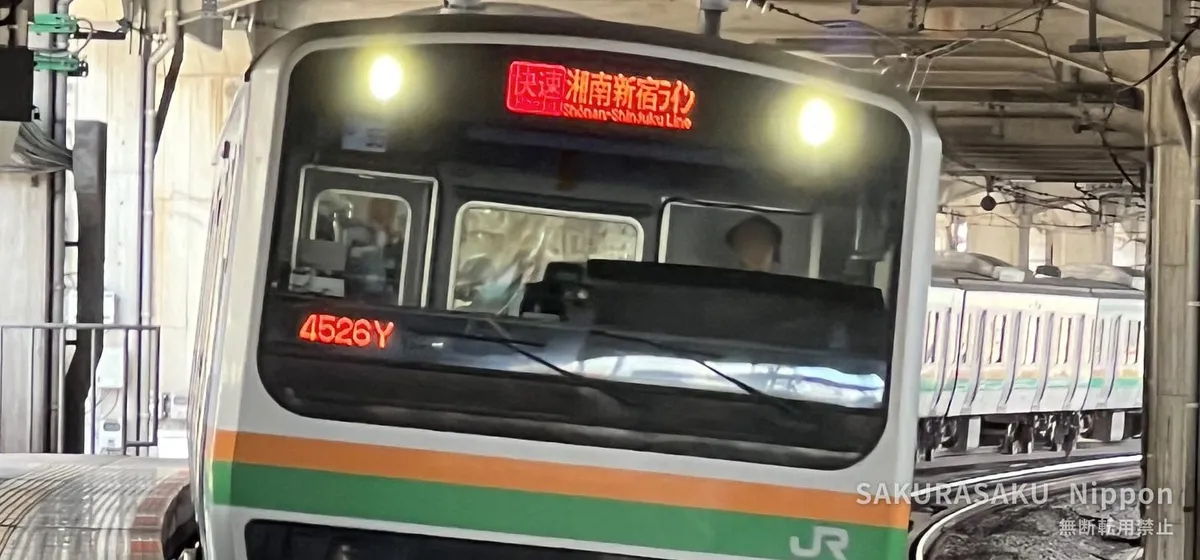
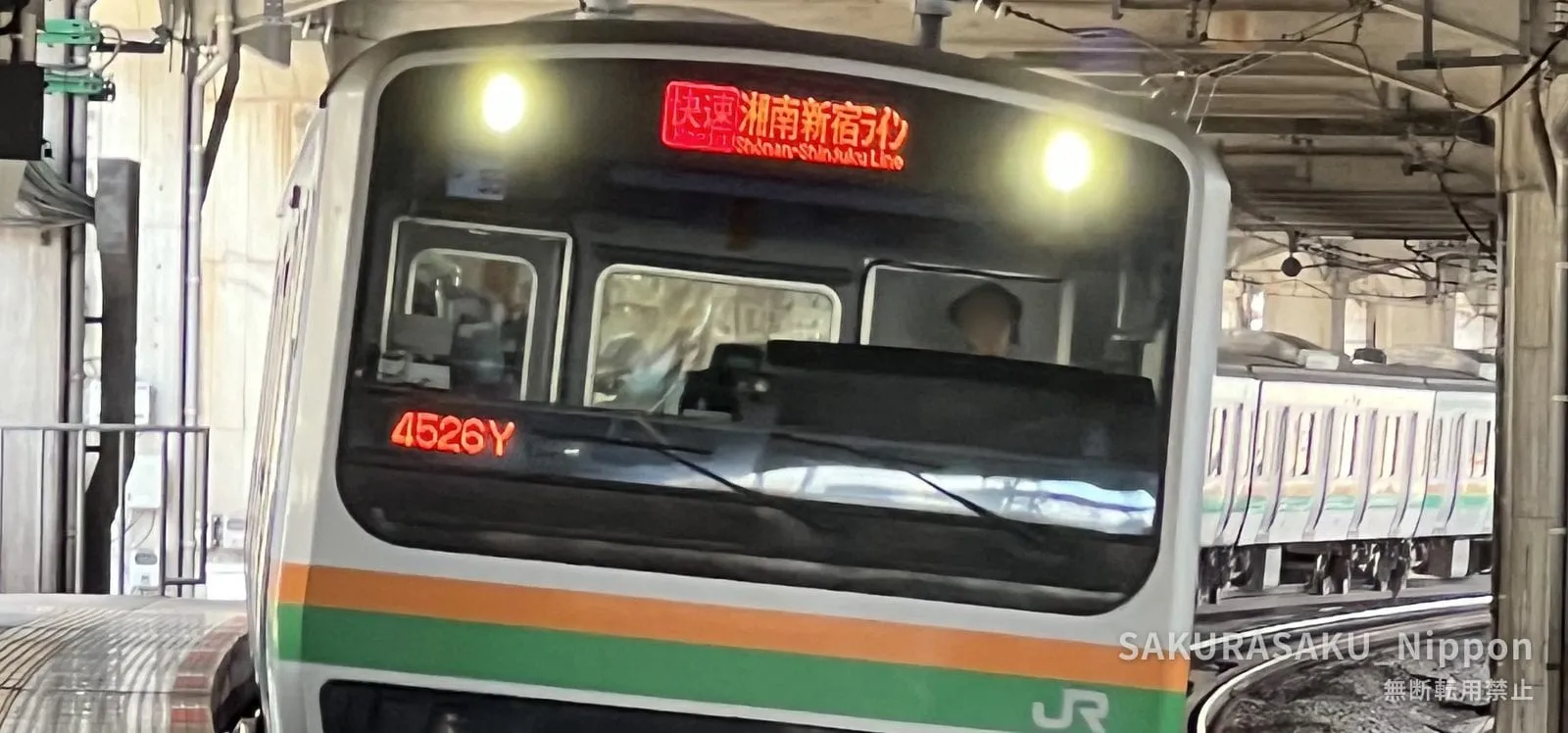
The train at the top is a Shonan-Shinjuku Line rapid. From Shinjuku it runs without a change north to Utsunomiya and Takasaki, and south to Yokohama, Odawara and Zushi.
Long runs like that are where the Green Car makes most sense. Tokyo to Utsunomiya, for instance, is 109.5km and about two hours. The ordinary fare of ¥2,090 plus a ¥1,550 Green ticket comes to ¥3,640 — around ¥1,000 less than the shinkansen. It takes longer, and you are sitting down for all of it.
→ For what is at the end of those two hours, see the Utsunomiya day trip.
Practical Information
- Where to find them: local and rapid trains on the Tokaido, Yokosuka, Sobu Rapid, Utsunomiya, Takasaki, Joban, Shonan-Shinjuku, Ueno-Tokyo, Chuo Rapid and Ome lines
- Position in the train: cars 4 and 5 in a ten-car formation
- Fare (in addition to the ordinary fare): ¥750 up to 50km, ¥1,000 up to 100km, ¥1,550 over 101km, when bought in advance with an IC card
- Paper ticket or bought on board: ¥1,010 / ¥1,260 / ¥1,810
- Seating: unreserved, double-decker
- Where to buy: the green platform machine (plastic IC cards only); the Mobile Suica app; an ordinary machine or ticket office outside the gates (paper)
- After boarding: touch the reader in the ceiling above your seat, red to green. Paper tickets are shown to the conductor
What Goes Past the Window
From an upper-deck seat, sitting that much higher, you notice the freight trains. On the Tokaido and Utsunomiya lines alike, long trains loaded with square containers slide past on the next track.
Those square boxes have model numbers. And somebody makes a storage box in the shape of one.

JR Freight container storage box (19D pattern, with lid)
View the JR Freight container storage box on Amazon.jp
View the JR Freight container storage box on Rakuten (Japanese site)
Price and stock may change. Other patterns, including the 18D, are sold on the same page
Who Is This For?
Travellers who would like the journey itself to be part of the trip. Japanese railways do not compete on speed alone, and bolting a double-decker first class onto a commuter train is a good example of that.
And anyone hauling a large suitcase for more than an hour. Pay the ¥750 without thinking about it.
Note: fares and the lines served can change. Please check JR East’s current information before you travel.
Affiliate note: This article contains Amazon and Rakuten affiliate links. As an Amazon Associate, we earn from qualifying purchases at no extra cost to you.