Toyosu Market Tuna Auction: How the Free Lottery Actually Works
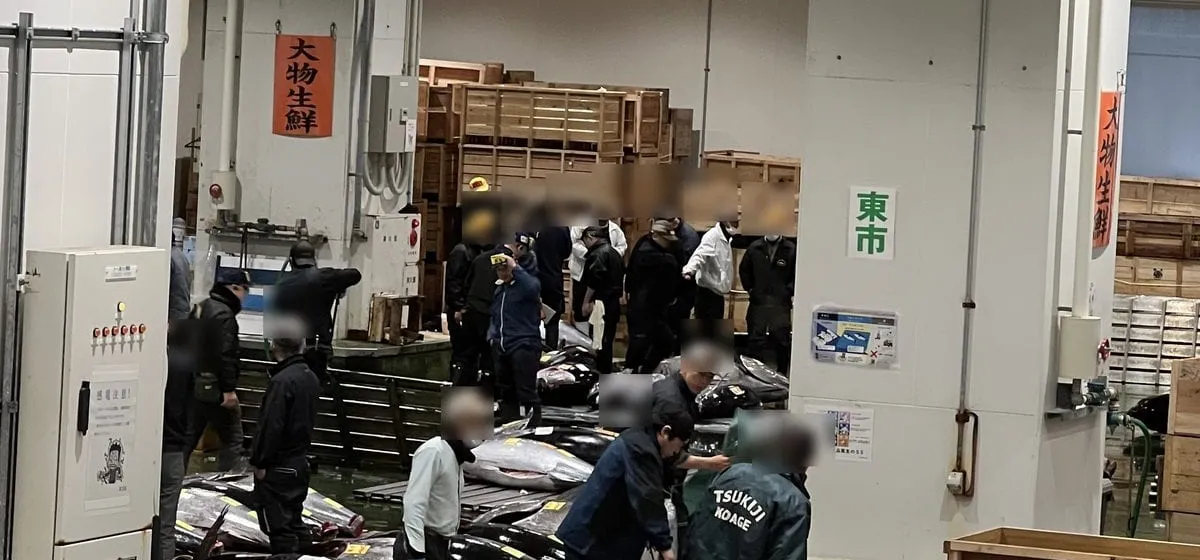
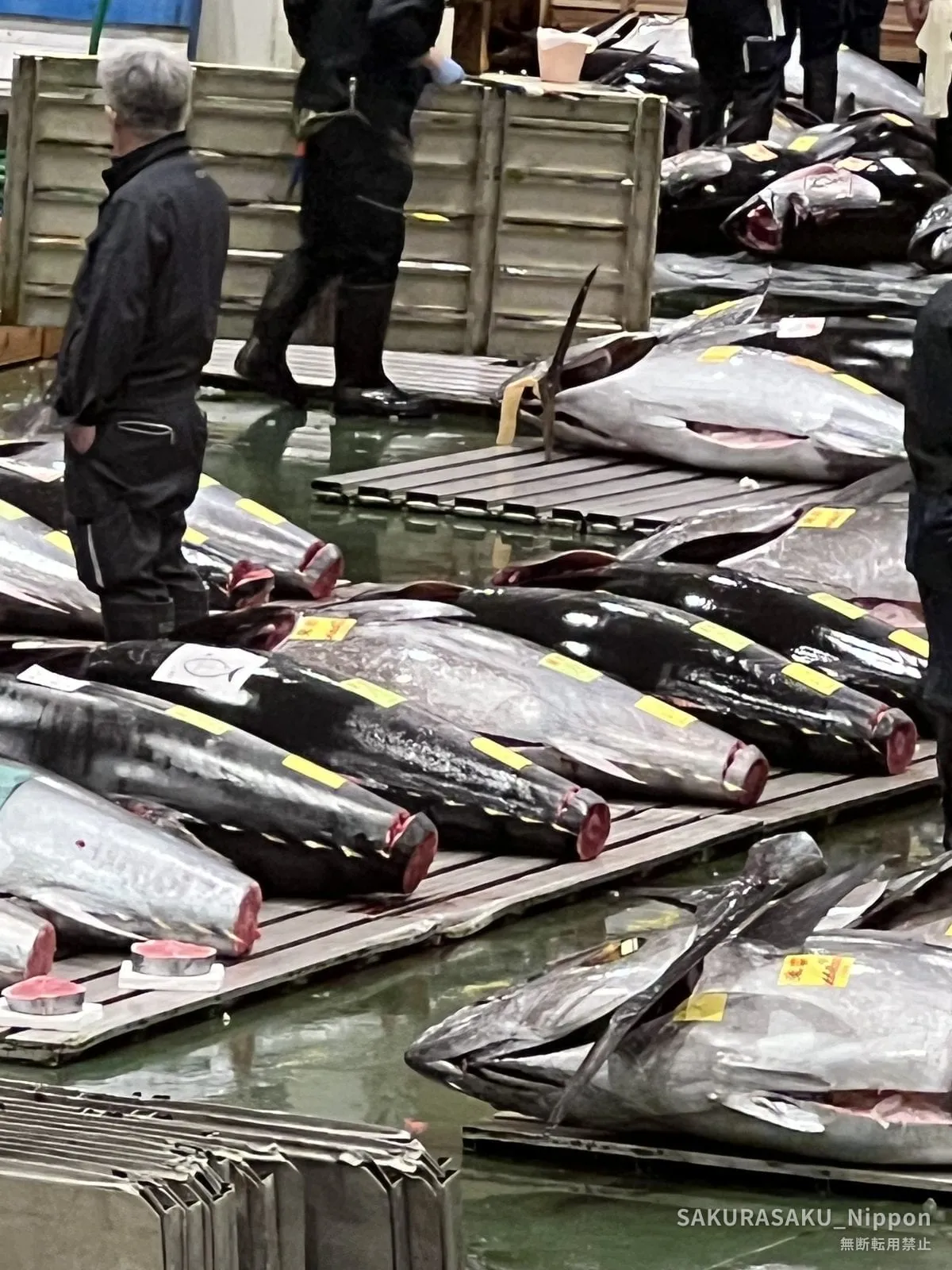
Before dawn, in a hall the size of a small airport, close to a thousand tuna lie in rows on a green floor. A bell rings at half past five. Five auctioneers begin at once, in a chant that has no equivalent anywhere, and buyers answer with quick flicks of their fingers. Within minutes, fish worth more than a car have changed hands.
One hundred people a day are allowed to stand beside this — on a deck at floor level, no glass between you and the auction. It costs nothing. But you cannot simply turn up: you must apply online the month before and win a lottery.
I would like to explain exactly how that works, because the process trips up a great many visitors. And if you do not win, there is a second way in that almost nobody talks about.
Two Ways to See the Tuna Auction
This is the single most confusing thing about Toyosu Market, so let us settle it first.
| Observation deck | Visitor walkway | |
|---|---|---|
| Booking | Lottery, apply the month before | None needed |
| Cost | Free | Free |
| Where | Ground level, beside the auction | One floor above, behind glass |
| Time | 5:45–6:25 am | Market opens 5:00 am |
| Capacity | 100 people per day | Open to all |
Both are free. The deck is the close one, and it is the one that requires the lottery. The walkway above is always open, needs no application at all, and is a genuinely good experience in its own right.
Applying for the Deck (The Lottery)
Applications open on the official lottery site, which has an English version.
🔗 Toyosu Market Tuna Auction Lottery — official application site
The rhythm is monthly. Roughly at the start of each month, the dates for the following month open for application, the window stays open for about a week, and the results are published about a week after that. For example, the application window for September 2026 viewing ran from 5 to 12 August, with results on 20 August.
What to know before you apply:
- It is a draw, not first-come-first-served. Applying in the first minute gains you nothing.
- One application per group. You may name up to five people, and every person counts — including a baby.
- One email address, one entry. Re-entering under a friend’s name is not permitted.
- You may list up to three preferred dates. You will be offered one of them, if any.
- The lead applicant must be junior-high-school age or older.
- Keep the password you set. You will need it to check the result.
Only winners are emailed — and the market says plainly that mail is not resent, so check the results page yourself on the announcement date rather than waiting for a message that may have gone to spam.
On the Morning Itself
Meeting time is 5:30 am at the PR Corner, on the 3rd floor of the Management Facilities Building in Block 7. From Shijo-mae Station, cross on the pedestrian deck, enter the Management Facilities Building on the 3rd floor, turn right and walk straight ahead.
Bring two things for every person in your party, children included:
- The winning notification (on your phone screen or printed)
- Photo ID — passport, driving licence, student card. For primary-school children without photo ID, a health insurance card is accepted.
Identity is checked for everyone. This is not a formality: it exists to stop the resale of viewing slots, and if you cannot be identified, you will not be admitted. Groups move from the PR Corner to the deck together, so arriving late means missing it entirely.
On the deck you view in turns, group by group, from 5:45 to 6:25. Photographs are allowed; flash is not. Anyone visibly drunk will be turned away.
Getting There Is the Hard Part
Here is the detail that catches people out, and I would rather you heard it from me than at 5:20 in the morning.
The first Yurikamome train does not comfortably get you there for a 5:30 meeting. The earliest departures from Shimbashi are around 5:45 — after the meeting time has passed. Please do not plan your morning around it.
Realistic options:
- Taxi. The most reliable, and what most winners end up doing. From central Tokyo, allow 20–30 minutes.
- Toyosu Station on the Yūrakuchō Line, then roughly 20 minutes on foot. Check the first train for your line and give yourself a wide margin.
- Stay nearby. There are hotels within a few minutes’ walk of the market. For a 5:30 start, this is not an extravagance — it is the calm option.
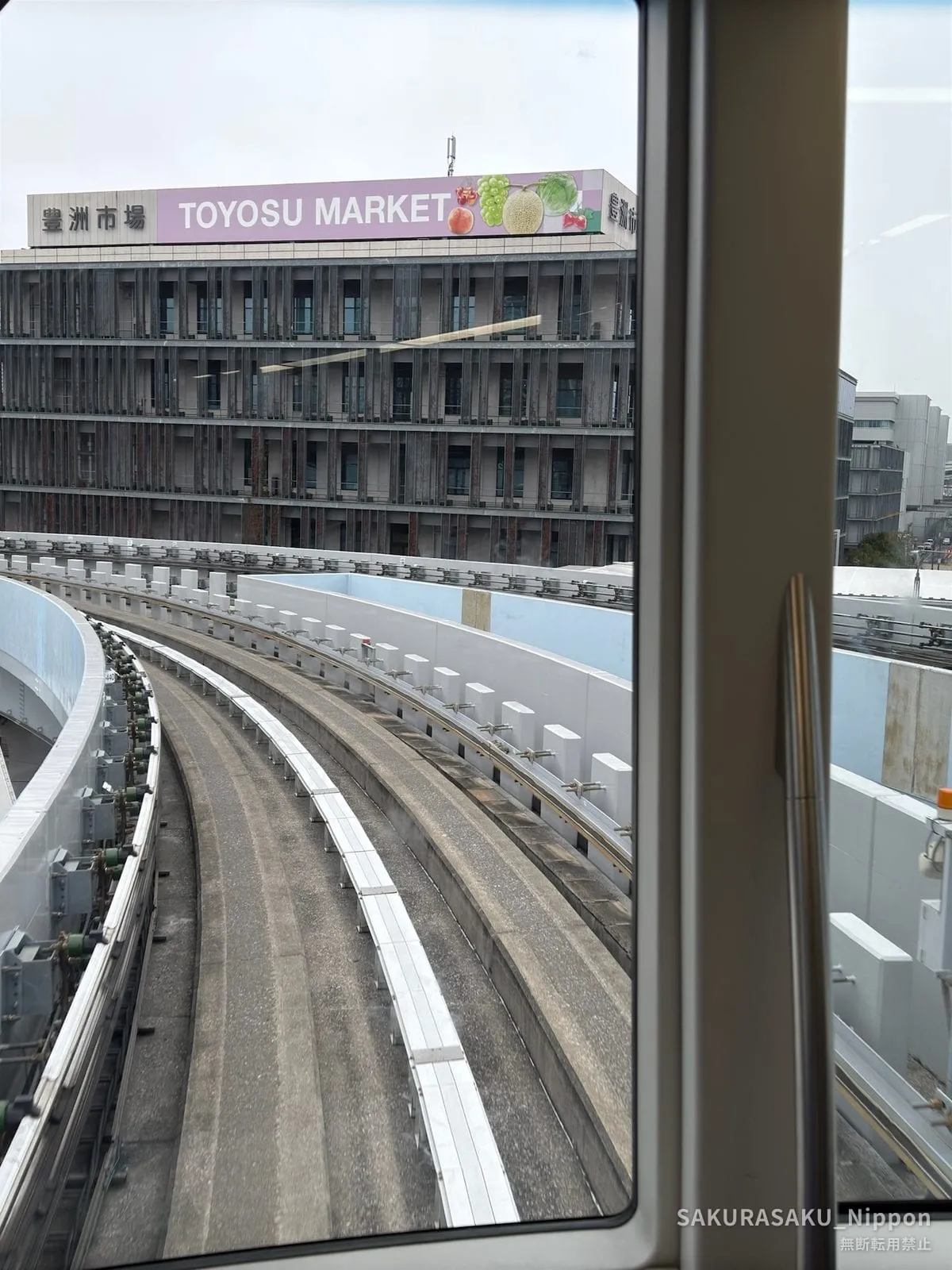
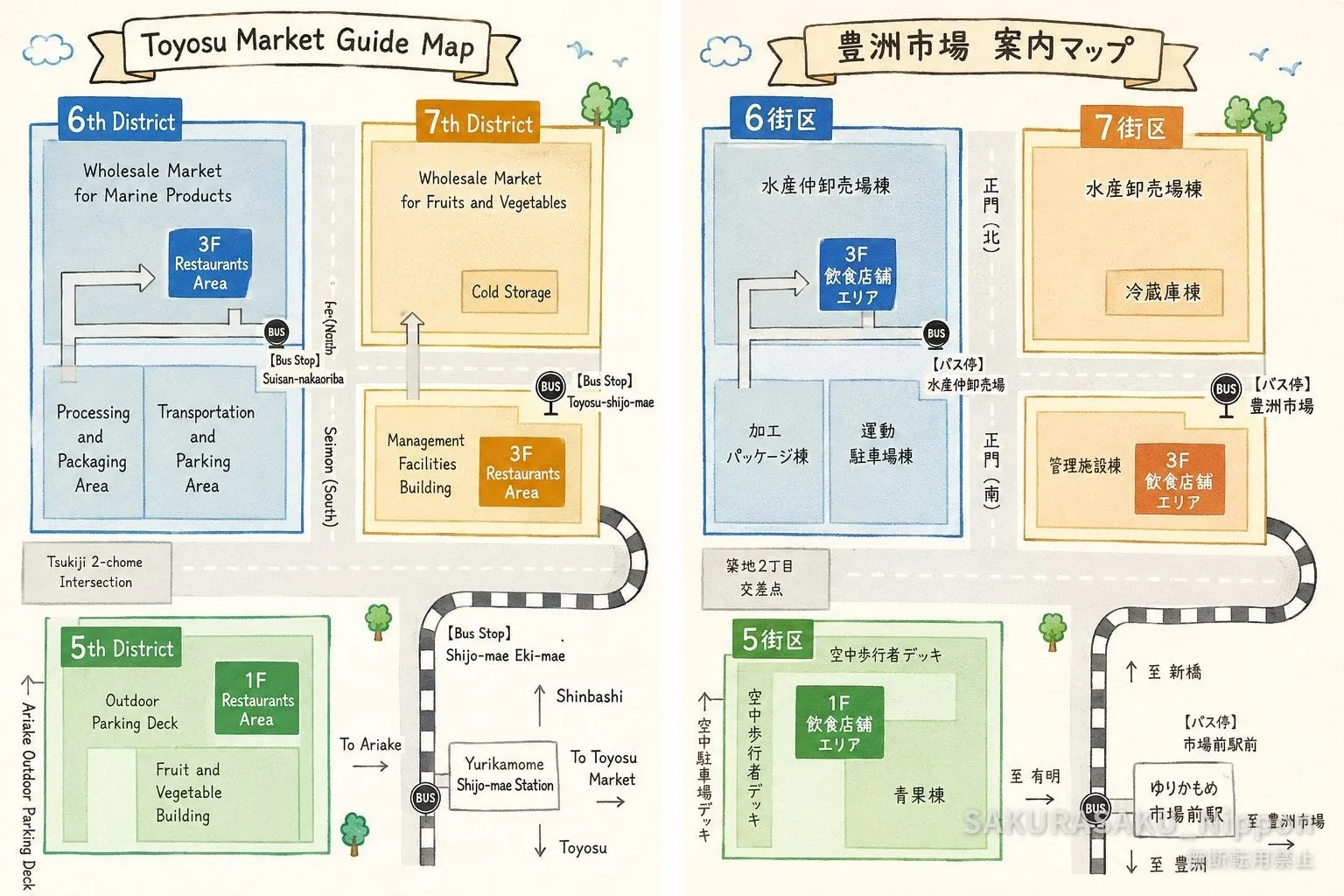
The market is very large and the visitor entrances are not obvious. Please look at the map before you travel, and save it to your phone. In the dark, with no signage in your line of sight, “the building next to the station” is not enough to go on. Staff are posted along the visitor route and some can help in English.
Please Treat It as a Workplace
Toyosu is not an attraction that opens for visitors. It is the wholesale market that supplies much of Tokyo’s fish, and the people you are watching are at work, on the busiest half-hour of their day. The viewing is free because the market is not selling you anything.
That distinction is worth carrying with you:
- Keep your voice down, especially on the deck. Auctioneers and buyers are listening for numbers.
- No flash photography. It interferes with people judging fish.
- Follow the marshals’ instructions. Visitors who disturb others are removed from the deck.
- Stay on the visitor route. The ground-floor market floor is closed to sightseers and guarded — only buyers may enter. This is not unfriendliness; a sightseer among the turret trucks is a genuine hazard.
- No eating or drinking in the corridors, including on the benches. There is no smoking area for visitors.
The market has opened this up voluntarily. It could close it again just as easily, and markets elsewhere have done exactly that. Please help it stay open.
If You Do Not Win
Do not cancel your morning. The visitor walkway on the floor above needs no booking at all.
The market opens at 5:00 am. From the walkway you look down over the green floor of the large-fish hall, and between 5:30 and 6:30 the auction’s live audio is piped through — the bell, the auctioneers’ chant, the whole hour of it. Honestly, the fresh-tuna auction is hard to see from up there; what you get a clear view of is the frozen tuna auction, which is the larger half of the sale, roughly a thousand fish to the fresh tuna’s two hundred.
Along the walkway there are panels explaining the hand signals buyers use to bid, and the market’s history back to the Edo period. There is also an enormous replica of the largest bluefin ever landed at Tsukiji, which is the market’s most photographed object.
Then walk over to Block 6, where two real turret trucks are parked for visitors to look at, and up to the rooftop garden in Block 6 — on a clear morning you can see Mount Fuji from it.
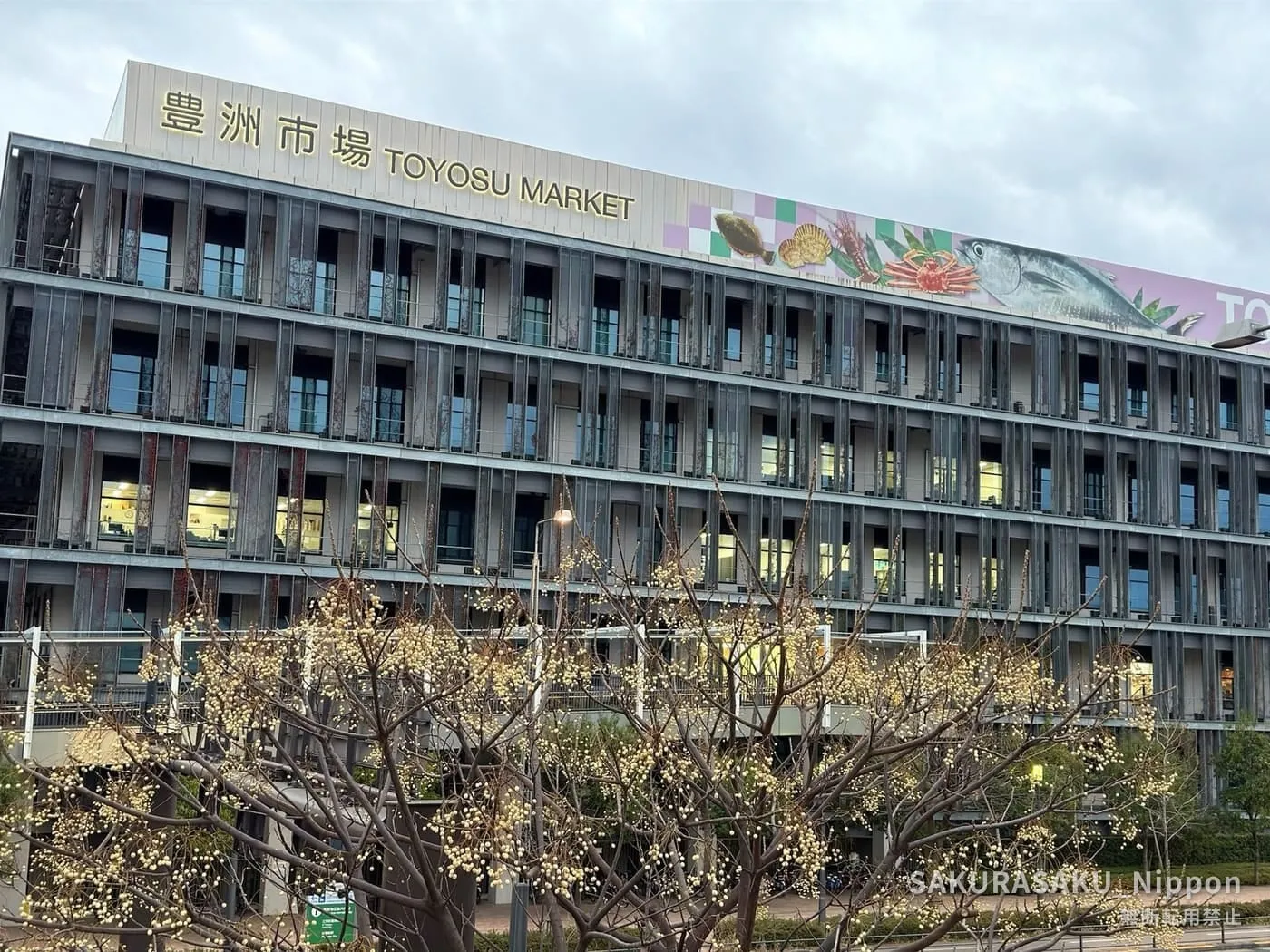
There is also the option of being shown round. Guided tours cover Toyosu and Tsukiji together, with the auction viewing and a seafood breakfast in the outer market. This is not the lottery deck — a tour does not get you onto it — but having someone walk you through an unfamiliar market in the dark, in a language you read, is worth something on its own.

The photo on the tour listing is Toyosu Senkyaku Banrai, the dining complex next door to the market. Most of its shops and restaurants open at 10:00 (a few on the second floor from 9:00), so this is the market district later in the morning — not the auction floor at five.
One Thing to Take Home
Photography is limited and the auction is over in forty minutes, so the market is a difficult place to keep hold of. These two are the exceptions.
Toyosu opened in 2018, when Tsukiji’s inner market closed after eighty-three years. Tsukiji Shijō no Hitobito (「築地市場の人々 最後の二年間を撮る」) is a large-format photo book by Tomokazu Yamashita, published by Kokusho Kankōkai in 2022. He spent the market’s final two years photographing the people in it — the auctioneers, the buyers, the men with the hooks — rather than the fish.
If you have stood on the deck at Toyosu, the faces in it are recognisably the same faces. It is 184 pages, A4 size — a photographic record, so it reads the same in any language. The captions and afterword are in Japanese, but they are not what you buy it for.

The People of Tsukiji: Photographing the Last Two Years — Tomokazu Yamashita (text in Japanese)
View The People of Tsukiji photobook on Amazon.jp
View The People of Tsukiji photobook on Rakuten Books (Japanese site)
This one ships outside Japan. Amazon.jp will send it overseas; the international postage is shown at checkout, and your own country may add customs charges.
Price and stock may change. Figures are from the time of writing.
→ More on this photobook in a separate article.
Practical Info
- Name: Toyosu Market (Tokyo Metropolitan Central Wholesale Market)
- Address: 6-6-1 Toyosu, Kōtō, Tokyo
- Nearest station: Shijo-mae Station, Yurikamome Line (about 5 minutes on foot)
- Open: 5:00 am – 5:00 pm
- Closed: Sundays, public holidays, and most Wednesdays — please check the market calendar before you go
- Auction deck: Lottery only, 5:30 am meeting, 5:45–6:25 viewing, free
- Visitor walkway: No booking, free, live auction audio 5:30–6:30 am
- Admission: Free throughout
Afterwards
You will be finished by half past six with the whole morning ahead of you, which is a slightly strange feeling. The obvious answer is breakfast — the market’s own restaurant floors open early, and I have written separately about where to eat at Toyosu Market, and what to avoid.
If you would rather keep moving, teamLab Planets is one station away at Shin-Toyosu, and its first slot of the day is the quietest.
Note: Application windows, viewing times and market closing days change. Please check the official lottery site and the market calendar before making plans.
Affiliate note: This article contains Amazon, Rakuten and Klook affiliate links. As an Amazon Associate, we earn from qualifying purchases at no extra cost to you.