Restaurant SAKAKI: A Michelin-Listed Kitchen Where Lunch Is a Hamburger Steak
Kyobashi is the block most visitors walk through without noticing. Tokyo Station is one side of it, Ginza is the other, and almost nobody stops in the middle.
There is a restaurant here called SAKAKI whose dinner — French — is listed in the Michelin Guide Tokyo 2026 as a Selected Restaurant. On a weekday at half past eleven, there is a queue outside it, and most of the people in that queue are going to order a hamburger steak.
Both of those sentences are true at once, and that is the whole reason I would like to tell you about this place.
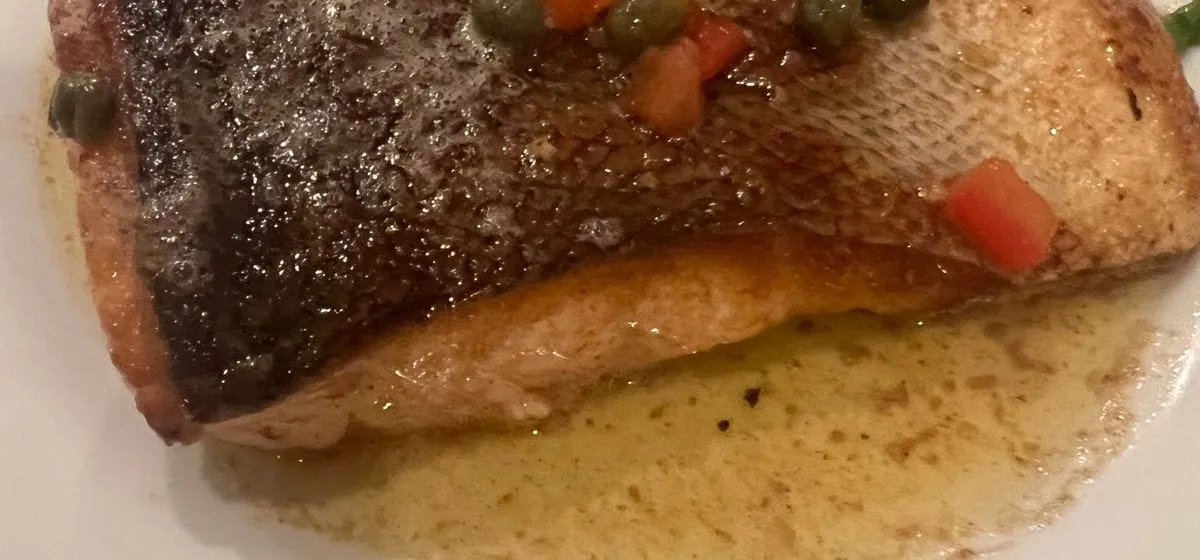
![Pan-seared fish with tomato, olive and caper sauce on a plate marked R[S] Restaurant SAKAKI](/_astro/kyobashi-sakaki-hero.DTLE5Z36_Avd5D.webp)
Two Restaurants, One Kitchen
Japan has a category of cooking called yōshoku — Western food, adopted in the Meiji period and then quietly made Japanese over a hundred and fifty years. Hamburger steak, crab croquettes, hayashi rice, fried prawns. It is not French, and it is not an imitation of French. It is its own thing, and it is what Japanese people mean when they say they are having “Western food” at home.
SAKAKI does both, and it separates them by the clock:
| Weekday lunch | Saturday lunch | Dinner | |
|---|---|---|---|
| What | Yōshoku set menu | French course | French, à la carte and course |
| Booking | None — you queue | Reservation only | Recommended |
| Hours | 11:30–13:30 (last order) | Same | 18:00–20:30 (last order) |
Please read that middle column twice. If you turn up on a Saturday hoping for the relaxed weekday lunch, you will find a reservation-only French course instead, and you will not get in. This catches people out. Come on a weekday for yōshoku.
Closed Sundays and public holidays.
The Queue, and the One Rule
A line forms at lunchtime. It moves quickly, because the dining room is genuinely large — this is not a six-seat counter — but it forms.
The restaurant states one rule plainly on its own website, and I want to pass it on because breaking it by accident would be an unpleasant way to start a meal:
You may not hold a place for someone who has not arrived. Not inside the restaurant, and not outside it. Whatever the reason, your whole party must be together before you join the queue.
That is not unfriendliness. In a lunch service with a line down the pavement, one person standing in for four is the difference between a fair queue and a resented one. Meet your friend at the station exit, then walk over together.
If you would rather not queue at all, arrive a little before opening.
What I Ate
I began with fresh oysters and a small glass of beer, before the meal proper. There are worse ways to spend a Tuesday.
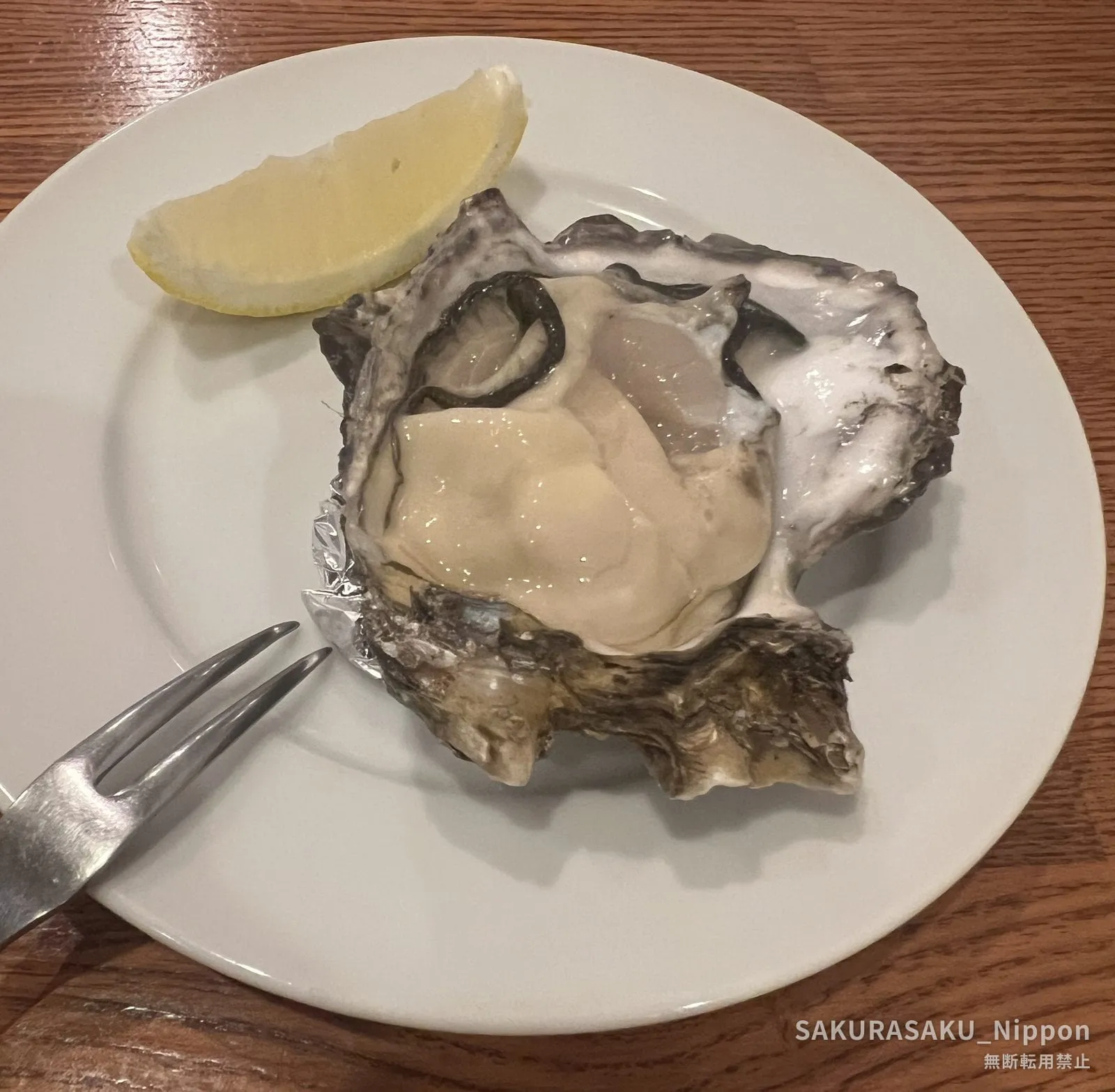
I would like to say something about raw oysters in Japan, because it is a fair thing to be cautious about in a country whose food rules you do not know.
In Japan, oysters are sold under two legally distinct designations: nama-shoku-yō (for eating raw) and kanetsu-yō (for cooking). They are not the same product graded differently — they come from separately controlled waters, with sanitation requirements attached, and a restaurant serving raw oysters is serving the raw-designated kind. It is a genuinely well-run system, and it is the reason raw oysters are ordinary here rather than daring.
I should still be straight with you: no designation makes raw shellfish risk-free anywhere in the world, and norovirus season in Japan runs through the winter. If you are pregnant, elderly, or have a condition that affects your immune system, the cooked oysters on the same menu are the sensible order. For everybody else, this is a reasonable thing to enjoy.
For the main I had the hamburger steak — the yōshoku benchmark, and a fair test of any kitchen that claims the style. Demi-glace, a mound of leaves, and no decoration anywhere.
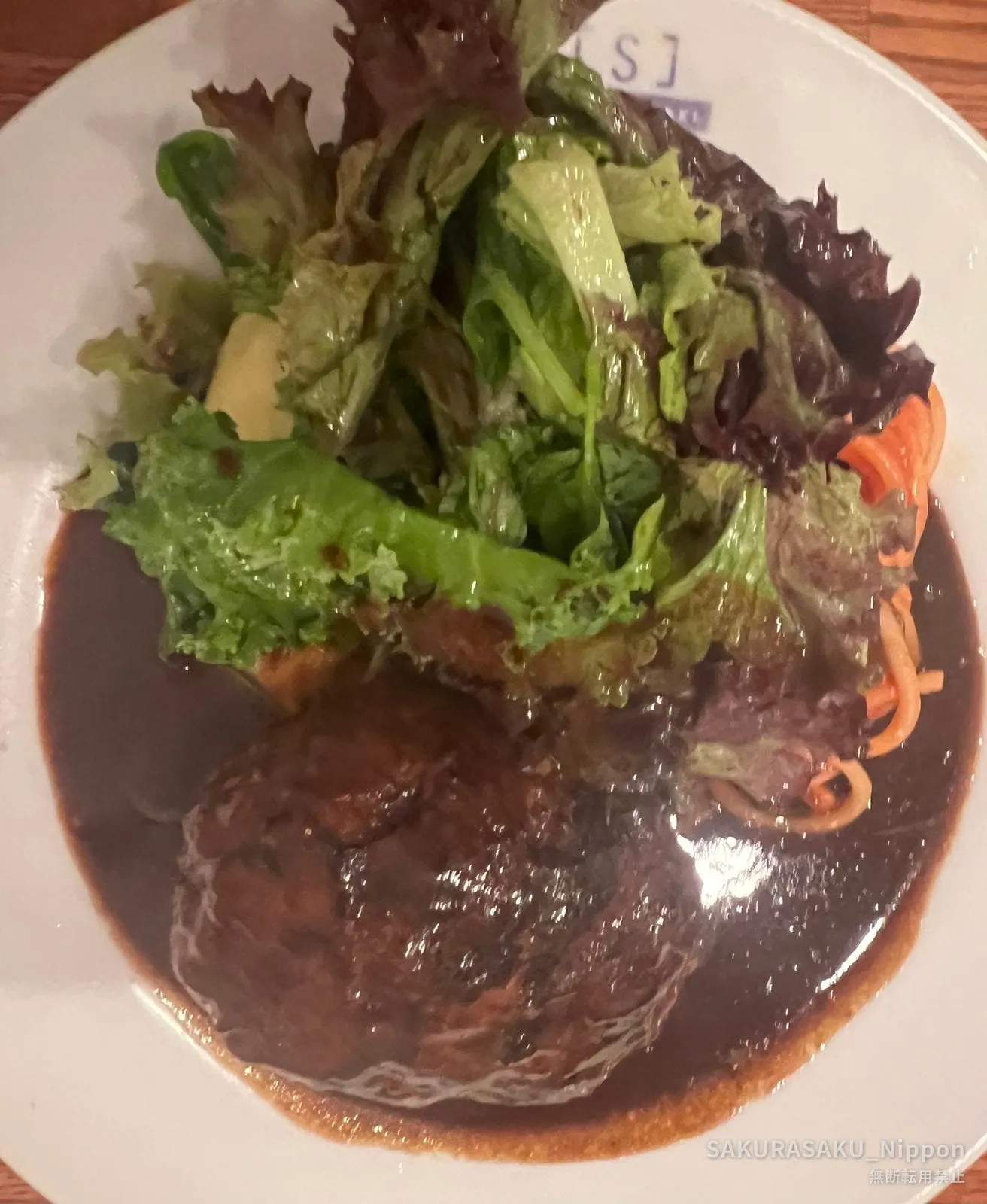
This is the thing I keep coming back to. The kitchen that made this is the kitchen whose dinner is in the Michelin guide. Nothing has been dumbed down for the lunch service; it has simply been asked to do a different job.
The pan-seared fish at the top of this article — a fillet with tomato, olive and caper — is the same hand in its French register.
Practical Information
- Name: Restaurant SAKAKI (レストラン サカキ)
- Address: Sakaki Building 1F, 2-12-12 Kyobashi, Chūō-ku, Tokyo
- Telephone: 03-3561-9676
- Nearest stations: Kyobashi (Tokyo Metro Ginza Line), Exit 4 · Takaracho (Toei Asakusa Line), Exits A5 / A6
- Lunch: 11:30–13:30 (last order) — yōshoku set, weekdays only
- Saturday lunch: French course, reservation only
- Dinner: 18:00–20:30 (last order)
- Closed: Sundays and public holidays
- In the guide: Michelin Guide Tokyo 2026 — Selected Restaurant, French (dinner)
- Queue rule: your entire party must be present before joining the line
One more thing to check: the restaurant takes a summer break in mid-August, and it opens reservations for a given month on the 1st of the month two months before. Both are posted on its own site. Please look before you travel.
Something Sweet from Next Door
You are a few minutes from Ginza, and Ginza has a fruit shop that has been there since 1894.
Ginza Sembikiya is one of Japan’s old kudamono specialists — the kind of shop where a single melon is sold in a wooden box — and in 1913 it opened what is generally counted as the first fruit parlour in Japan. Its patisserie arm makes something far more suitcase-friendly than a melon.
The Ginza Fruit Kuchen is a two-layered baked sponge with fruit juice worked into the batter, in four pairings: strawberry and milk, lemon and honey, melon and milk, banana and chocolate. Each piece is individually wrapped, and — this is the part that matters for a traveller — it keeps for about 120 days at room temperature. No refrigeration, no rush home, no anxiety about the flight.
Ginza Sembikiya's fruit kuchen — individually wrapped, keeps around 120 days
View the Ginza Sembikiya fruit kuchen on Amazon.jpPlease note: box sizes vary, so check the count on the listing before you order. Amazon Japan can deliver to your hotel during your stay, but please confirm with the hotel first that they will accept parcels for guests. And on Amazon.co.jp, the English display toggle is at the top right of the screen.
A Bed Nearby
If you would like to be within walking distance of both Kyobashi and Ginza, Mitsui Garden Hotel Kyobashi is at 1-3-6 Kyobashi — 300 m from Kyobashi Station and about eight minutes on foot from Tokyo Station, which makes it an unusually good base if your trip includes day trips by Shinkansen.
One thing you must know before booking: this hotel does not accept children, and extra beds are not permitted. If you are travelling as a family, look elsewhere — I would rather you read that here than discover it at check-in.
If You Liked This Sort of Place
Two others in the same spirit.
Bistro Fève in Nishi-Ogikubo is the opposite scale — six tables, reservation essential, game meat and bread the owner bakes herself — but the same honesty about what it is.
And if the weekday-lunch principle appeals, Caretta Shiodome is the clearest example I know: restaurants 200 metres above Tokyo Bay where the weekday lunch sets are far better value than dinner, for exactly the same window.
If you are eating your way around fish instead, breakfast at Toyosu Market is the honest guide to what to order there — and what not to.
Who Is This For?
Anyone who would rather eat well than eat famously. Anyone curious about yōshoku, which is one of the most Japanese things on any menu despite its name. And anyone who likes the idea of a Michelin-listed kitchen that spends its weekday lunchtimes making hamburger steak for office workers, and does not appear to find that a contradiction.
Note: Hours, closing days, seasonal breaks and the reservation calendar change. Please check the restaurant’s official site before visiting.
Affiliate note: This article contains Amazon and Klook affiliate links. As an affiliate, we may earn from qualifying purchases at no extra cost to you.