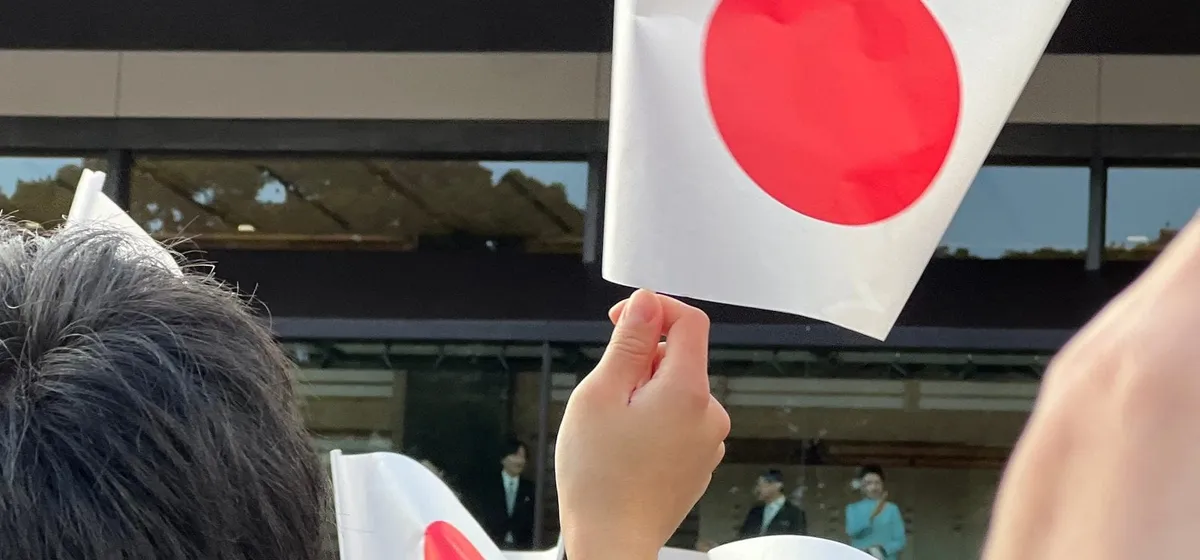
The New Year Greeting at the Imperial Palace: Japan's Ippan Sanga
For most of the year, the inner grounds of the Imperial Palace in Tokyo are closed. On 2 January, they are not. On that one morning the great gate opens, and anyone at all — Japanese or foreign, with no reservation and no ticket — may walk across the moat and into the courtyard, to see the Emperor and Empress appear on the balcony and offer their greeting for the new year.
It is called Ippan Sanga (一般参賀), and it is free.
A Very Full Week for the Emperor
In Japan, the first three days of January — shōgatsu san-ga-nichi — are the most important days of the year. For the Imperial Household they are also the busiest.
Around this public greeting sit a series of quiet Shintō rites: the ceremonies of purification on New Year’s Eve, the Shihōhai at dawn on the 1st, in which the Emperor prays toward the four directions for the peace of the nation and a good harvest, and further rites on the 3rd and 4th. The balcony appearance on the 2nd is the one part of that week the public is invited to share.
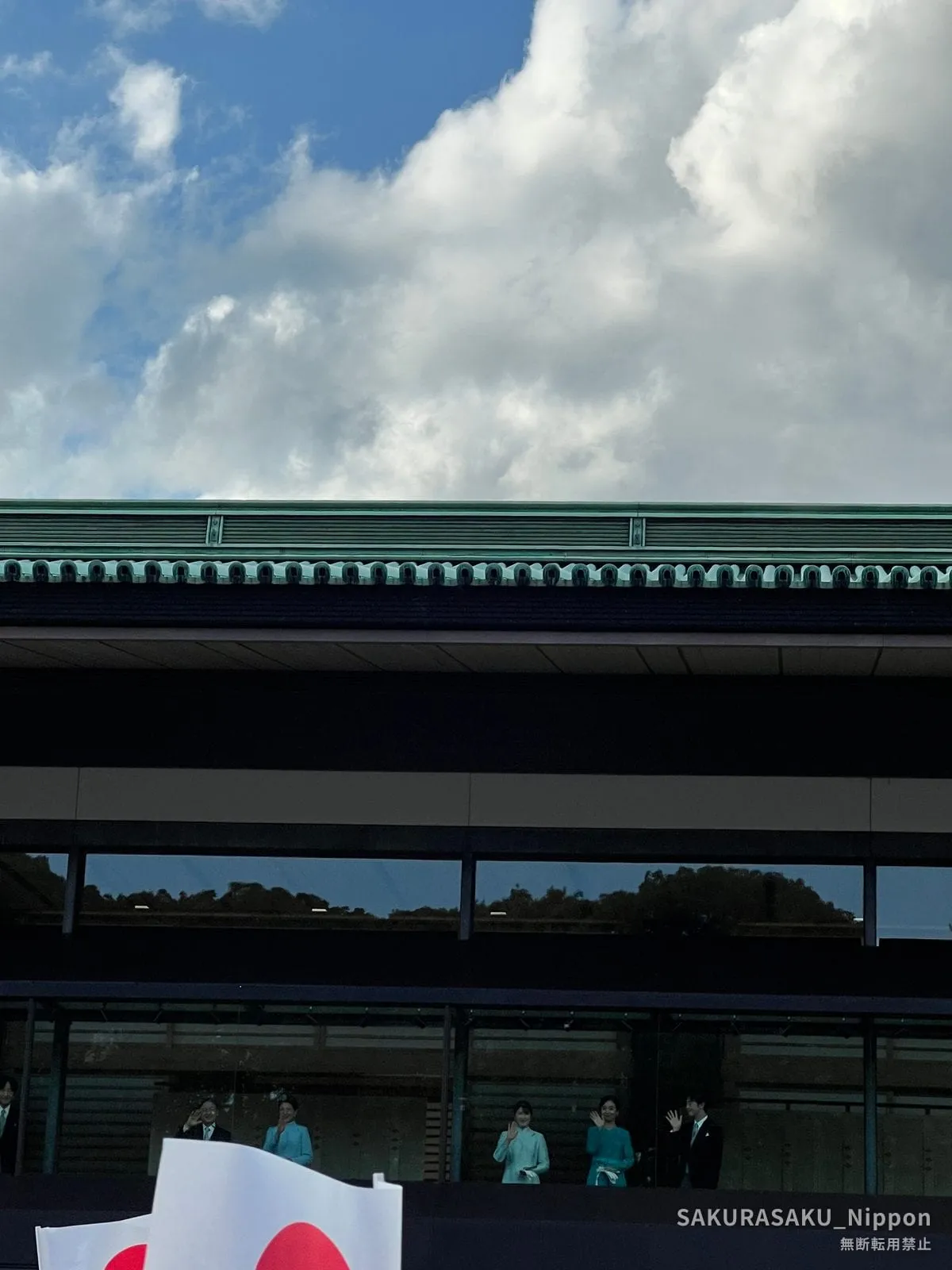
The custom began in 1948, and it has continued, with a few interruptions, ever since. In January 2026, 60,140 people came.
How the Day Runs
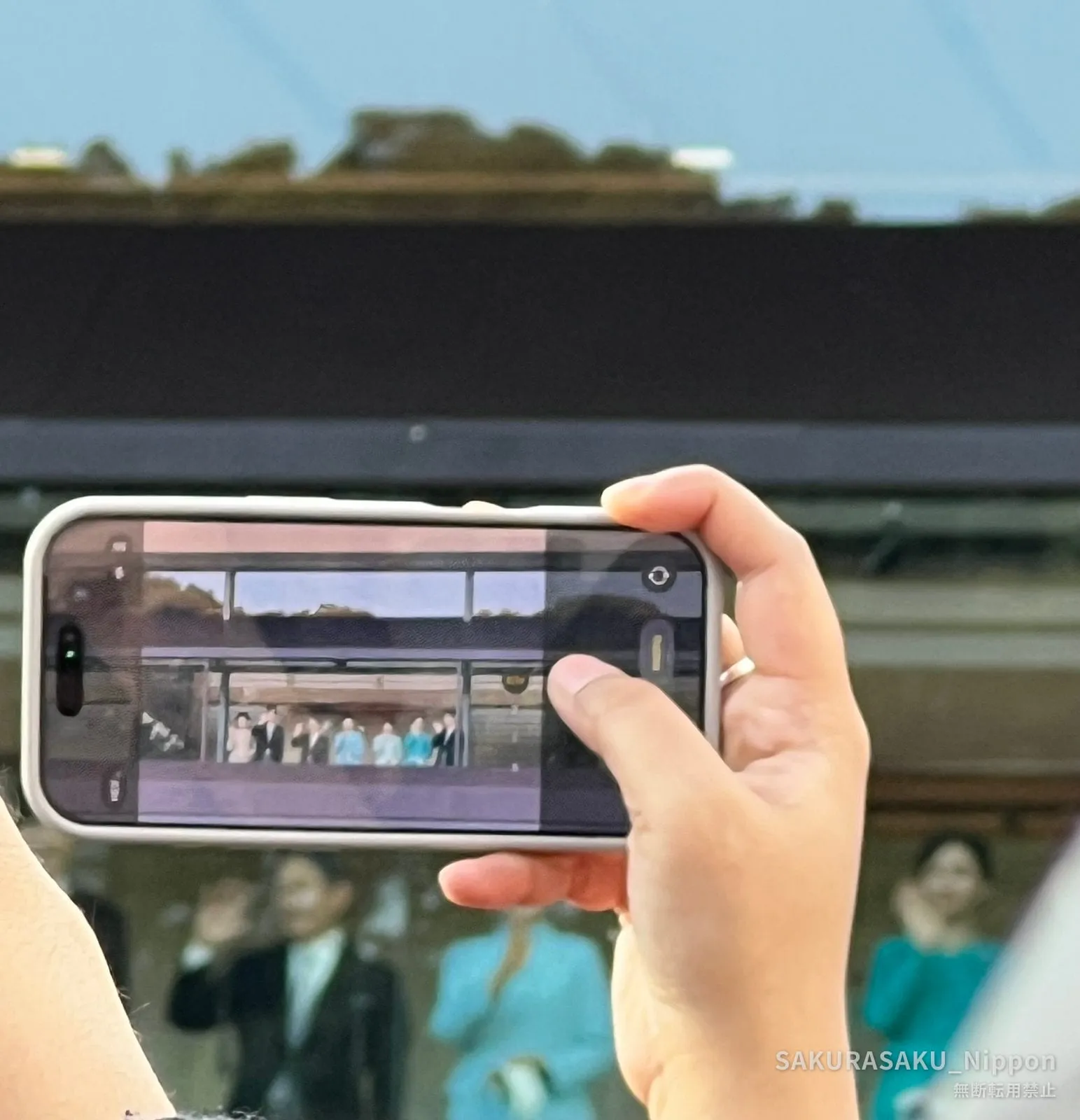
The Emperor and Empress come out onto the balcony of the Chōwaden hall about five times during the day. If a great many people have come, the Household Agency sometimes adds an extra appearance.
Approximate appearance times: 10:10 · 11:00 · 11:50 · 13:30 · 14:20
Entry: from 09:30 to 14:10 — and 14:10 is a hard close.
You do not choose a slot. You join the queue, pass security, and go in for whichever appearance you arrive for. Because everyone wants as many people as possible to get through the gate, visitors are asked to leave after the appearance they have seen, so the courtyard can be refilled for the next one.
Which Gate, and in Which Direction
This part is worth memorising, because the gates are one-way.
- Enter: the Main Gate (Seimon), by the famous Nijūbashi bridge — this is the only entrance.
- Exit: Sakashita-mon, Kikyō-mon, Ōte-mon, or Inui-mon.
You cannot enter through an exit gate. If you arrive at Ōte-mon expecting to go in, you will be sent all the way round.
The Paper Flag — and One Request
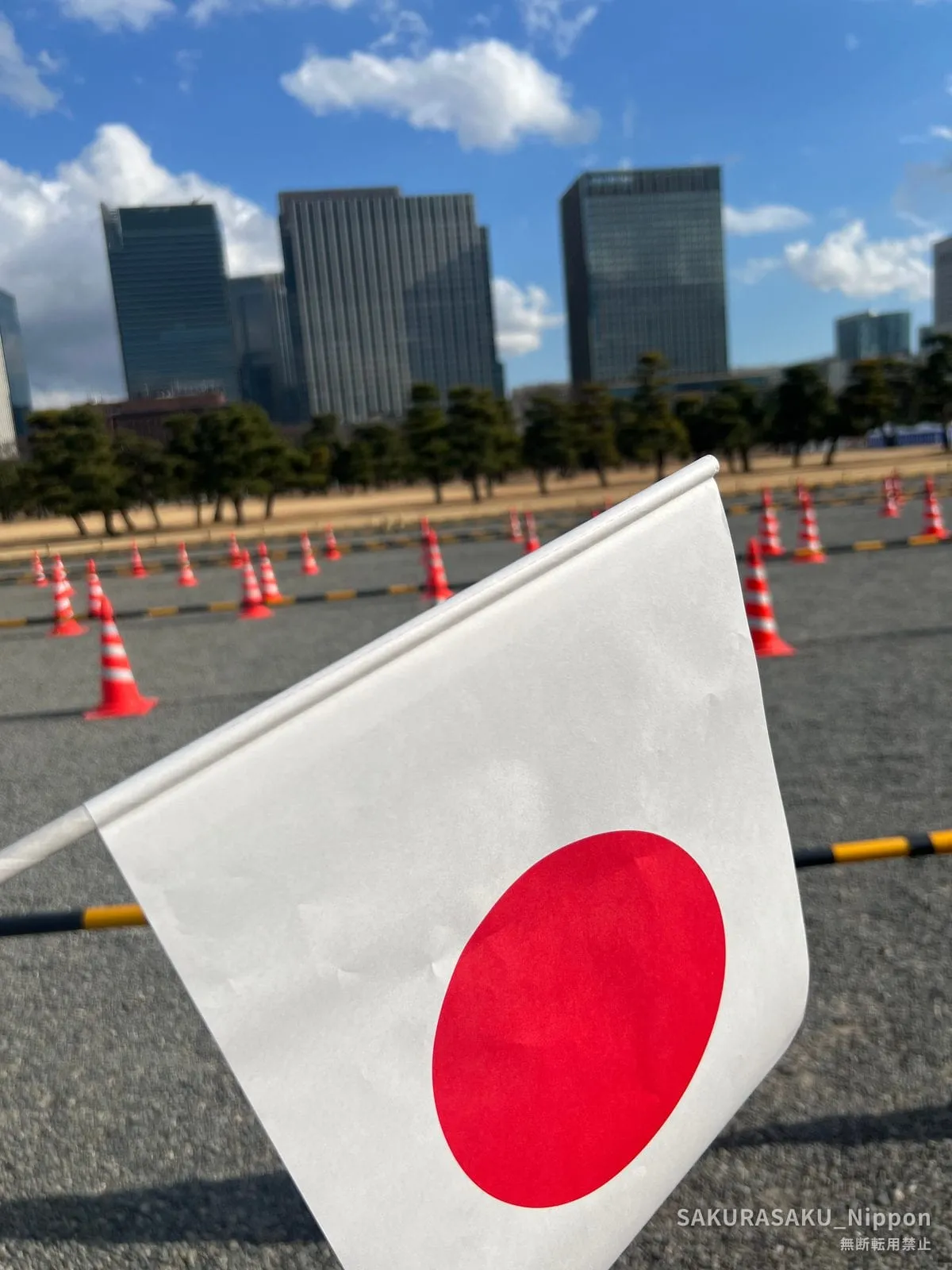
Near the Main Gate, volunteers hand out small paper Japanese flags, free of charge. You may take one. Almost everybody does, and the sight of sixty thousand of them moving together is the thing you will remember.
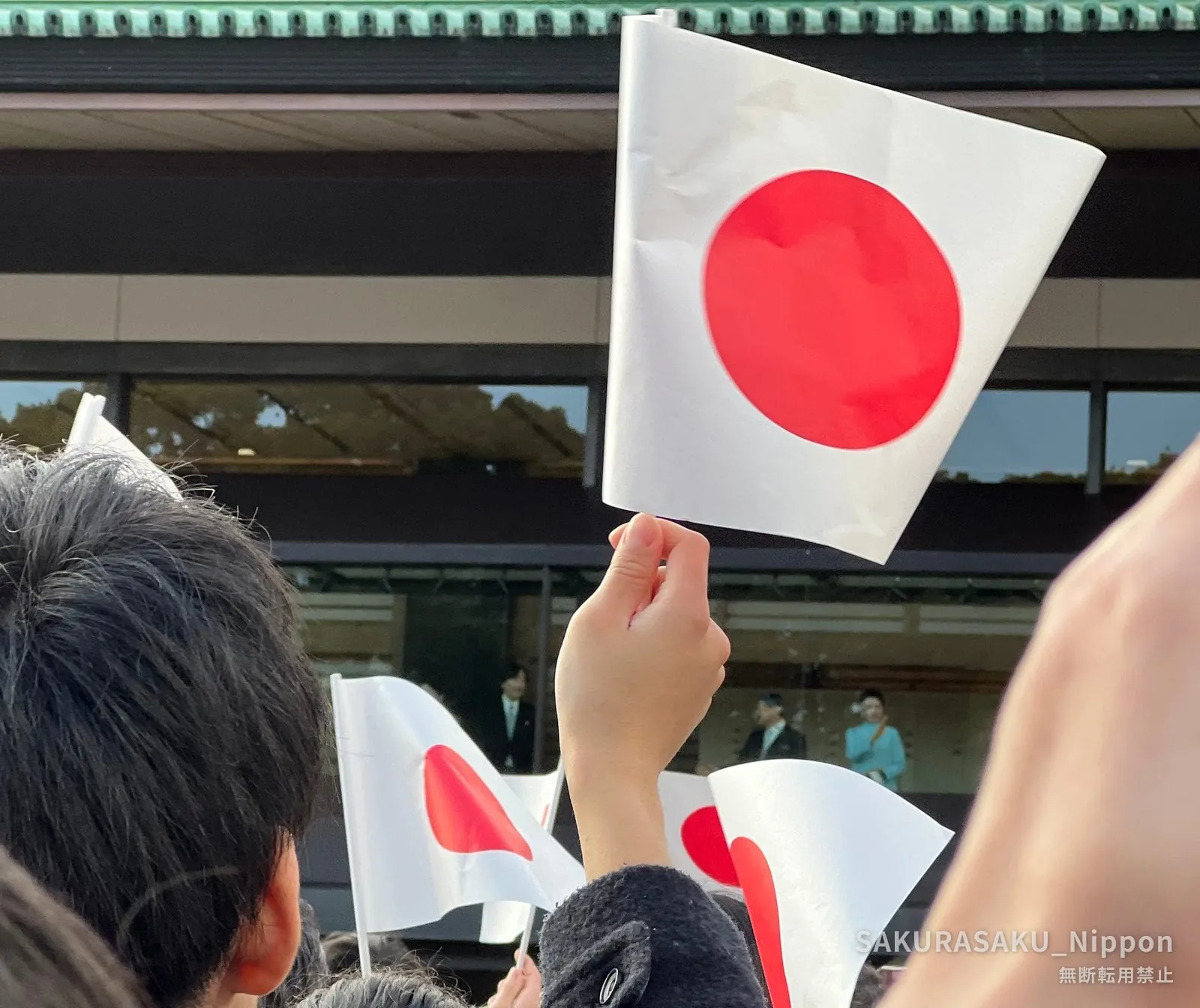
Afterwards, near the exit gates, you will find people collecting the flags for recycling — a quietly characteristic piece of Japanese housekeeping. You may hand yours back, or you may keep it as a memento. Either is perfectly fine.
There is one thing we would gently ask. Please do not drop the flag in the street. Take it home, or give it to the collectors — but not the pavement. Nobody wants to begin the year by seeing their country's flag lying in the road like litter.
Practical Notes
A few things that will make the day easier.
- Security is thorough. There are bag checks at the gate. Bring as little as possible. Leave suitcases and large bags at your hotel — most will hold luggage before check-in and after check-out — or in a station coin locker. Knives and scissors, even small legal ones, will slow your check down badly; simply do not bring them. Drones are prohibited outright.
- Mind your shoes. The palace plaza is deep gravel, and there are slopes inside. With a crowd this size, a fall is a real risk. High heels are a poor idea; so, if you are dressed formally, are geta.
- Keep the line. Queues form in front of the Main Gate before opening. Please do not break the line or stop walking within it, and do follow the staff directing the flow.
- Arrive early. The 14:10 closing is enforced, and security takes time.
It Can Be Cancelled
No booking is required — but the greeting can be called off for snow or severe weather. Please check the Imperial Household Agency’s website on the morning itself.
→ Imperial Household Agency — Ippan Sanga
Afterwards: A Little of That World to Take Home
The bonbonnière — the Imperial sweet box
Here is a small piece of Japanese court history that very few visitors know.
In the 1890s, as the Imperial Household began hosting Western-style banquets for foreign guests, it needed a parting gift. The answer was the bonbonnière — a tiny lidded box, small enough to sit in your palm, holding a few sweets. In Japan it came to be filled with konpeitō, the little star-shaped sugar crystals that are grown, grain by grain, over many days. Because that patient process was felt to resemble the raising of a child, konpeitō became a token of good fortune.
The bonbonnière has been part of Imperial celebrations ever since — a vessel in which happiness is said to live. They are still given at Japanese weddings today.
The lacquer house Yamada Heiando, known as a purveyor to the Imperial Household, makes them in traditional auspicious patterns: spring-and-autumn, pine-bamboo-plum, and the “many treasures” motif.
→ The full story: The bonbonnière — Japan’s Imperial sweet box
The same house also makes Hida Shunkei lacquerware — a clear amber finish that leaves the wood grain visible, and is meant to be used, not shelved.
→ More about it: Hida Shunkei lacquer: the bowl that shows its own wood grain
If you would like to understand the ceremonies
After a morning at the palace, you may find yourself wondering what the Shihōhai actually is, or why there is a rite on the 3rd as well. Zukai de Wakaru: Tennō to Kōshitsu Nyūmon by Osamu Ōsumi is a clear, well-organised introduction to the Emperor and the Imperial Household.
It is written in Japanese only — but it is a zukai book, built around diagrams, charts and family trees, so a good deal of the structure can be followed visually.
This one ships outside Japan. Amazon.jp will send it overseas; the international postage is shown at checkout, and your own country may add customs charges.
Ordering to your hotel. Amazon.co.jp will usually deliver to a Tokyo hotel — enter the hotel address, and your own name with the room number. Please ask the hotel first, as not every hotel accepts parcels for guests. If the Japanese site is hard going, the language switch is at the top right of the screen.
(Prices and availability change; the figures above were correct at the time of writing.)
Practical Information
- Event: New Year Ippan Sanga (新年一般参賀)
- When: 2 January, most years
- Cost: Free — no reservation, no ticket
- Entry: 09:30–14:10, through the Main Gate (Nijūbashi) only
- Appearances: about five, around 10:10 / 11:00 / 11:50 / 13:30 / 14:20
- Exit gates: Sakashita-mon, Kikyō-mon, Ōte-mon, Inui-mon
- Nearest stations: Tokyo, Nijūbashimae, Hibiya, Ōtemachi
- Official information: kunaicho.go.jp
Who Is This For?
Anyone in Tokyo at New Year who would like to see something that is genuinely, unmistakably Japanese — not a performance arranged for visitors, but a national moment that happens to be open to all. Come early, wear flat shoes, take a flag, and stand for a while among sixty thousand people who have all had the same idea.
Note: Times, gates and arrangements are announced each year and may change. Always check the Imperial Household Agency’s official notice before you go.
Affiliate note: This article contains Amazon affiliate links. As an Amazon Associate, we earn from qualifying purchases at no extra cost to you.