Shinjuku Underground: The City Beneath the World's Busiest Station
Guinness World Records recognises Shinjuku as the busiest railway station in the world: an average of 2,704,703 people a day in 2022, across the several companies that share it.
Most visitors experience this at street level, in the crush outside the East Exit. What they miss is that a large part of Shinjuku is not at street level at all.
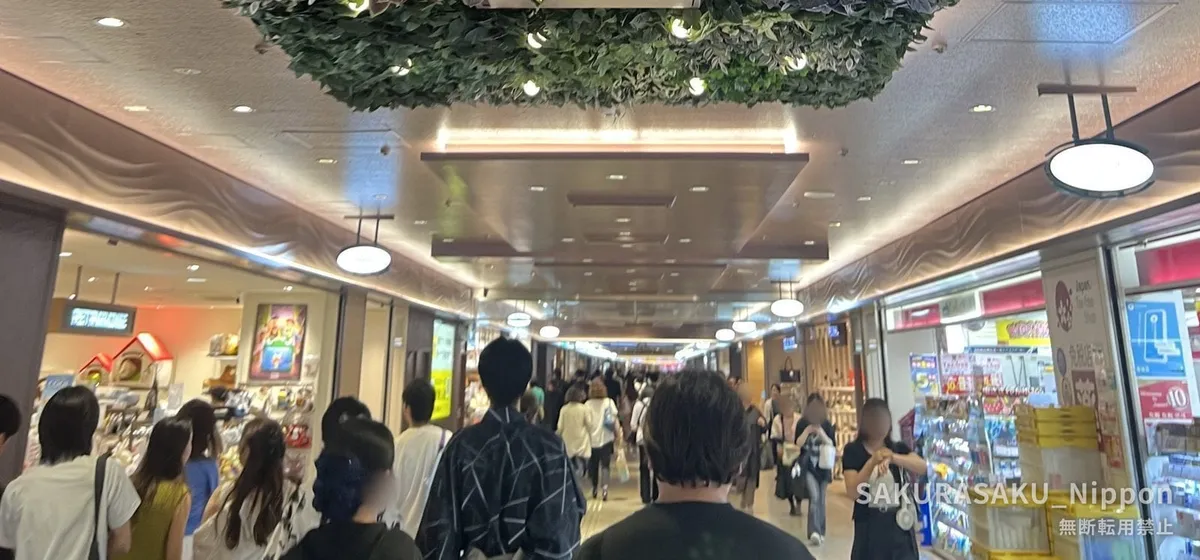
Underneath the station, and running out from it in several directions, there is a second Shinjuku — a network of lit passages, concourses and shopping streets that goes on for far longer than you expect. On a wet afternoon in June, or an airless one in August, it is the pleasant version of the district. It is air-conditioned, it is dry, and you can eat, shop and cross a considerable amount of ground without ever seeing the sky.
The honest reason I am writing this: I go down there often, and I almost never see visitors from abroad. That seems a waste of something Tokyo does unusually well.
An Anthill, Drawn as a Fantasy
Here is the shape of the thing, roughly — halls, passages, a central concourse, a lower level, and stairs up to plazas at four compass points.
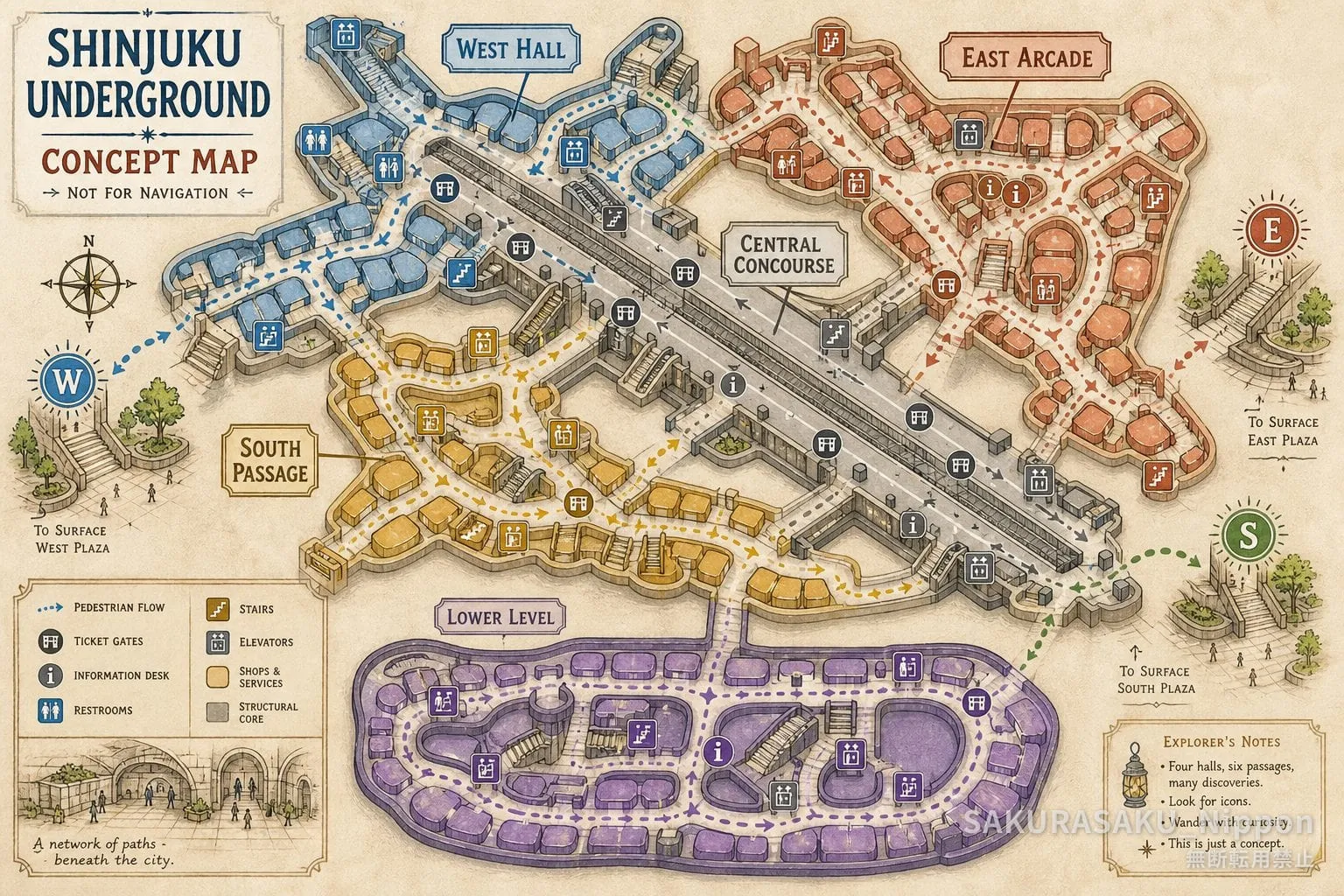
Please do not try to navigate with this. It is an illustration I had made to show the feeling of the place — an anthill of branching corridors — and it says so on the map itself. It is not a survey, the halls are invented, and none of it corresponds to real exits. The real maps are the ones printed on boards throughout the concourses, and on each railway company’s own station diagram.
I include it because the feeling is the part that is hard to convey. People who live here get turned around down there. I do, regularly, and I have lived in this city my whole adult life. That is not a failure of attention. It is a genuinely complicated piece of infrastructure, built in pieces across seventy years by different owners, and the confusion is structural.
Once you accept that, the whole place becomes much easier.
Subnade: The Part You Can Actually Learn
The easiest section to get to know is Shinjuku Subnade, which runs underneath Yasukuni-dōri on the Kabukichō side.
It opened on 15 September 1973 and has more than eighty shops on one long level — B1 is the shopping street, B2 is the car park. It is operated by Shinjuku Subnade Co., an affiliate of Isetan Mitsukoshi Holdings, which is why it feels less like a station passage and more like a department store that has been unrolled into a strip.
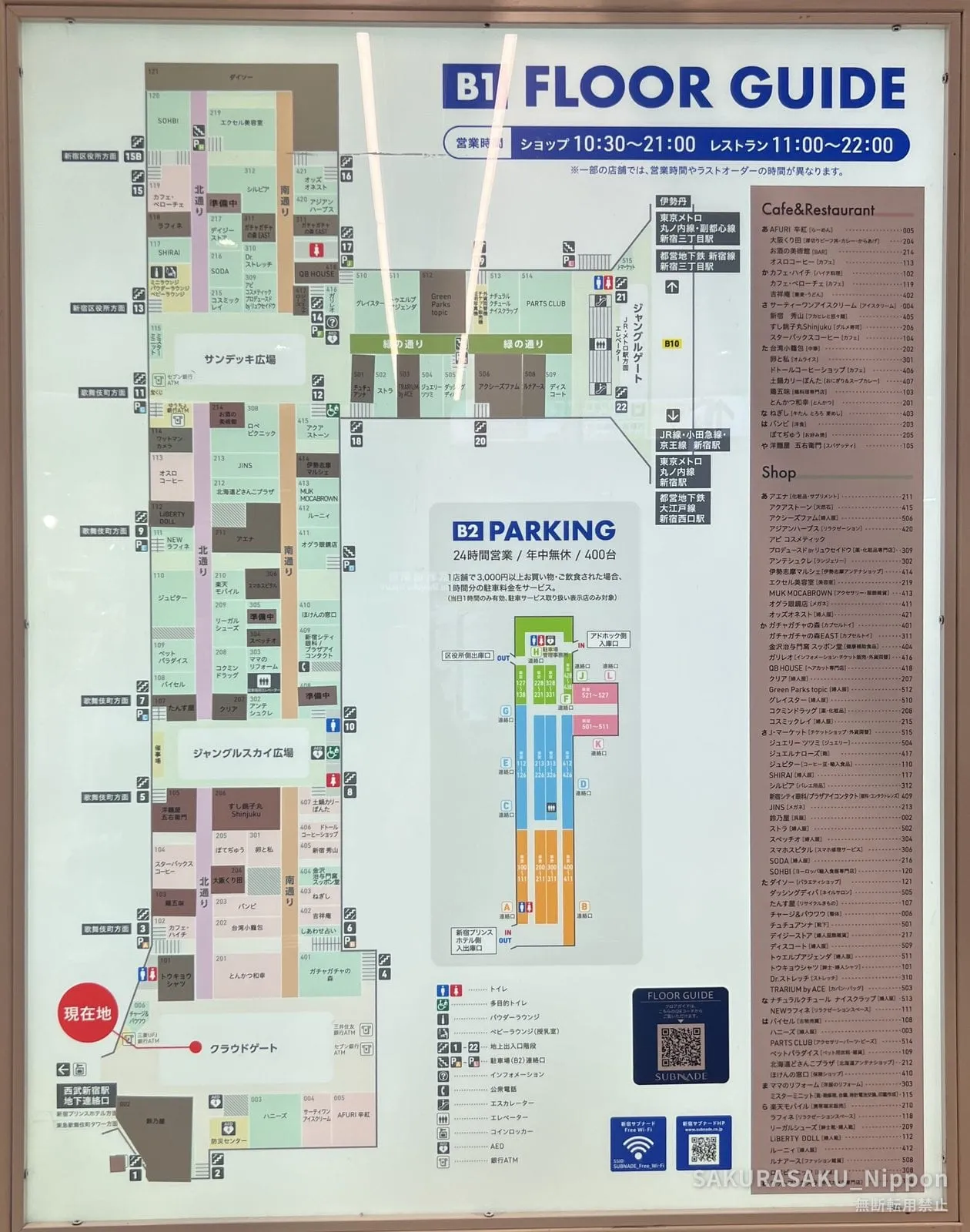
Inside, it is laid out as three parallel streets — Kita-dōri (north), Minami-dōri (south) and Midori-no-dōri (the “green street”) — joined by open squares with names like Sun Deck Plaza and Jungle Sky Plaza. Numbered stairways, 1 to 22, lead up to the surface.
Learn those three street names and you have solved most of Subnade. When a sign says Kita-dōri, it means the row you are standing in, not a district somewhere else.
At the north end it connects directly to Seibu-Shinjuku Station; at the south and east it feeds into the concourses for JR, Odakyu, Keio, the Marunouchi Line and, further along, Shinjuku-sanchōme. That is the practical value: Subnade is the underground bridge between Seibu-Shinjuku and everything else.
How to Read the Signs
This is the part worth actually reading, because it converts the whole network from intimidating to usable.
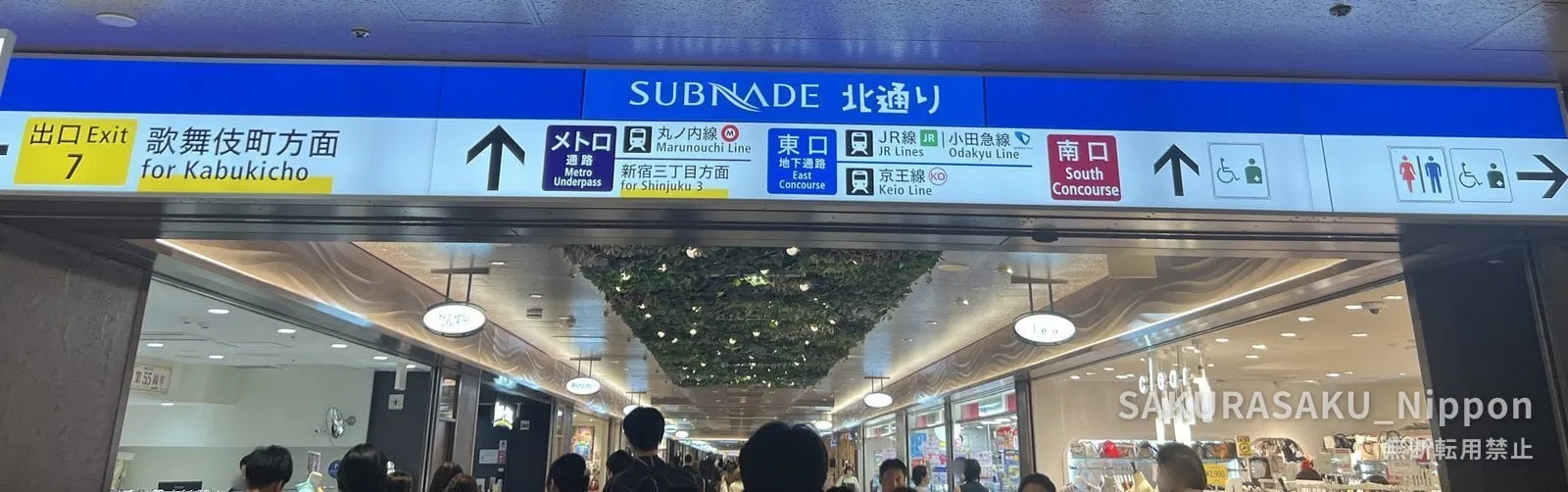
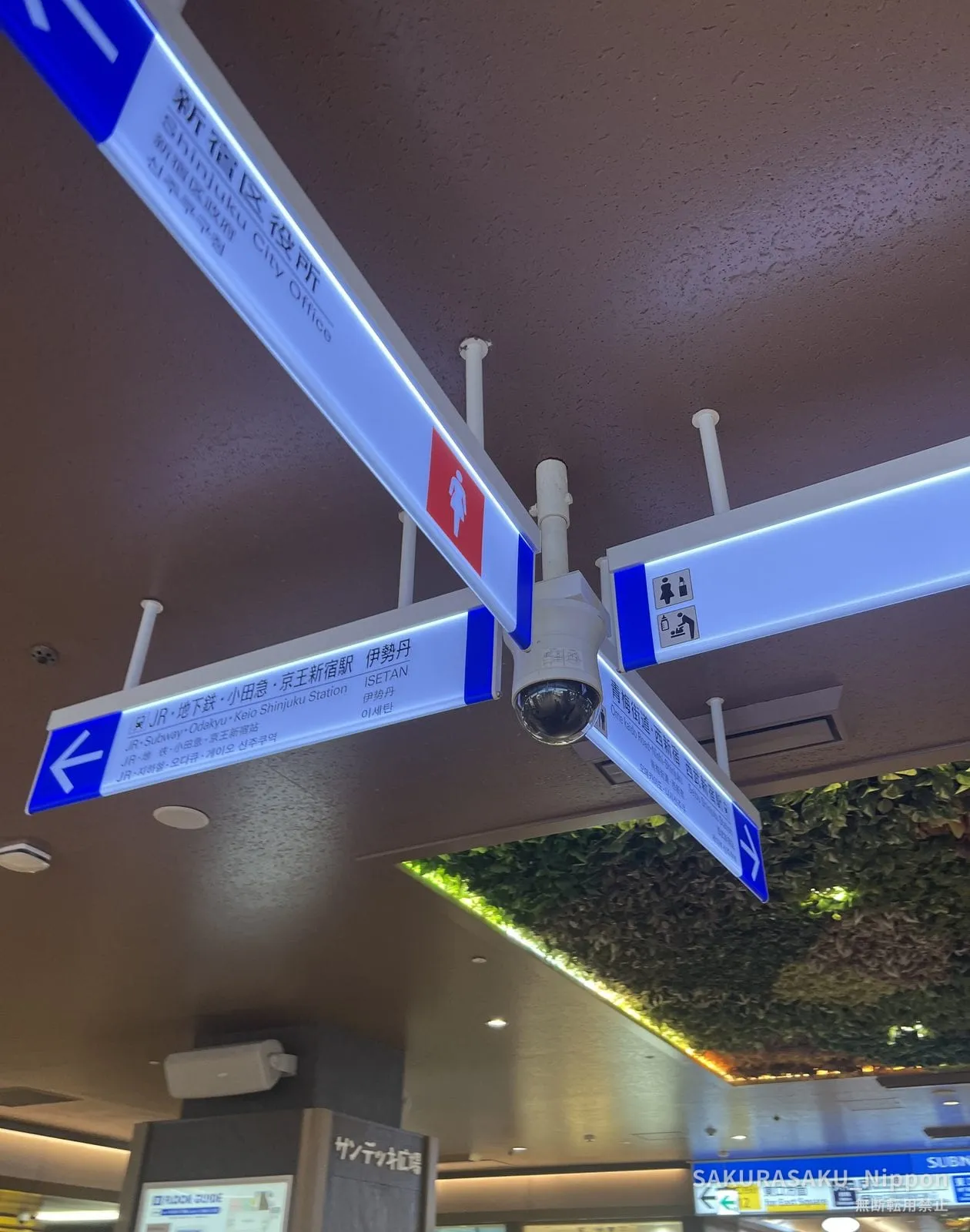
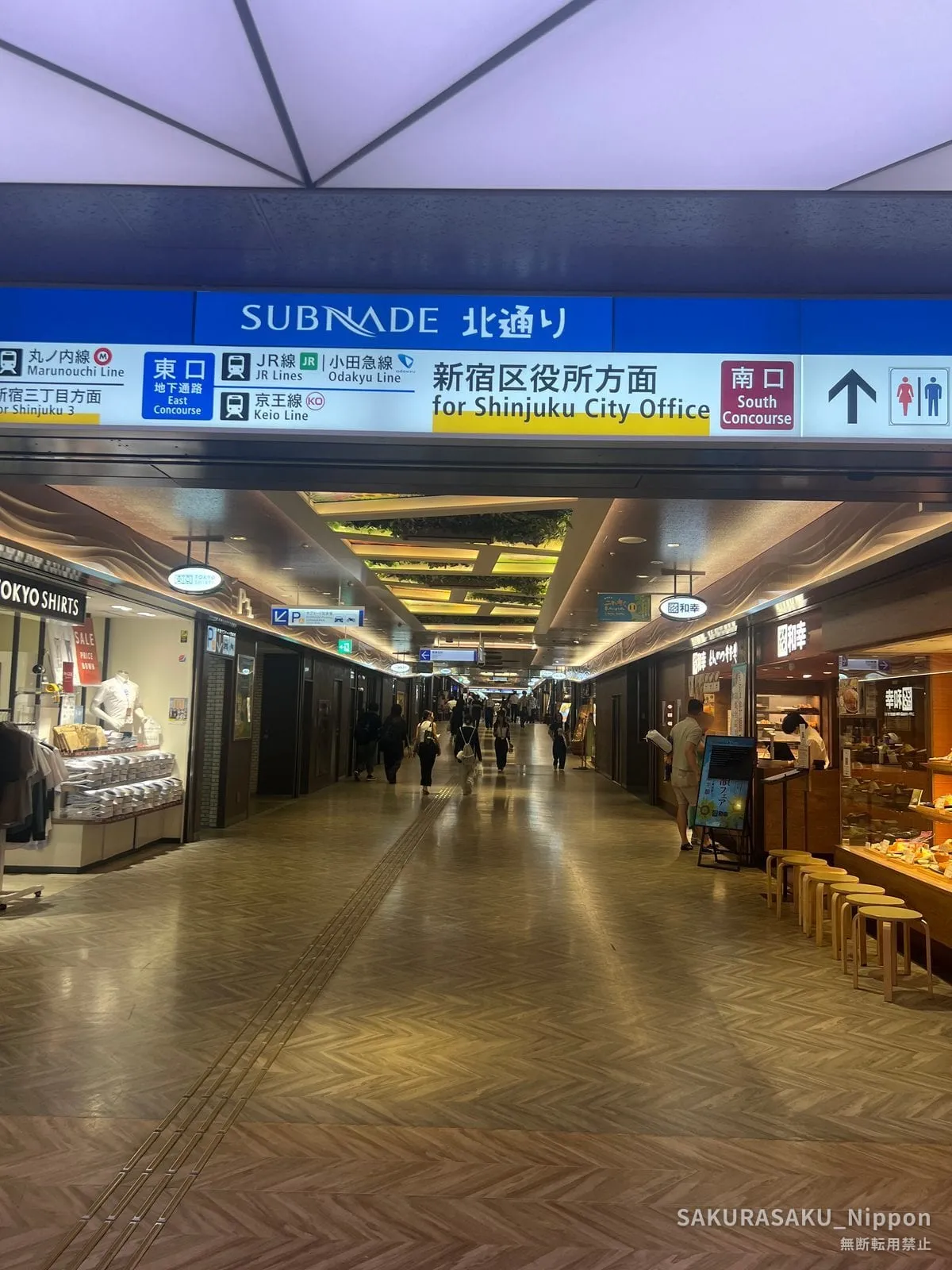
The overhead signs are blue with white lettering, and they are written in four languages — Japanese, English, Chinese and Korean. They are not decorative. They are a system.
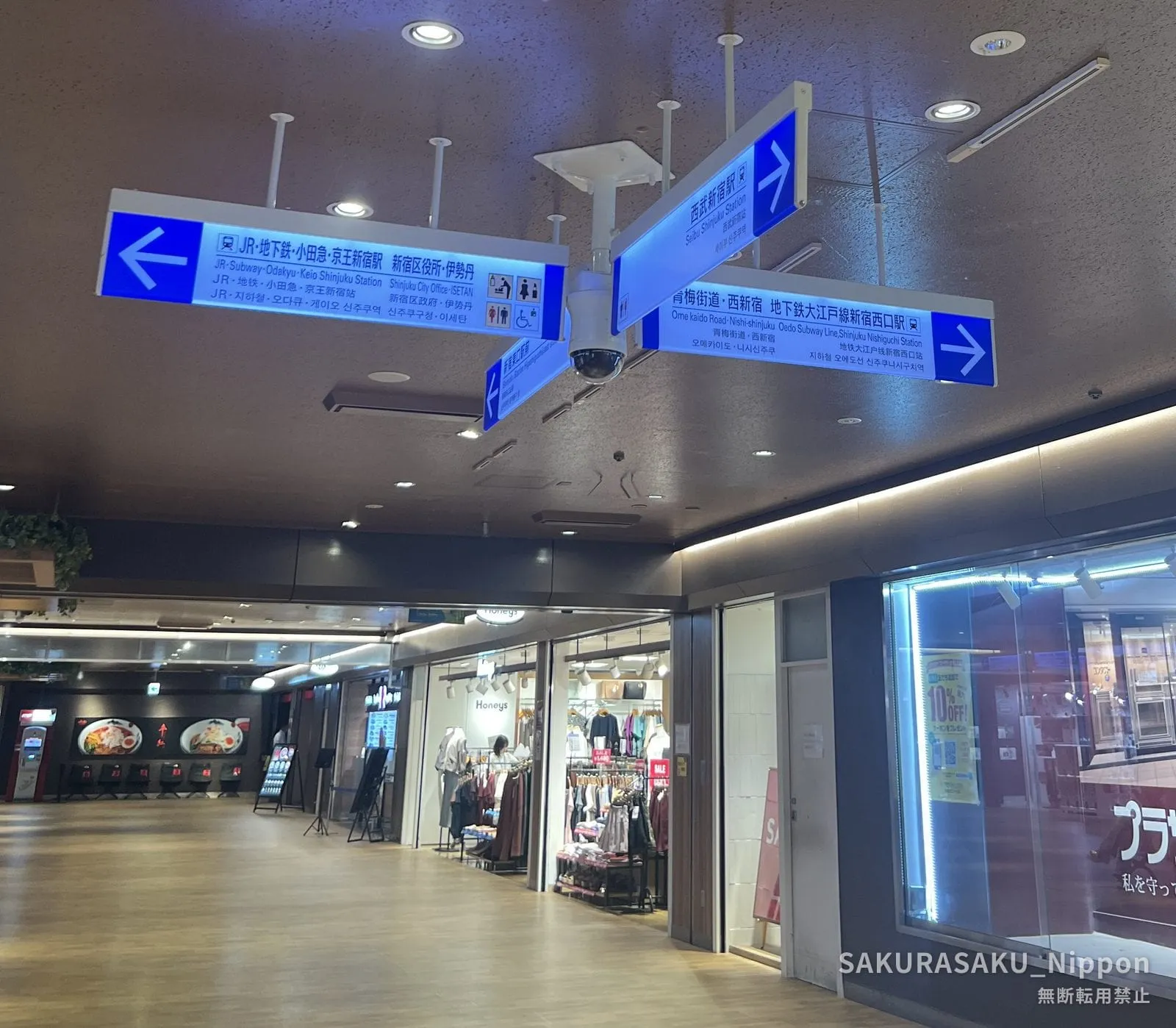
Three things to know.
One: the signs point at exits, not at places. Below ground, “Isetan” and “Shinjuku City Office” are directions in the same sense that “East Concourse” is. If you are looking for a shop, find the exit number first and the shop second.
Two: the concourses are colour-coded, and the colours are consistent. East Concourse appears in blue, South Concourse in red, on every sign that mentions them. Once you have decided which concourse you want, you can follow one colour for several hundred metres without reading anything else.
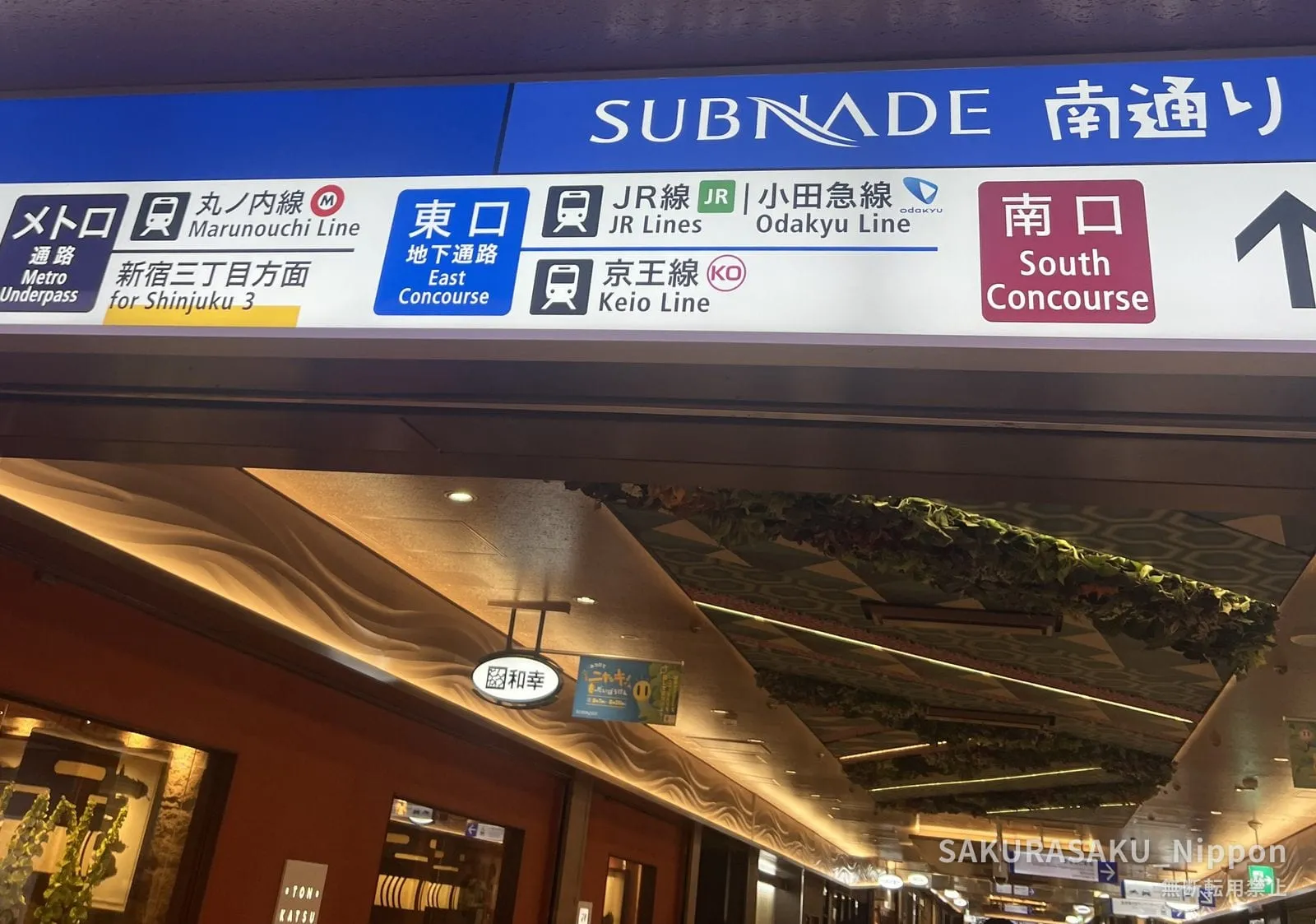
Three: the railway logos do the work that the words cannot. JR is the green square, Odakyu the blue bird-shape, Keio the pink circle marked KO, the Tokyo Metro Marunouchi Line the red circle marked M. If you know your line’s logo, you can navigate this whole system without reading a word of any of the four languages.
And when you are properly lost, look for a floor guide board. They stand at intervals along the concourses, with a red “you are here” dot, every shop numbered, and the connecting stations listed down one side.
Where You Can Get Without Going Outside
This is the reason to care, and the reason locals use it in bad weather.
From the JR Shinjuku gates, underground passages will take you to:
- Seibu-Shinjuku Station — through Subnade, at the north end
- Shinjuku-sanchōme — Tokyo Metro Marunouchi and Fukutoshin lines, and the Toei Shinjuku line, along the passage called the Metro Promenade, which has been open since 14 March 1959
- Shinjuku-nishiguchi Station on the Toei Ōedo line
- Isetan, on the east side
- Shinjuku City Office, on the Kabukichō side
- and, on the west side, the tower district and the Tokyo Metropolitan Government Building — the free observatories. The Metropolitan Government gives the walk as about ten minutes from the JR west exit.
Two honest cautions before you rely on this.
The underground is not one continuous mall. It is several systems that meet, and in a few places the connection between them is a plain corridor, or a short flight of stairs, or — near the west side — a stretch that has been rerouted for construction. Shinjuku Station has been under long-term redevelopment for years, and passages do close and move. If a sign contradicts what you read here, believe the sign.
And the shops keep their own hours while the passages keep the station’s. In Subnade the shops run roughly 10:30 to 21:00 and the restaurants 11:00 to 22:00 — though the board itself notes that individual shops differ, and other listings give slightly different times, so check before making a plan around it. After the shops close, the shutters come down and a bright shopping street becomes a long empty corridor. It is perfectly safe. It is just not the same place.
A Small Piece of Courtesy
One thing worth saying, because it is the only real way to annoy anyone down here.
These passages are somebody’s commute. At 8 to 9 in the morning and 5 to 8 in the evening, the concourses carry a genuinely enormous number of people moving at speed in two directions.
So: step to the side before you stop. Do not stand still in the middle of a passage to look at your phone, and do not set up a photograph in the flow — take it from the edge, or come back at midday when the same corridor is half empty. Keep your suitcase in front of you rather than trailing behind. And if you need to work out where you are, do it beside a floor guide board, which is where everybody else does it too.
None of this is a rule anyone will enforce. It is simply the difference between being a visitor and being an obstacle.
Things Down There That Are Worth Stopping For
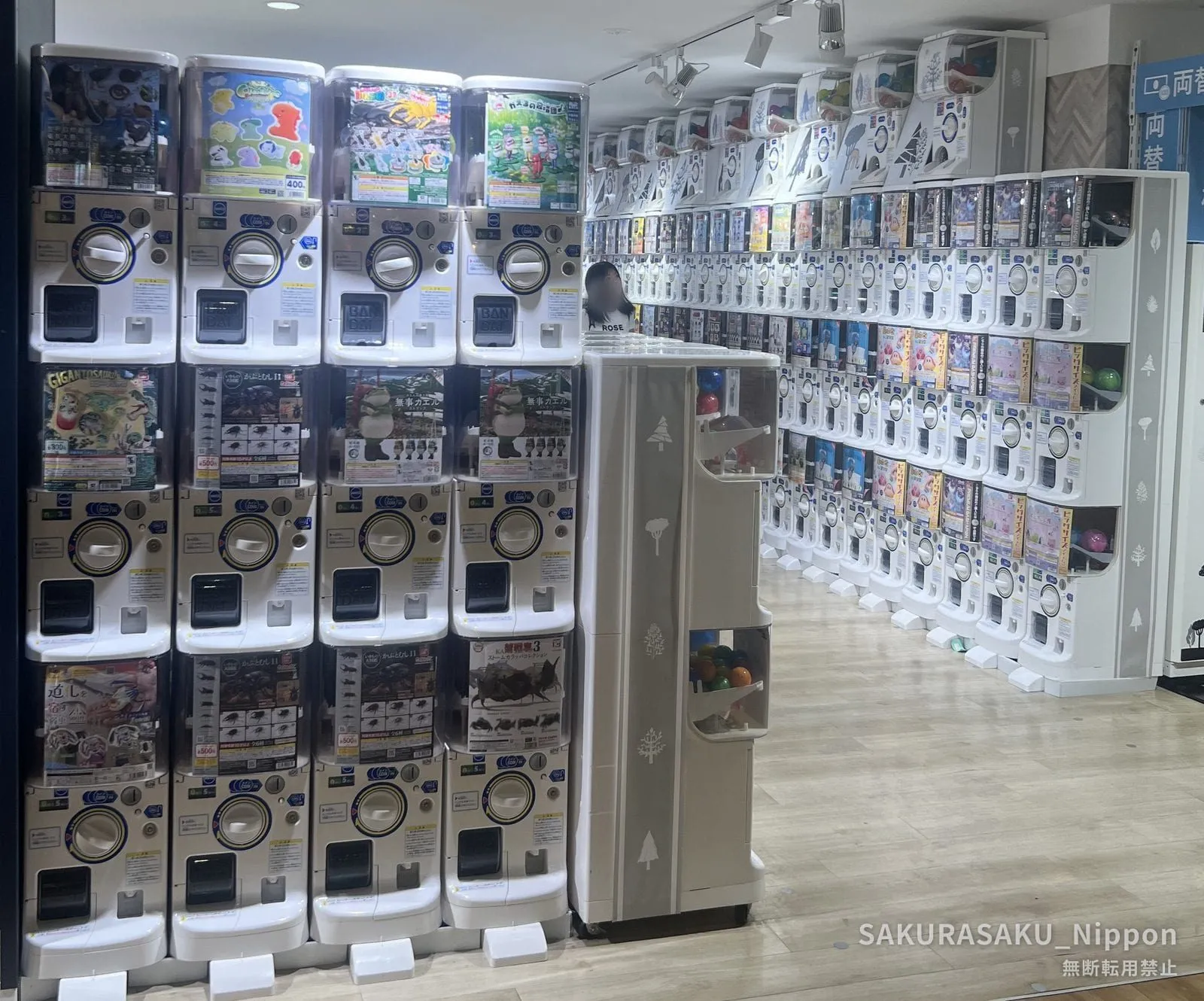
The capsule toy wall. Subnade has a gachapon shop where the machines run in unbroken rows along both sides — hundreds of them, several tiers high, from ¥300 to ¥500 a turn. Coins only, and there is a change machine on the wall.
Free Wi-Fi. Subnade runs an open network — look for SUBNADE_Free_Wi-Fi on the floor guide boards. Underground, where your data connection may be doing badly, this is more useful than it sounds.
Currency exchange. There is an exchange counter in Subnade, which is a genuinely rare thing to find in a shopping arcade rather than a bank or an airport.
Cheap parking, if you drove. The B2 car park is open 24 hours, every day of the year, with 400 spaces — and spending ¥3,000 or more at a single shop above it earns you an hour free. Conditions apply and participating shops are marked, so ask at the till.
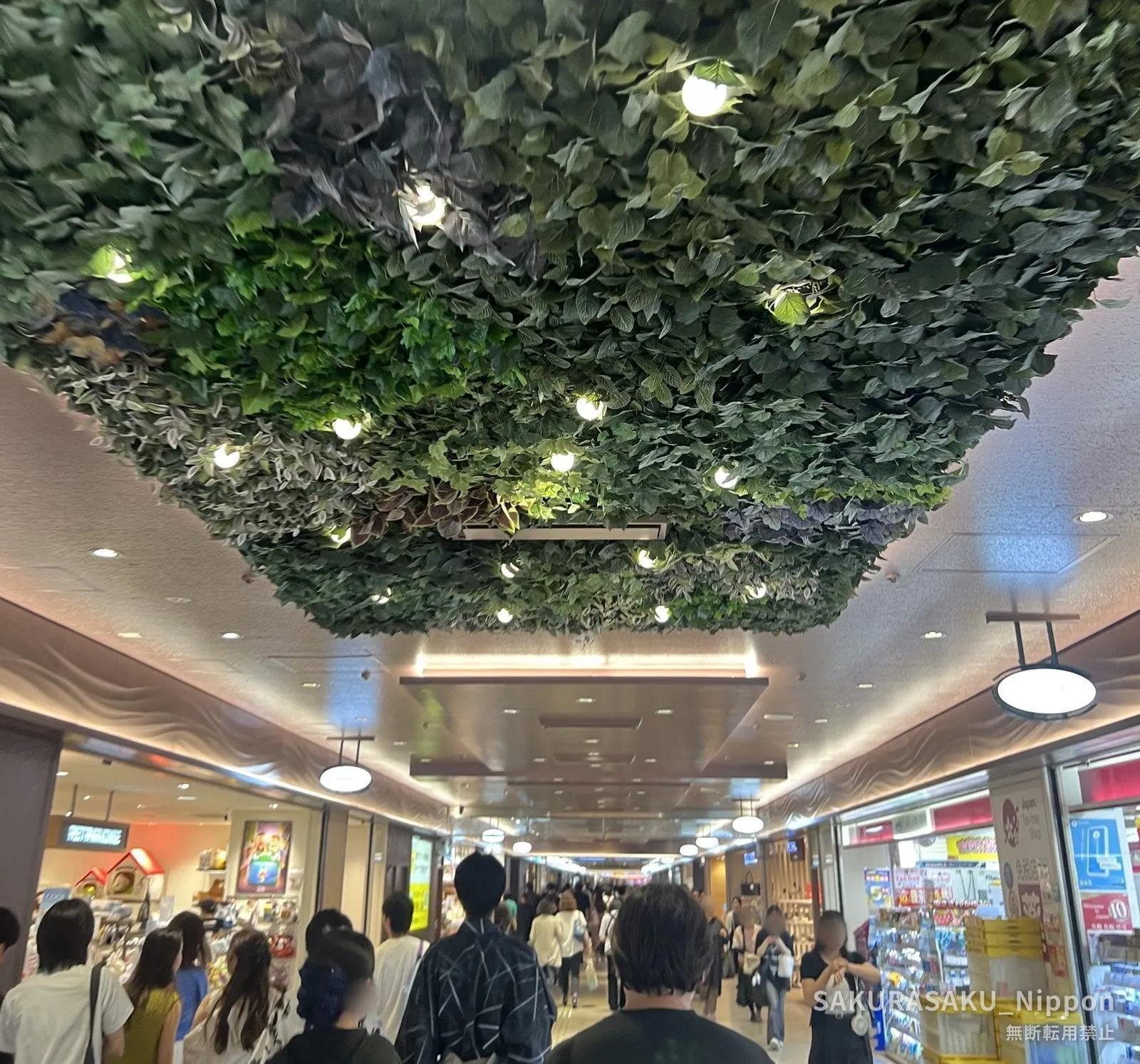
The green ceiling. In the central stretch, the ceiling is covered in a dense canopy of foliage with lights set into it. It is artificial, and I am not going to pretend otherwise. It is also the single most photographed thing in Subnade, and on a grey wet day it does something unreasonably cheering to a basement corridor.
The Best Thing to Do Down Here on a Wet Evening
If the weather has ruined your plans, there is one option that keeps you underground and is built for exactly this problem.
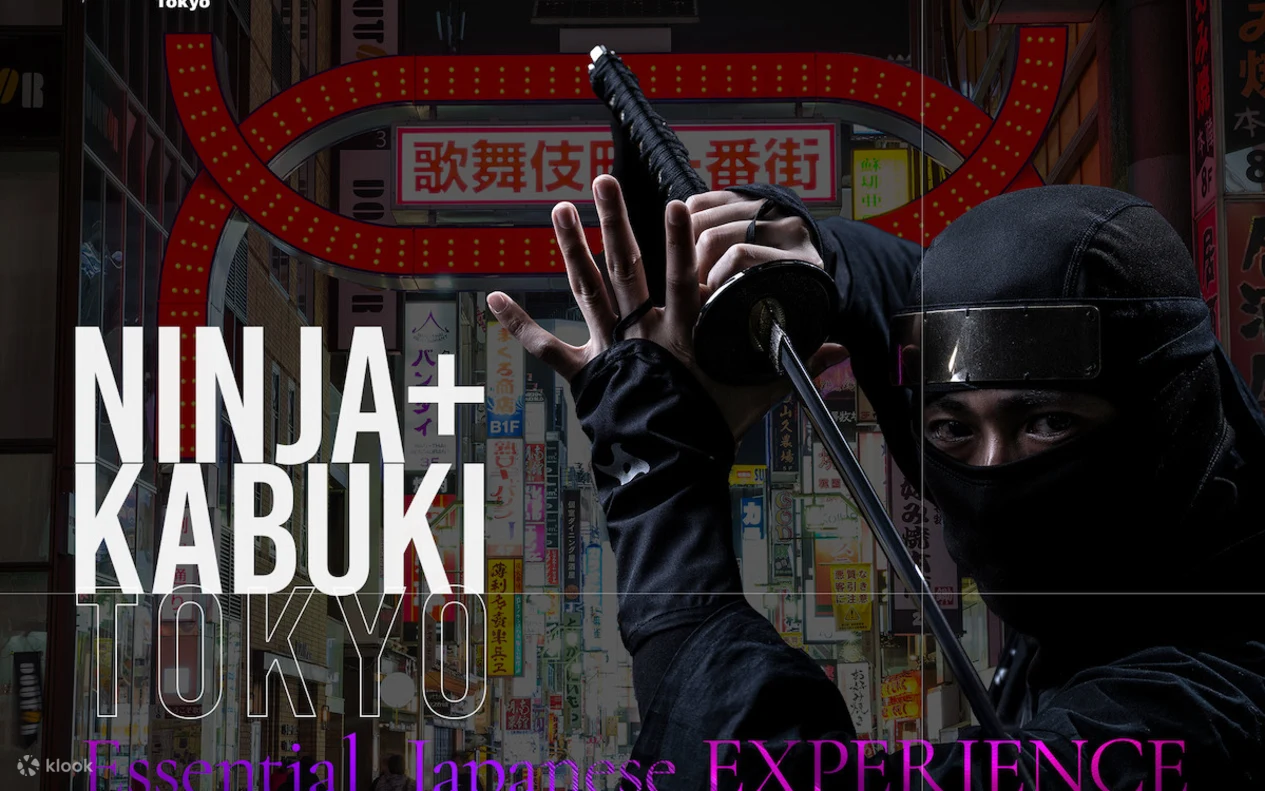
Shinjuku NINJA -LIVE SHOW- runs in a basement in Kabukichō — the Dai-ni Tōa Kaikan building, B1, about a minute from Subnade’s Exit 7 for Kabukichō. It opened in 2024, runs about 80 minutes, and is supervised by the Japan Ninja Council and the kabuki master Tanaka Denjirō.
Here is the part that connects to the rest of this article. Like the signs in the concourse above it, the show is built so that language does not matter. There is no dialogue to follow. What carries it instead is drumming, stage fighting in the kabuki manner, dance, and projection thrown across the walls — and the room is small enough that you can see faces.
An interactive ninja section comes partway through, and the second half asks for genuine audience participation. If being called up on stage would spoil your evening, sit further back.
One honest note: tickets start around ¥7,000, which is not a small sum for eighty minutes. What you are paying for is a small room and performers who do this properly, rather than scale.
Taking Shinjuku Home: Curry Arare
If you want one thing from Shinjuku that is actually of Shinjuku, this is my suggestion, and it is a cheap one.
Nakamuraya has stood at the Shinjuku crossing since 1909, and it is the shop that put Indian-style curry on Japanese restaurant menus. Shinjuku Curry Arare applies that same curry spice — the recipe the company traces to its main restaurant, from 1927 — to arare, small baked rice crackers, in single-serving sachets.
They are light, spicy, and they weigh nothing in a suitcase. Nakamuraya’s own product page gives the 12-sachet box as 120g (10g × 12), with a 90-day shelf life, and lists milk, soy and chicken among the ingredients.
One thing to know before you order: the packs sold on Amazon and Rakuten are 14-sachet boxes, and Nakamuraya’s own online shop currently lists only 8-sachet and 12-sachet sizes. The 14-sachet box appears to be a retail-outlet size that is not on the maker’s own product pages, so I cannot confirm its weight from the official source. If the exact quantity matters to you, buy the 8 or 12 from Nakamuraya directly.

Shinjuku Curry Arare — curry-spiced rice crackers in single-serve sachets
View Shinjuku Curry Arare on Amazon.jp
View Shinjuku Curry Arare on Rakuten (Japanese site)
Contains milk, soy and chicken. Price and stock may change.
→ More on this one, including where to buy it in Shinjuku itself, in a separate article.
Getting There
Any Shinjuku exit will do — the point is that you go down rather than out. For Subnade specifically, the East Exit of JR Shinjuku, the Marunouchi Line concourse, or the underground exit of Seibu-Shinjuku Station all put you straight into it.
Practical Information
- Where: the underground concourses of Shinjuku Station and the streets radiating from them; Shinjuku Subnade is beneath Yasukuni-dōri, Kabukichō 1-chōme
- Nearest stations: Shinjuku (JR, Odakyu, Keio, Tokyo Metro, Toei) · Seibu-Shinjuku · Shinjuku-sanchōme · Shinjuku-nishiguchi
- Subnade opened: 15 September 1973 · more than 80 shops on B1
- Subnade hours: shops roughly 10:30–21:00, restaurants 11:00–22:00; individual shops differ
- Free Wi-Fi: SUBNADE_Free_Wi-Fi
- Car park: B2, open 24 hours all year, 400 spaces; one hour free with ¥3,000 spent at a participating shop
- To the Metropolitan Government Building: about 10 minutes on foot from the JR west exit, largely underground
- Cost: nothing, unless you buy something
- Allow: an hour to wander; a whole wet afternoon if you want one
Who Is This For?
Anyone whose day in Tokyo has just been rained on. Anyone travelling in July or August, when the surface of this city is genuinely hard work. Anyone who likes infrastructure, or signage, or the particular pleasure of a place that locals use and visitors walk over the top of.
And anyone who has stood outside the East Exit in a crowd, wondering whether there is a better way to cross Shinjuku. There is. It is directly below you.
Note: Station passages, shop hours, prices and connections all change, and Shinjuku Station is under long-term redevelopment. Please check current information — and the signs in front of you — before relying on any route here.
Affiliate note: This article contains Amazon, Rakuten and Klook affiliate links. As an affiliate, we may earn from qualifying purchases at no extra cost to you.