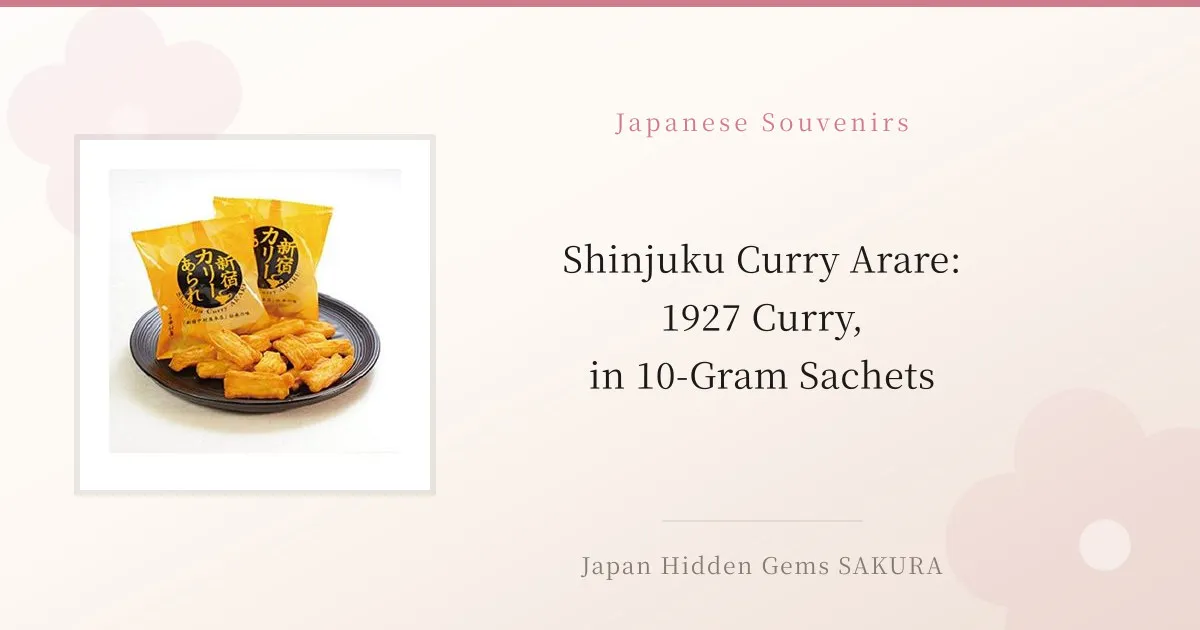
Shinjuku Curry Arare: 1927 Curry, in 10-Gram Sachets
Shinjuku’s most famous flavour is a curry, and it comes from a bakery.
Nakamuraya was founded as a bread shop in Hongō on 30 December 1901, and moved to its present corner in Shinjuku in 1909. In 1927 it opened a restaurant on the premises and launched three things in the same year: steamed pork buns, mooncakes, and pure Indian-style curry.
That curry went on sale on 12 June 1927 at 80 sen — at a time when a plate of Western-style curry rice in an ordinary Tokyo restaurant cost 10 to 12 sen. Eight times the price. The company’s own record of it is that it sold as fast as they could make it.
The reason it existed at all is a good story, and the company tells it plainly: Rash Behari Bose, an Indian independence activist in exile in Japan, was sheltered by the Sōma family who owned Nakamuraya — the whole staff took part in hiding him, against the wishes of the government — and he later married their eldest daughter, Toshiko. It was Bose who wanted a genuine Indian curry served in Japan.
Shinjuku Curry Arare is the cheap, light, carry-home version of that. The company applies the curry spice it traces to the main restaurant, from 1927, to arare — small, lightly baked rice crackers — and packs them in single-serving sachets.
Why This Is a Good Souvenir
Because of the weight, mostly, and the shape of it.
Nakamuraya’s own product page gives the 12-sachet box as 120 g — 10 g × 12 sachets — with a shelf life of 90 days. That is a box of twelve separate gifts weighing about as much as a paperback. You can hand them out one at a time and the box stays flat in a suitcase.
They are crisp rather than heavy, and properly spiced rather than sweet — this is the same aromatic curry blend, not a curry-flavoured snack. If your household has one person who does not like sweet Japanese souvenirs, this is generally the box they finish.
Please Read This Before You Order
Two honest notes, neither of them fatal.
The pack sizes do not match across sellers. The boxes sold on Amazon and Rakuten are 14-sachet boxes. Nakamuraya’s own online shop currently lists only 8-sachet and 12-sachet sizes. The 14-sachet box appears to be a size sold through retail outlets rather than the maker’s shop, and I could not find its weight stated on any Nakamuraya product page. So I am not going to tell you what it weighs. If the exact quantity matters — for a gift list, or hand luggage limits — buy the 8 or 12 from Nakamuraya and count on the official figures.
Allergens. The listed ingredients include milk, soy and chicken. The seasoning is a chicken-based one, so this is not a vegetarian snack. If you are buying for someone with an allergy, read the current pack, not this article.
Buying It in Shinjuku Itself
You do not have to order it at all. Nakamuraya’s main shop is at the Shinjuku crossing above ground, and the confectionery is widely stocked in the station’s own food halls and department-store basements — including on the underground level, which is the pleasant way to shop for it in July.
If you are collecting it on foot, the underground concourses are the route to use: a guide to walking under Shinjuku, and reading the signs, is here.
How to Have It Delivered to Your Tokyo Hotel
If you would rather not carry it around for the rest of the day, both Amazon Japan and Rakuten will deliver to a hotel during your stay.
- Check with the hotel first that they will accept a parcel for a guest. Most will; a few will not.
- Address it to the hotel’s address, with the hotel name, and the guest name exactly as it appears on your booking.
- On Amazon.co.jp, the English display toggle is at the top right of the screen.
- Rakuten Ichiba is Japanese-only. If it is hard going, your browser’s translate function handles it well enough to get through checkout.

Shinjuku Curry Arare — curry-spiced rice crackers in single-serve sachets
View Shinjuku Curry Arare on Amazon.jp
View Shinjuku Curry Arare on Rakuten (Japanese site)
Contains milk, soy and chicken. Price and stock may change.
The Short Version
A bakery in Shinjuku sheltered an Indian revolutionary, married him into the family, and put his curry on the menu at eight times what curry cost. Ninety-nine years later you can carry that spice blend home in ten-gram sachets for the price of a coffee.
That is, I think, an unusually good ratio of story to luggage.
→ Back to the guide to Shinjuku’s underground, where you can buy this without going outside.
Note: Product specifications, ingredients, prices and availability change. Please check the current packaging and the maker’s own product page before buying, particularly for allergens.
Affiliate note: This article contains Amazon and Rakuten affiliate links. As an affiliate, we may earn from qualifying purchases at no extra cost to you.