Nagatoro: The Rock That Came Up From Twenty Kilometres Down
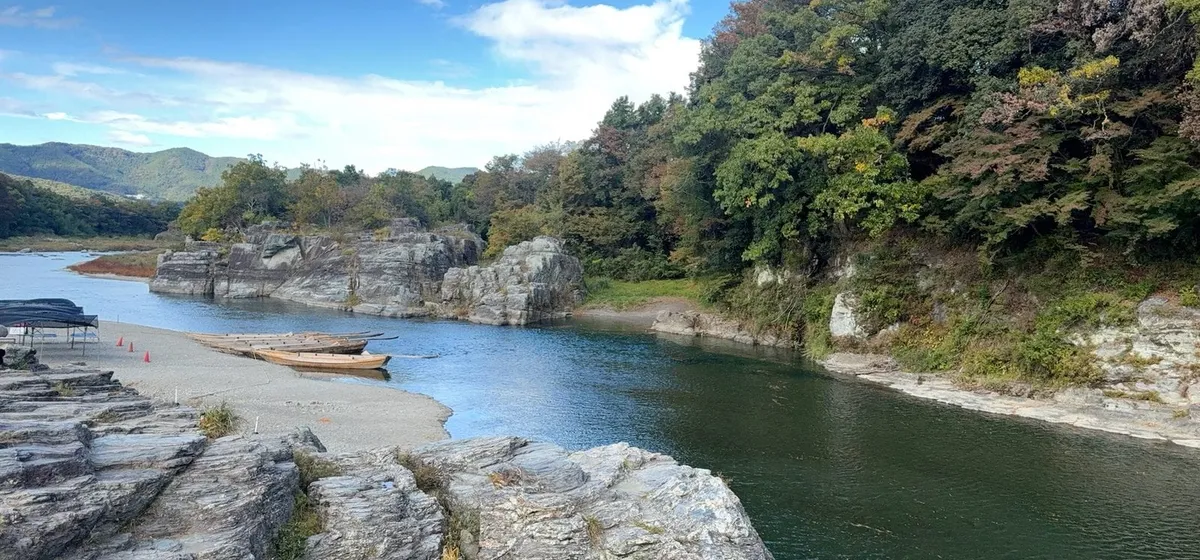
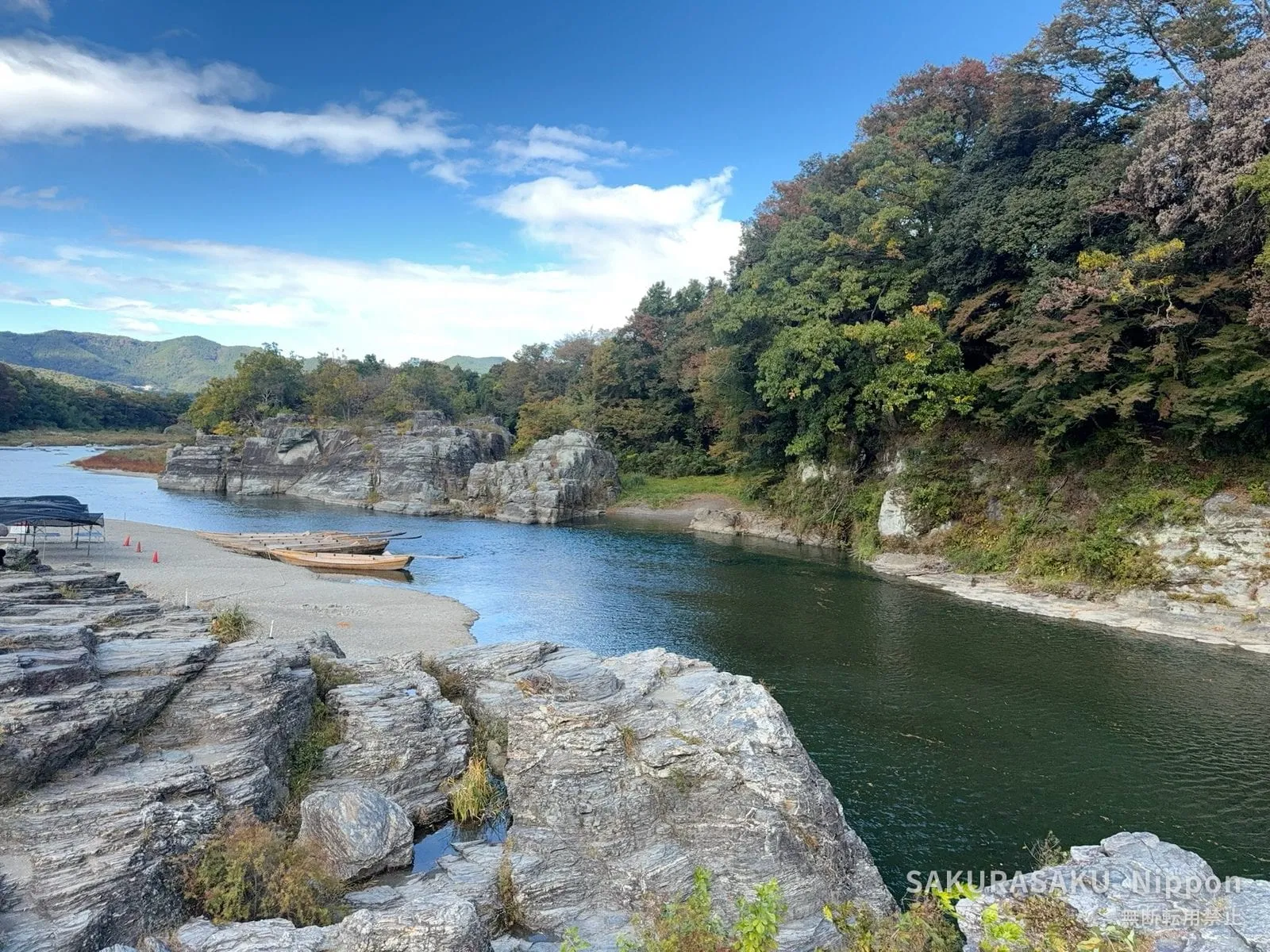
There is a stretch of the Arakawa River, about ninety minutes northwest of Ikebukuro, where the bank is not a bank at all. It is a floor. Flat grey slabs run out from the trees to the water’s edge, splitting cleanly into layers, the whole thing tilted very slightly as though someone had laid a stone terrace and then given up halfway.
It is called the Iwadatami — the “rock tatami” — and the sensible reaction is that it looks man-made. It is not. What you are standing on came from twenty to thirty kilometres beneath the surface of the earth.
Why the Rock Splits Like That
The stone here is crystalline schist, and it belongs to a band of rock called the Sanbagawa belt, which runs a long way across Japan.
The short version of how it got here: sediment that had piled up at the edge of the continent was dragged down as one tectonic plate slid beneath another. At twenty to thirty kilometres of depth, under enormous pressure, the minerals in it re-formed and lined themselves up. That alignment is called schistosity, and it is why the rock now peels apart in sheets, “like a pie”, as the local geopark puts it.
Then the whole mass came back up, and the Arakawa spent a very long time washing the soil off it. The result is a pavement of rock that formed deeper than any drill has ever reached, lying flat in the open air with a river running over it.
That is why Nagatoro is called the window into the earth. It is not a slogan. It is a fairly literal description of what the place is.
The Place Where Japanese Geology Started
Modern geology arrived in Japan in the Meiji period, and it came to Chichibu almost immediately.
Heinrich Edmund Naumann was invited by the government in 1875, became the first professor of geology at the University of Tokyo in 1877, and was in Chichibu by 1878. He is generally called the father of Japanese geology, and this valley is where a great deal of the early Japanese fieldwork was done.
The names accumulate after him. Bunjirō Kotō described piemontite schist here in 1888 — the first report of that rock anywhere in the world. Sen’ichi Ōtsuka named the Chichibu Palaeozoic strata and the Chichibu Basin. Toyokichi Harada named the Yamanaka graben in 1890. And in 1901, the geologist Kotora Jinbō wrote that this was a place every geologist in the country ought to visit once in their life.
The poet Kenji Miyazawa came in 1916, on a student geology excursion, and wrote about it.
The area was designated a National Place of Scenic Beauty and Natural Monument on 9 December 1924 — a double designation, for the landscape and for the geology at once.
You do not need any of this to enjoy an afternoon by the river. But it changes what you are looking at, which is the point of knowing it.
The Museum Five Minutes Away
If the rocks interest you at all, get off one station early.
The Saitama Museum of Natural History is a five-minute walk from Kami-Nagatoro Station, one stop before Nagatoro on the Chichibu Railway. Among other things it holds a reconstructed skeleton of Paleoparadoxia, the sea mammal that lived in this area around twenty million years ago, when Chichibu was under the sea.
Remember that animal. It comes back later, on a steam train.
The Boats
The other way to see the Iwadatami is from the water. The Nagatoro Line-kudari has been running wooden boats down this stretch of the Arakawa for well over a century, poled by boatmen who read the water rather than fight it.
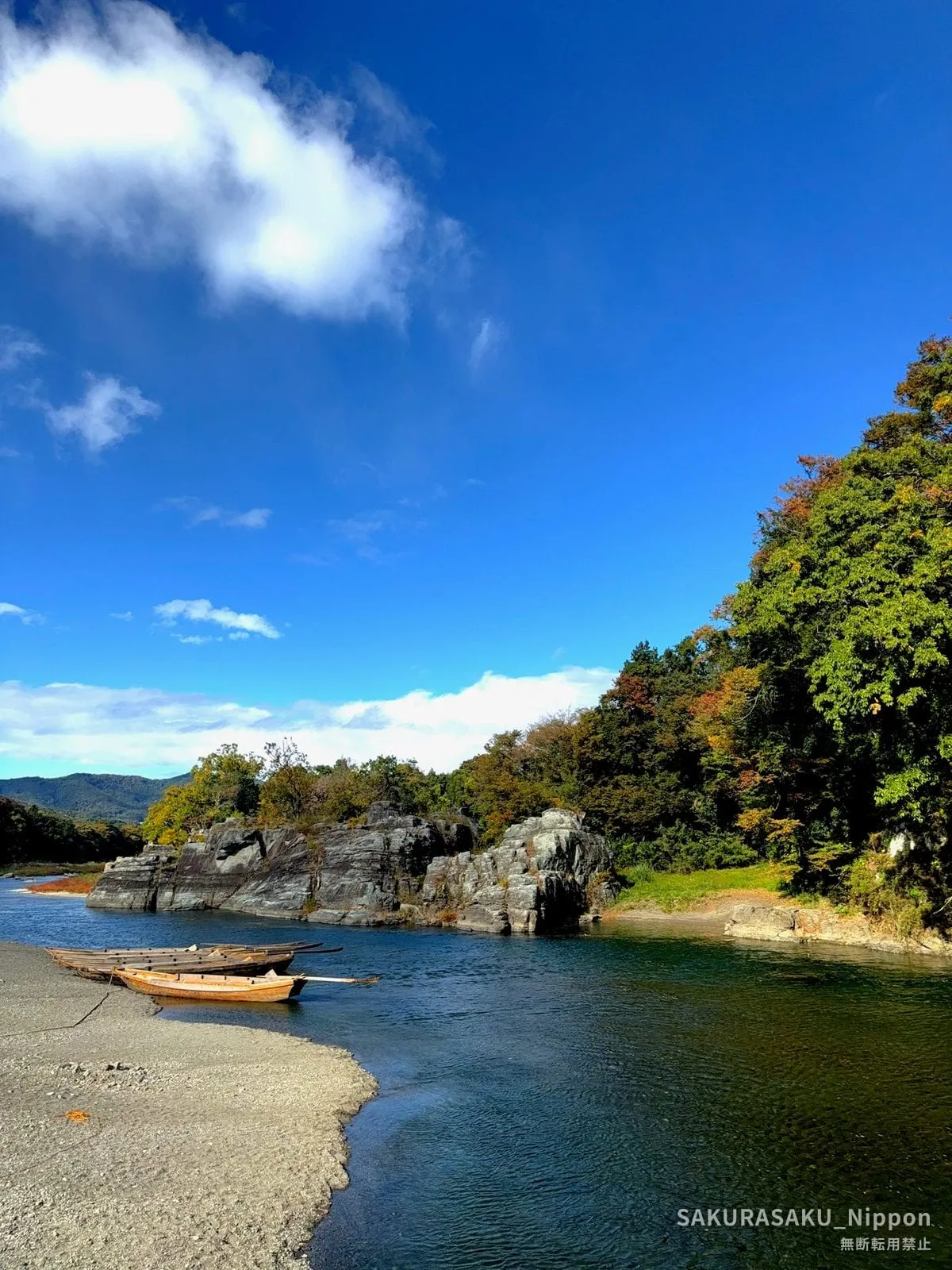
There are two courses, each about 3 km and, when the water is high, about 15 to 20 minutes on the river:
- Course A — Oyahana Bridge down to the Iwadatami. The rapid here, the Kotaki-no-se, is the one you have seen in photographs.
- Course B — the Iwadatami down to Takasago Bridge. A wider river, and a rapid called the Ōkawase.
Fares (for parties of 14 or fewer): ¥2,000 for adults, ¥1,000 for children, rising to ¥2,200 / ¥1,100 in the busy seasons — Golden Week, the summer holidays and the autumn colours. Boats leave whenever they fill, roughly every 10 to 40 minutes, and individual visitors do not need to book — you buy at the window on the day. Groups of 15 or more must reserve, by telephone, at least two weeks ahead.
Three honest notes.
First, the full 6 km course is currently suspended; the two halves are sold separately and you change boats if you want both. Check before you build a plan around it.
Second, the time on the water depends on the river. Twenty minutes is what you get with a good flow. In low water it is slower and gentler, which some people prefer and some do not.
Third, pets are not allowed on the boats — a rule since March 2022.
In winter the operator runs heated kotatsu boats instead, with a quilted table to put your legs under. It is exactly as good an idea as it sounds.
The Valley Itself
Away from the rock terraces, this is simply a very fine river valley: broad shingle beds, tall grass going copper in the autumn, and hills that turn from green to rust over about three weeks in November.
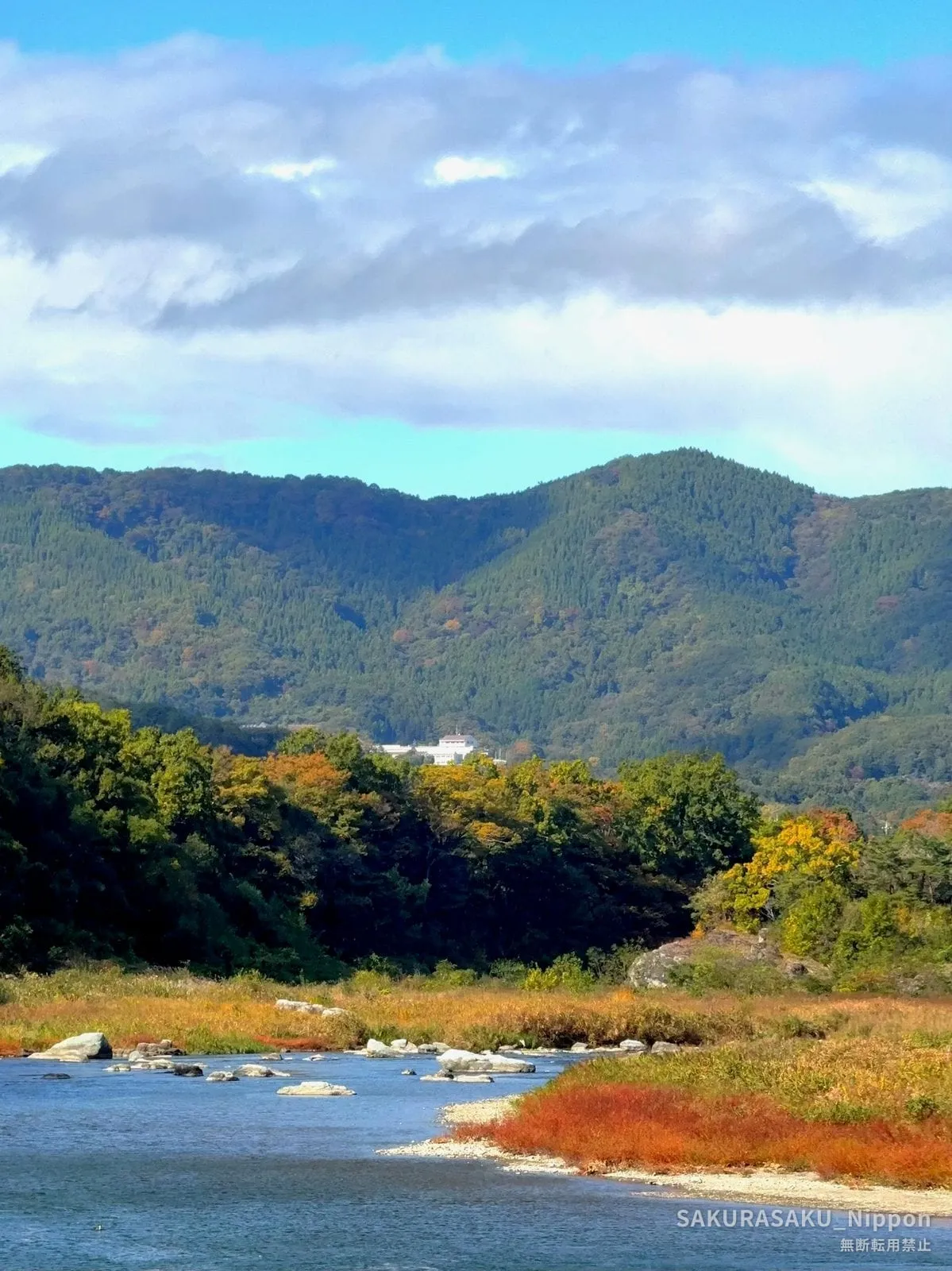
A word about the river. People swim and paddle here in summer, and the Arakawa looks calm from the bank. It has a strong current in places and the level rises quickly after rain upstream. Stay where the signs tell you to, and treat the rapids as something to look at from a boat.
Nagatoro Station
The station itself is worth two minutes of your attention before you walk to the river.
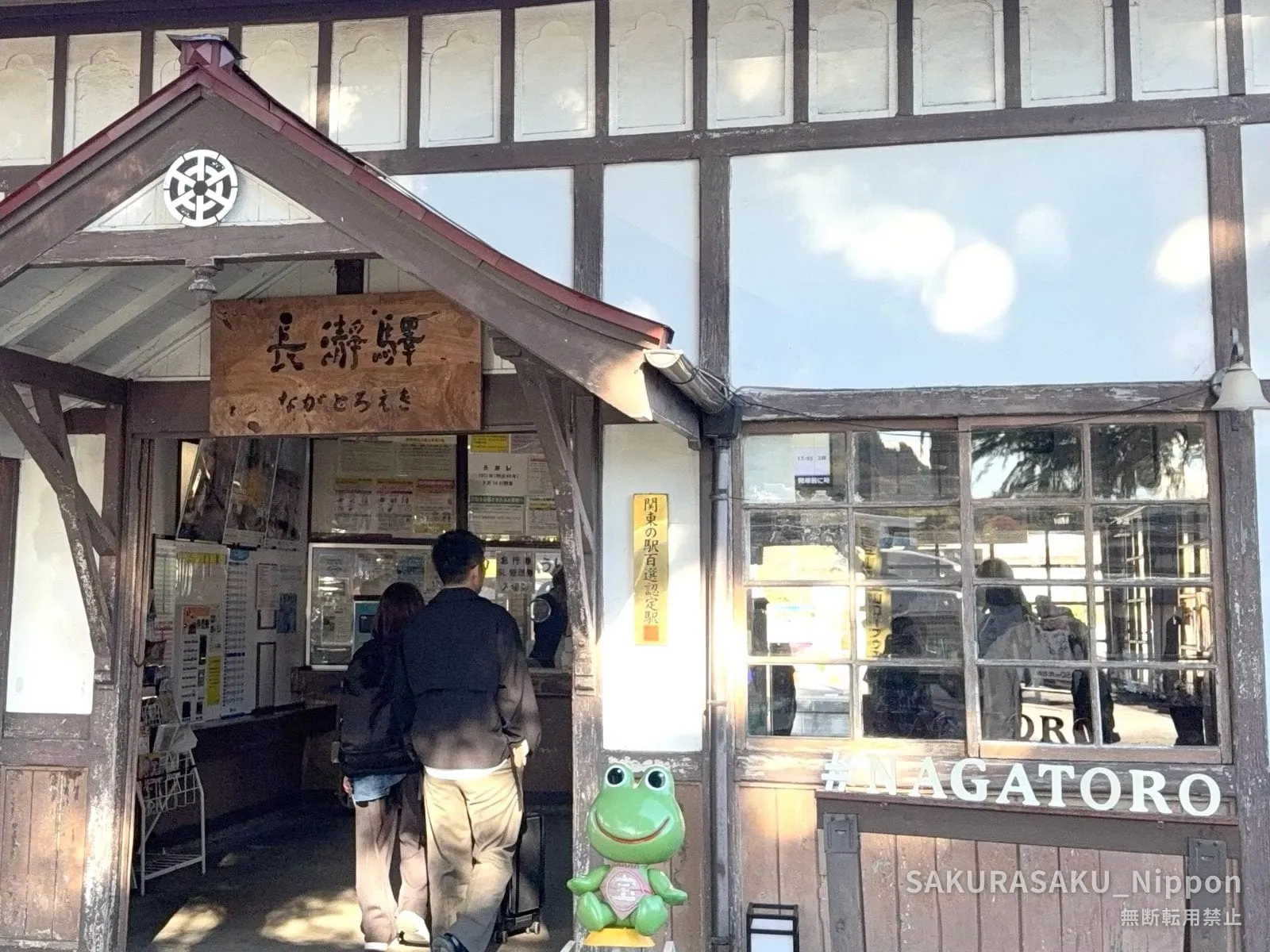
It is a wooden building with a carved nameboard in old characters, and a small plaque by the door records that it is one of the “100 Best Stations in the Kantō Region.” There is a frog. There is a hand-written board telling you which platform the next train leaves from. It is a working country station and it looks like one.
What to Eat on the Way to the River
The road from the station down to the Iwadatami is a short shopping street, and it smells of charcoal.
The thing to eat, if it is on, is ayu — sweetfish from the river, salted, skewered whole and stood around a charcoal fire until the skin blisters. Eat it hot, walking. It is the single best thing on that street.
The other thing worth stopping for is gohei-mochi: rice pressed onto a flat wooden paddle, glazed with a sweet-savoury miso and grilled until the glaze catches and blackens at the edges.
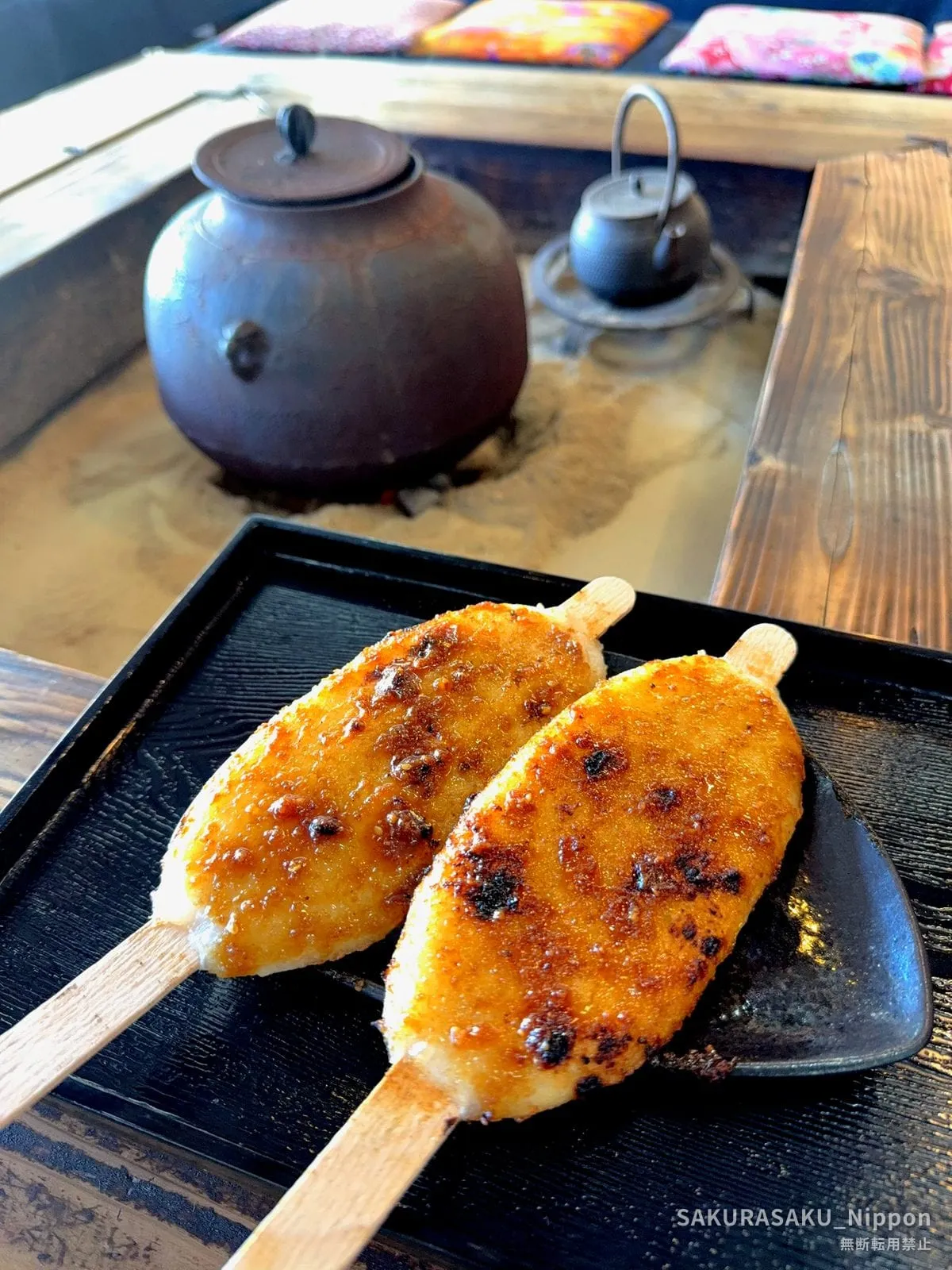
Where we ate them, they arrived beside an irori — a sunken hearth set into the floor, sand banked around a kettle. In late autumn, with the fire going, it is difficult to leave.
Nagatoro is also known for shaved ice made from natural ice, cut in winter and kept in an ice house. The famous shop draws long queues in summer, and shorter ones in the cold months, when eating shaved ice beside a heater is a local eccentricity worth joining.
Getting There
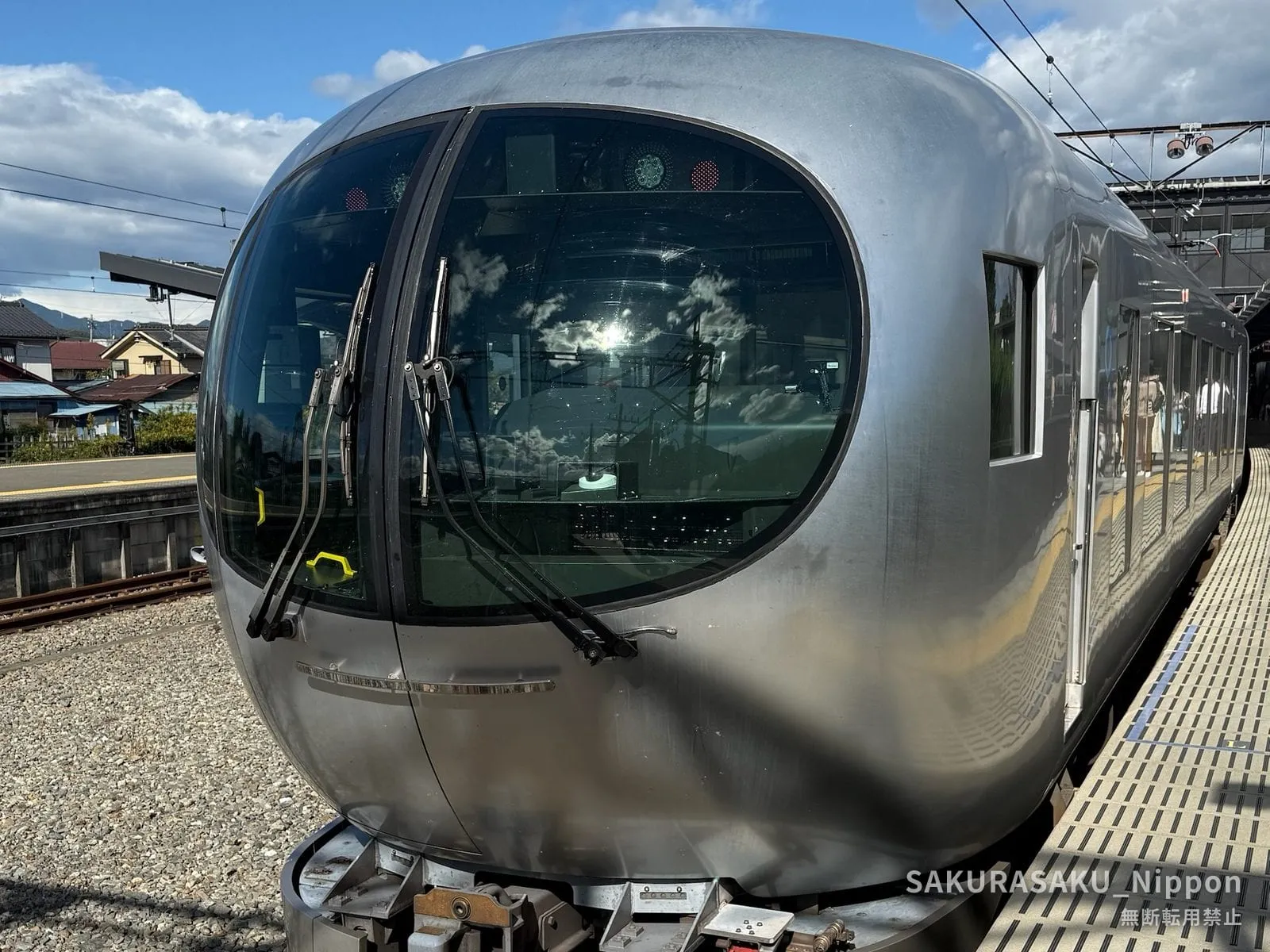
From Ikebukuro — the pretty way. Take the Seibu Ikebukuro Line Limited Express to Seibu-Chichibu. The train is the Laview, and it is a genuinely strange and lovely thing: a rounded silver nose, and side windows so tall and so large that from the platform you can see straight through the carriage to the houses on the far side.
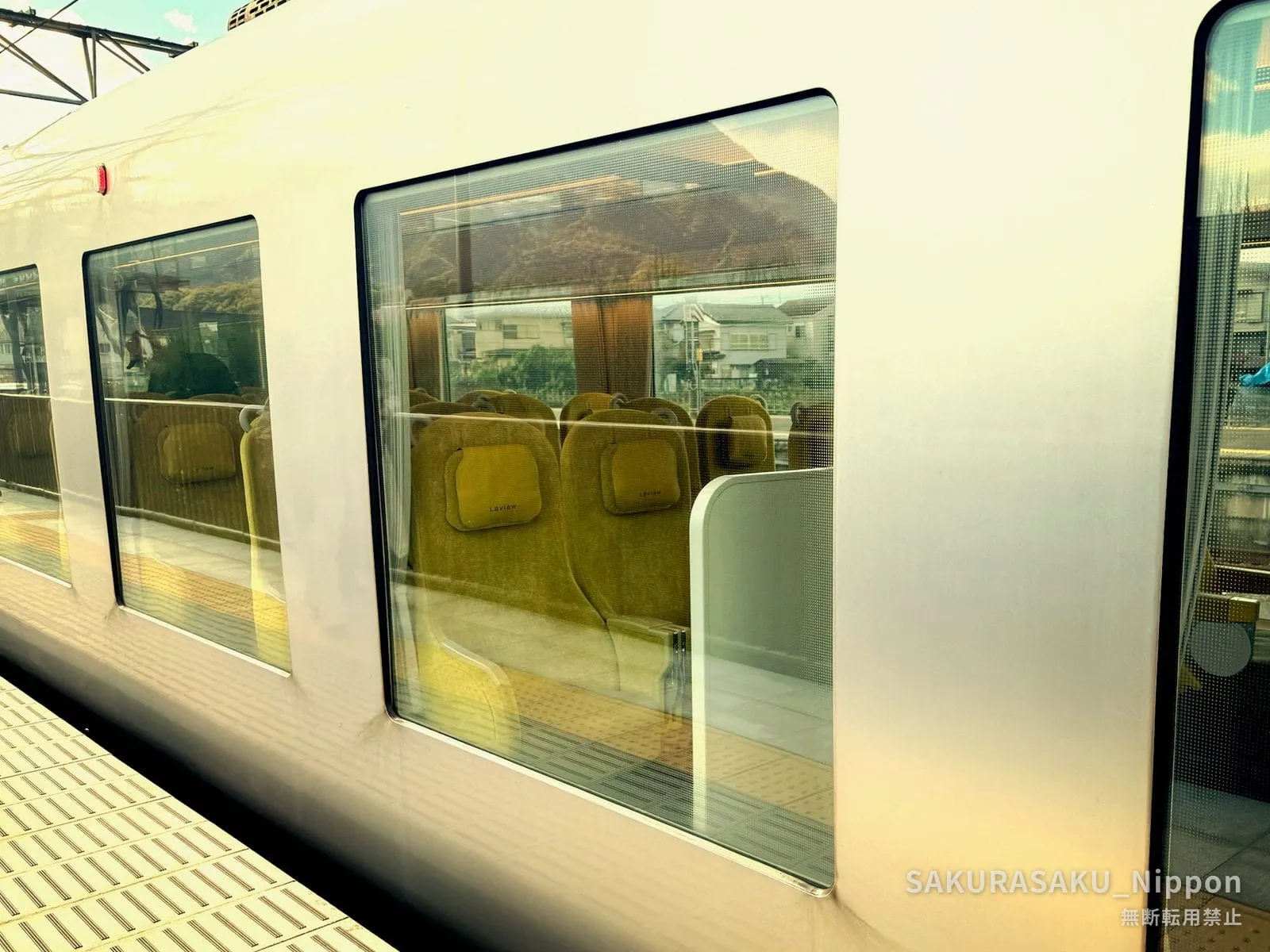
The seats are a deep, unembarrassed yellow.
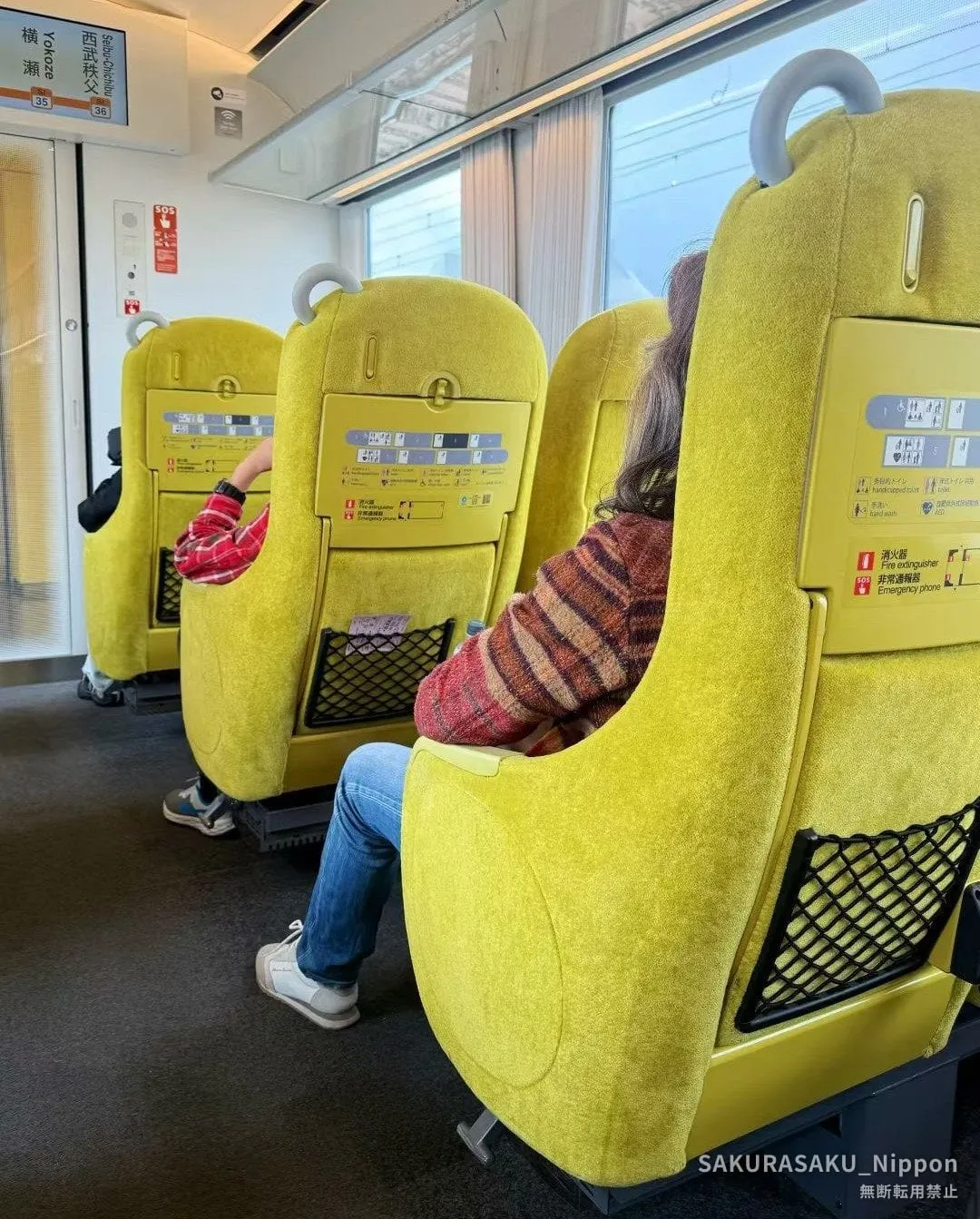
At Seibu-Chichibu you walk a few minutes to Ohanabatake Station and take the Chichibu Railway down the valley to Nagatoro.
From Kumagaya — the simple way. If you are coming off the Shinkansen or the JR Takasaki Line, Kumagaya is the eastern end of the Chichibu Railway, and one train takes you all the way to Nagatoro without changing.
Please check current timetables and fares before you travel. Both are subject to change, and the limited express requires a separate reserved-seat ticket on top of the ordinary fare.
A Day That Works
- Kami-Nagatoro Station first, for the natural history museum — twenty minutes is enough, an hour if the rocks have you
- One stop on to Nagatoro Station
- Down the shopping street, slowly, eating
- The Iwadatami — walk out onto the rock and look at how it splits
- A boat, if the river is running well
- Back up for shaved ice or a coffee before the train
Half a day is enough. A full day if you add the boat and lunch.
Practical Information
- Where: Iwadatami, Nagatoro Town, Chichibu District, Saitama
- Nearest station: Nagatoro (Chichibu Railway); Kami-Nagatoro for the museum
- From Ikebukuro: Seibu Limited Express to Seibu-Chichibu, then Chichibu Railway from Ohanabatake
- From Kumagaya: Chichibu Railway direct
- The Iwadatami: open riverbank, free
- Designation: National Place of Scenic Beauty and Natural Monument, 9 December 1924
- Line-kudari: about 3 km per course, 15–20 minutes; ¥2,000 adults / ¥1,000 children (¥2,200 / ¥1,100 in peak season); no reservation needed for parties of 14 or fewer
- Saitama Museum of Natural History: 5 minutes’ walk from Kami-Nagatoro Station
- Best season: autumn colour in November; shaved ice and boats in summer
- Allow: half a day, or a full day with the boat
If You Would Rather Drive
Chichibu sits in a wall of hills west of Tokyo, and the roads through them — Okutama, Mitake, the Arakawa headwaters — are the reason some people rent a car for a day rather than work out three train changes. Japan Experience lists a self-guided route through that country. Please read the itinerary carefully before booking to check it covers what you want; it is built around the mountains and rivers west of Tokyo rather than Nagatoro specifically.
The Cloth This Valley Made
One more thing about Chichibu, because it explains the town at the other end of the line.
Before it was a place people came to for the river, this was a silk valley. The cloth it made is called Chichibu Meisen, and it was designated a National Traditional Craft on 26 December 2013.
What makes it unusual is a technique called hogushi-nassen, patented in 1908: the warp threads are loosely woven with a temporary weft, stencil-printed while in that state, and then properly woven. Because the pattern is printed onto the threads rather than the finished cloth, the fabric has no right or wrong side — and because warp and weft carry different colours, it shifts as you move, the way a beetle’s wing does. It was worn all over Japan from the Taishō era into the early Shōwa years.
There is an indigo-dyeing workshop in Chichibu where you can dye something yourself. Check the workshop page for the current venue, duration and price before booking.
While You Are on This Line
The railway that brought you here is worth an article of its own, and it has one.
- The Paleo Express — the Chichibu Railway still runs a 1944 steam locomotive down this valley, and the train is named after the animal in the museum at Kami-Nagatoro
- The Misotsuchi Icicles — for about six weeks in midwinter, a cliff face upstream of here freezes solid
- Fifty-two Seats of Happiness — if you would like the journey from Tokyo to be the point, Seibu runs a restaurant train to Chichibu
Who Is This For?
Anyone who likes a landscape better once they know what made it. Anyone who wants a river, a wooden boat and grilled fish within two hours of Tokyo. And anyone who has ever wanted to stand on something that spent its formation twenty kilometres underground, and then walk back up the hill for shaved ice.
Note: Fares, timetables, boat operations and museum hours all change, and the river conditions change daily. Please check the operators’ own announcements before you travel.
Affiliate note: This article contains Japan Experience affiliate links. As an affiliate, we may earn from qualifying purchases at no extra cost to you.