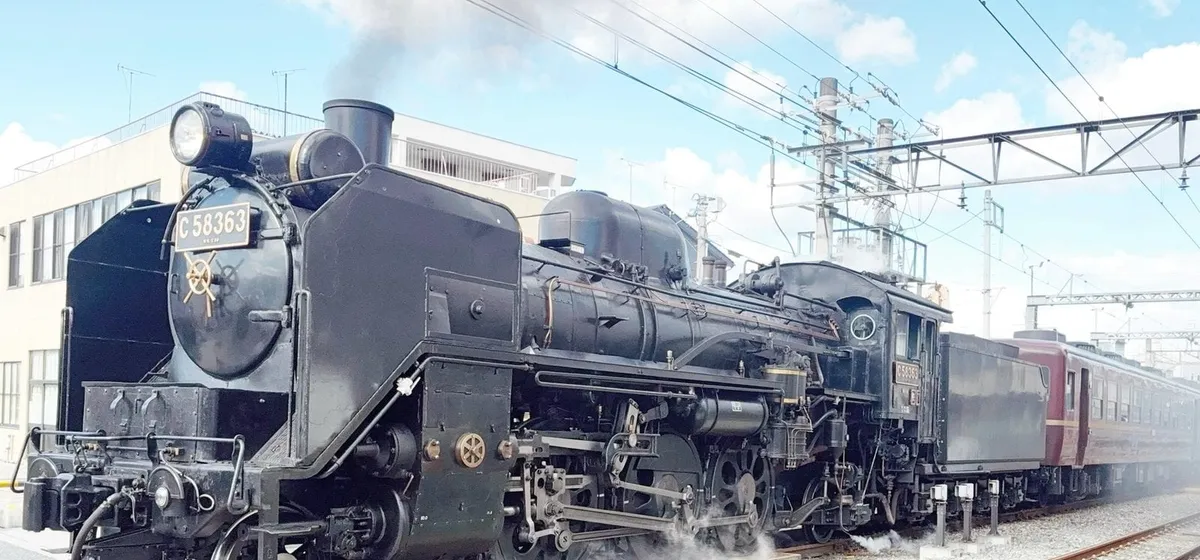
The Paleo Express: A 1944 Locomotive Still Works This Valley
An electric train is a quiet thing. It hums, it accelerates, and it is gone.
A steam locomotive is not quiet, and the parts of it that are not quiet are all different from one another. There is the smell of the smoke, which reaches the platform before the train does. There is the whistle, which is higher and more piercing than you expect. There is the blast from the chimney, one beat for every turn of the wheels, slow and then quickening. And under all of it, the joints in the rails going by underneath.
You can still have all of that within two hours of Tokyo.
What “Paleo” Means
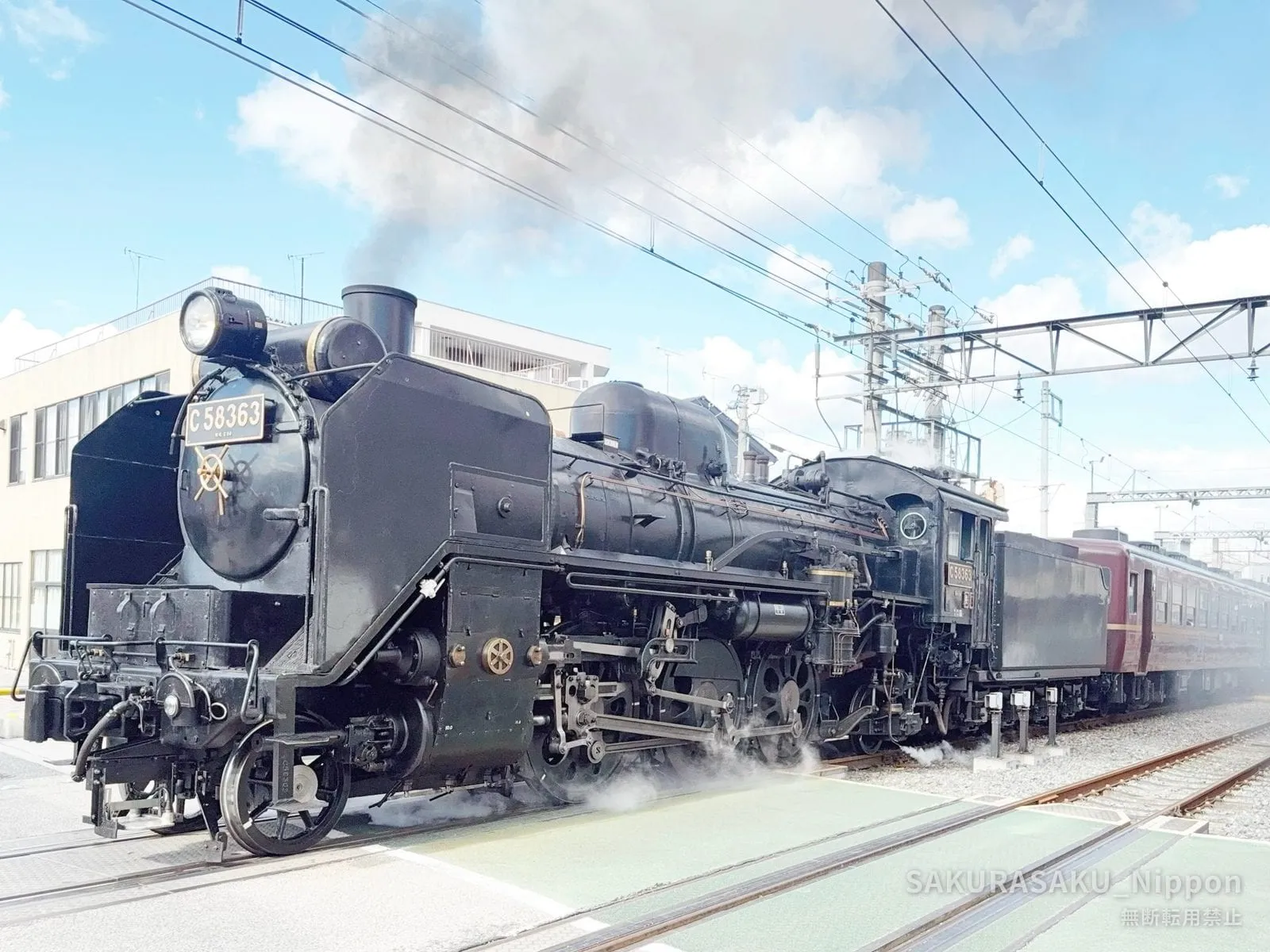
The train is called the Paleo Express, and the name is not decorative.
Around twenty million years ago, this area was under the sea, and a sea mammal called Paleoparadoxia lived here. The name is Latin for, roughly, “ancient strange animal”, which is fair — it was a heavy, hippo-shaped grazer with a strange splayed stance, and nothing like it exists now.
Its reconstructed skeleton is on display at the Saitama Museum of Natural History, five minutes’ walk from Kami-Nagatoro Station on this same railway. So the train is named after a fossil you can go and look at, from a window you can see it from. It is one of the better-thought-out train names in Japan.
The Locomotive Was in a School Playground
The engine is C58 363, and its history is worth knowing before you stand next to it.
It was built by Kawasaki on 19 February 1944 — in the middle of the war, in other words — and it worked until steam ended on the national network. By the time it was retired it had run 1,054,826 kilometres.
From 1973 it sat in the grounds of Fukiage Elementary School (now in Kōnosu City, Saitama) as a static exhibit, which is where a great many Japanese steam locomotives ended up: bolted down in a playground, slowly rusting, admired by children who had never heard one work.
In 1987 it was returned to the register. In March 1988, to mark the ‘88 Saitama Exposition in Kumagaya, it ran again — and it has been running for the Chichibu Railway ever since.
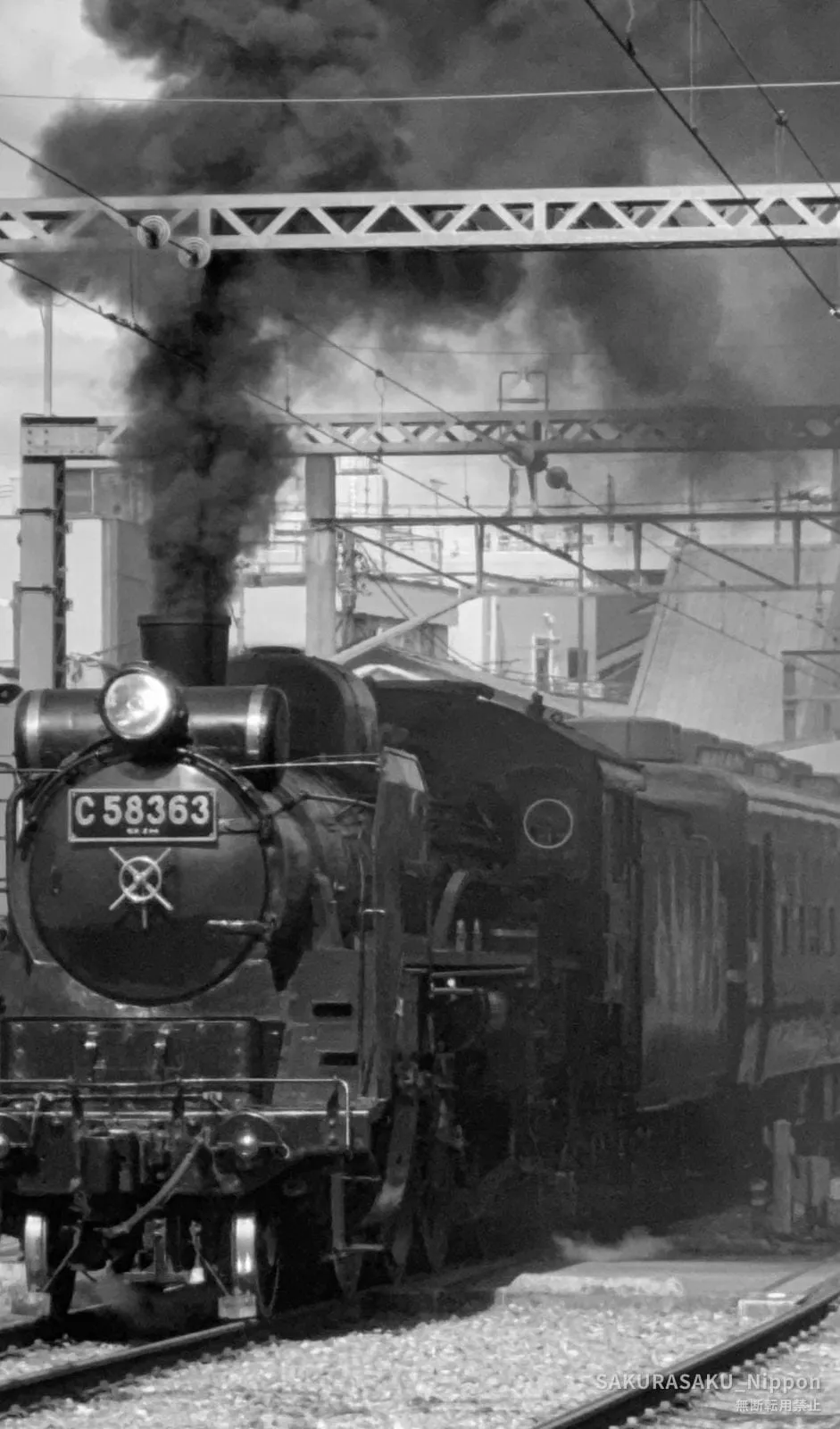
That is the thing to hold on to when it goes past you. It is not a replica and it is not a museum piece. It is a machine from 1944 that spent fifteen years as a monument and then went back to work.
It burns roughly one tonne of coal per return trip.
The Route
The Paleo Express runs the 56.8 km from Kumagaya to Mitsumineguchi, one return trip on each operating day, taking about two and a half hours in each direction.
The line follows the Arakawa upstream, so you get the flat Kantō plain at the Kumagaya end, then the river narrowing, then the Nagatoro gorge, then proper mountains. The coaches are ex-JNR Series 12 stock, which the railway bought from JR East and refurbished in 2000.
Spring brings cherry blossom and then the moss phlox; there is new green in early summer and the colours in autumn. The line is also crossed by well-known photographic spots, of which the bridge over the Arakawa near Oyahana is the one most often published.
How to Book — and You Must
Every seat is reserved. There are no unreserved seats. If you turn up and there is nothing left, you do not ride.
- Check the operating days first. In 2026 the train runs from 20 March to 6 December, mainly on Saturdays, Sundays and public holidays. It does not run every day, and the pattern is not the same every month.
- Booking opens one month ahead, at midnight (00:00) on the day one month before your travel date, and closes 30 minutes before departure.
- Buy an SL reserved-seat ticket. Through the online booking system, paying by card: ¥1,000 one way. At a station window in cash, or through a travel agent: ¥1,100 one way. The price is the same for children.
- You also need an ordinary ticket for the journey itself — an IC card or a Chichibu Railway day pass will do.
One honest note, and it comes from the railway’s own site. Occasionally, and at short notice, the coaches are hauled by an electric locomotive instead of the steam engine. If the steam is the entire point of your day, this is the risk you are accepting. It is not common, but it is real, and it is better to know in advance than to find out on the platform.
If You Only Want to Photograph It
You do not need a ticket to watch it go past, and a good many people do exactly that.
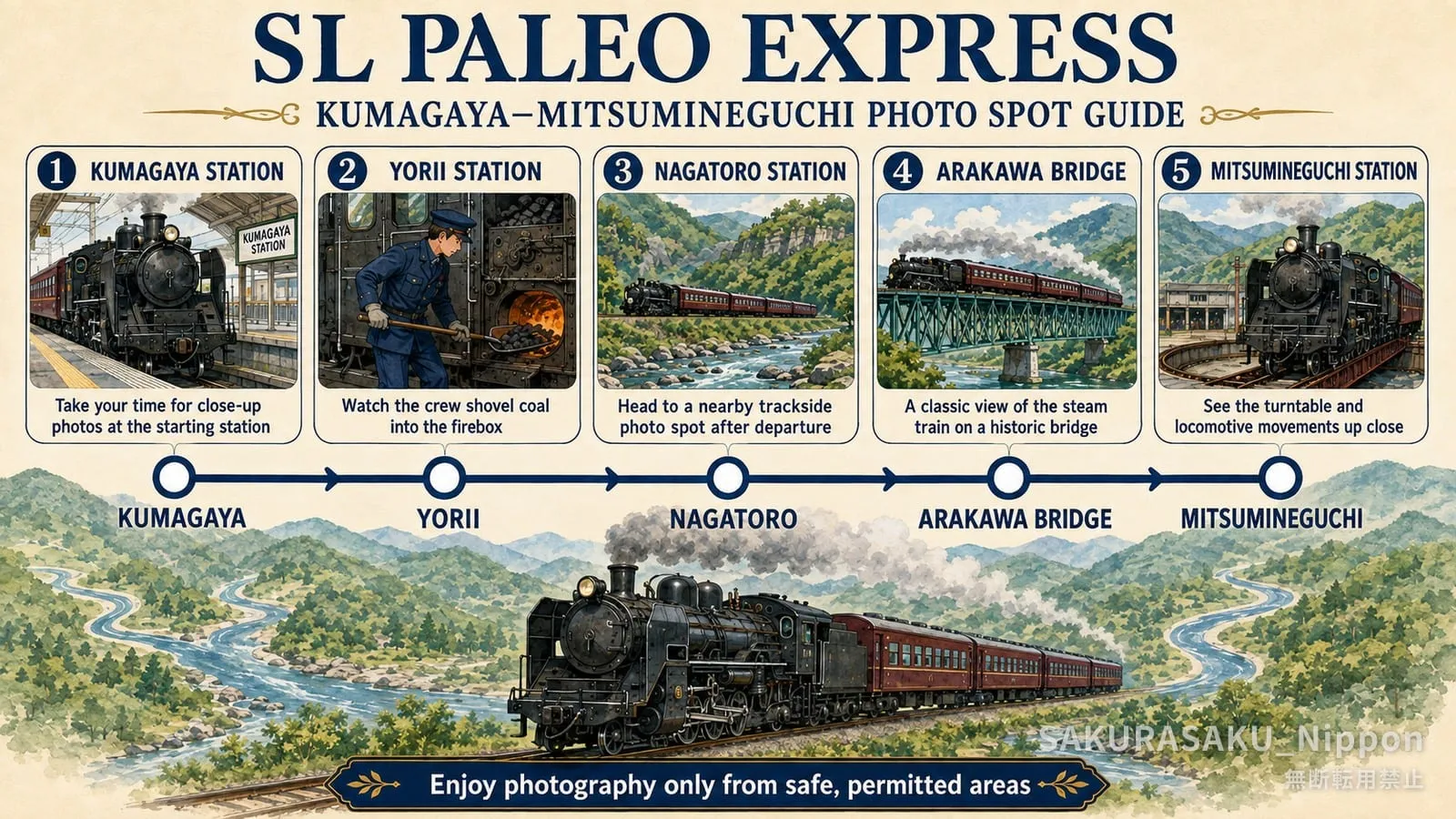
This is an illustration, not a set of photographs, and not a timetable. It was drawn to show the shape of the line — the starting station, the stops along the way, the bridge and the far end where the locomotive is turned for the return working. The scenes in it are painted, not photographed, and they are not pictures of specific views you are promised on the day.
What actually happens while your train is standing at any of these stations depends on that day’s working. Take the running times, the stop lengths and the platform arrangements from the Chichibu Railway’s own timetable and operating-day announcements, not from this picture.
Two thoughts from experience. First, the light matters more than the position — a steam locomotive against a bright sky is a silhouette, and the smoke is the picture, so think about where the sun is before you think about where the bridge is. Second, the return working is a different train: the loco runs a full turn at the far end, so morning and afternoon give you different sides and different light in the same day.
And the ordinary rule of Japanese railway photography applies. Stay behind the yellow line, stay off the ballast, and never stand on private land or in a field to get the shot. The people who live along this line have to keep living along it after you have gone home.
The Ordinary Trains Are Interesting Too
Here is the part most visitors miss. The Chichibu Railway’s local trains are almost entirely second-hand from Tokyo, and if you spent any time in the city twenty years ago you have probably ridden them before.
- The 5000 series were Toei Mita Line subway cars, rebuilt into three-car sets and running here since November 1999
- The 7000 series were Tokyu 8500s, here since March 2009
- The 7500 series were Tokyu 8090s, here since March 2010
- The 7800 series were also Tokyu 8090s, rebuilt into two-car sets with new cabs, here since March 2013
- Even the 6000 series used on express services were Seibu 101s, here since March 2006
So the valley is running Tokyo’s discarded commuter stock, repainted, up a river gorge. There is something quietly moving about that, especially if you remember the 8500s rattling through Shibuya.
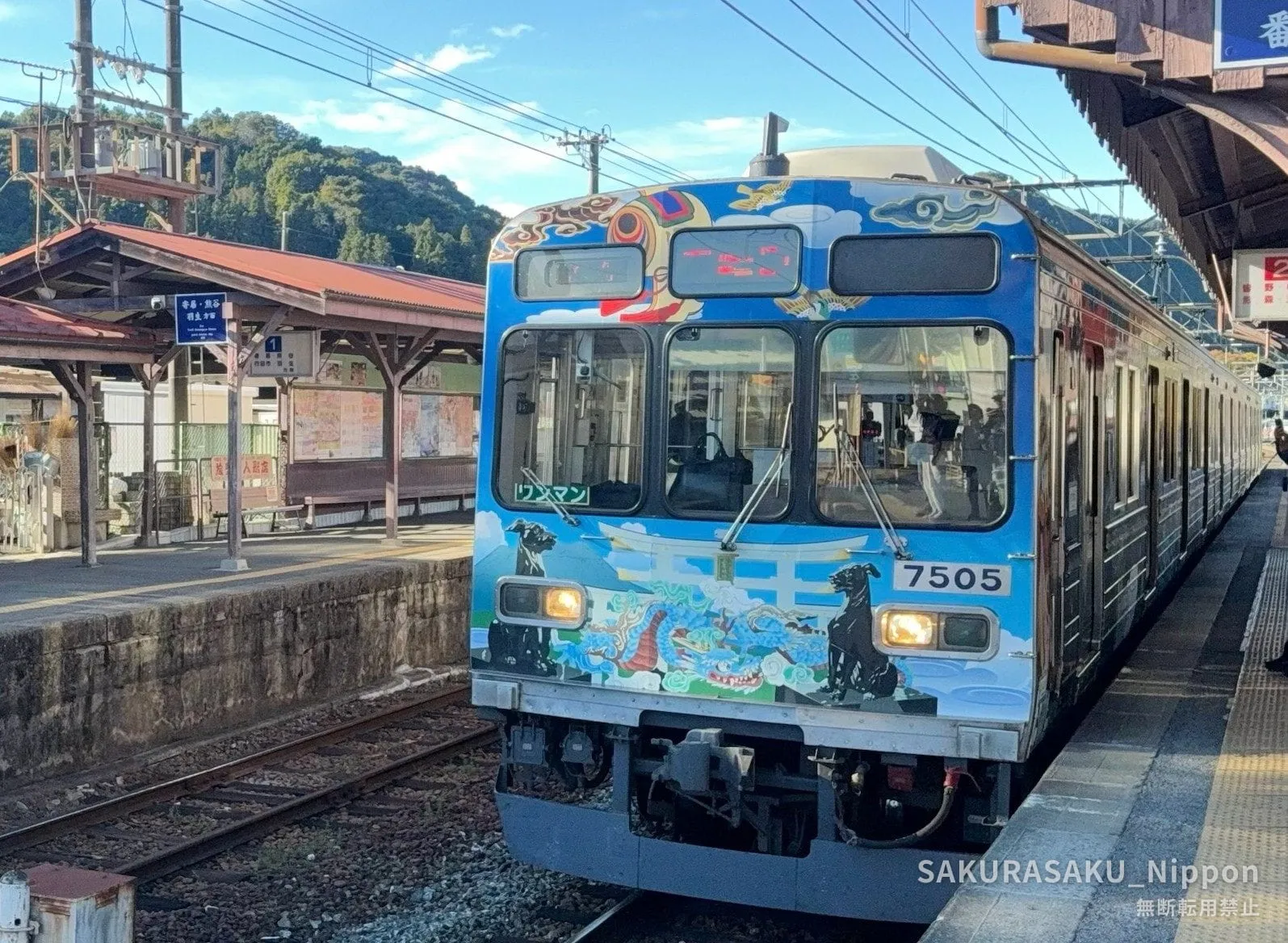
The one above is set 7505, wrapped since December 2015 as the Chichibu Three Shrines Train — the dragon and the black wolves on the front come from the three shrines of the district. The white board in the cab window says wanman: one-person operation, no conductor.
Where Steam Still Runs in Japan
Japan retired steam from ordinary service in the 1970s. What survives is a small number of preserved locomotives, run by both JR companies and private railways, on limited days, for tourists — a few in Kyushu, a few in the north, one or two in the centre of the country.
The Chichibu Railway’s is the closest to Tokyo that you can ride as a day trip without any real planning, which is why it is the one in this article. If you are going to travel a long way for steam, the others are worth researching. If you have one free Saturday and you are already in Tokyo, this is the one.
Something From Chichibu to Take Home
Chichibu makes whisky. That sentence surprises people, and then it stops surprising them once they taste it.
Ichiro’s Malt is the range from the Chichibu distillery, and it has become one of the most sought-after Japanese whiskies in the world. The Malt & Grain “Classical Edition” in the black label is a blend, 700 ml, sold in a presentation box — the most approachable way into the range, and a good deal easier to find than the single-cask bottlings that go to auction.
Ichiro's Malt, Malt & Grain Classical Edition (black label), 700 ml, boxed
View Ichiro's Malt Malt & Grain Classical Edition on Amazon.jp
This does not ship outside Japan. Alcohol cannot be sent overseas from Amazon.jp, so this is something to buy while you are here and carry home yourself — within your own country's duty-free allowance.
Price and stock may change.
On Amazon.co.jp, the English display toggle is at the top right of the screen. And if you would rather buy it in person, the shops around Seibu-Chichibu Station are the obvious place to look.
Practical Information
- Train: SL Paleo Express, Chichibu Railway
- Locomotive: C58 363, built by Kawasaki, 19 February 1944
- Coaches: ex-JNR Series 12, refurbished in 2000
- Route: Kumagaya to Mitsumineguchi, 56.8 km, about 2 hours 30 minutes
- Frequency: one return trip per operating day
- 2026 season: 20 March to 6 December, mainly weekends and public holidays
- Seats: all reserved, no exceptions
- Booking: opens 00:00 one month before the travel date, closes 30 minutes before departure
- SL reserved-seat ticket: ¥1,000 one way online by card; ¥1,100 at a window or agent; same price for children
- Also required: an ordinary ticket, IC card or day pass
- Note: an electric locomotive may substitute for the steam engine at short notice
Where to Get Off
- Nagatoro — the rock terraces, the wooden boats and the natural history museum with the Paleoparadoxia skeleton in it
- The Misotsuchi Icicles — midwinter, upstream, when a cliff face freezes
- Fifty-two Seats of Happiness — the other special train to Chichibu, on the Seibu line, with a kitchen in it
Who Is This For?
Anyone who has never heard a steam locomotive work and would like to. Anyone who likes machines with long biographies. And anyone who thinks a train named after a twenty-million-year-old sea mammal, hauled by an engine that spent fifteen years in a school playground, is a reasonable way to spend a Saturday. It is.
Note: Operating days, timetables and fares change every year. Please check the Chichibu Railway’s own announcements before you travel.
Affiliate note: This article contains an Amazon affiliate link. As an affiliate, we may earn from qualifying purchases at no extra cost to you.