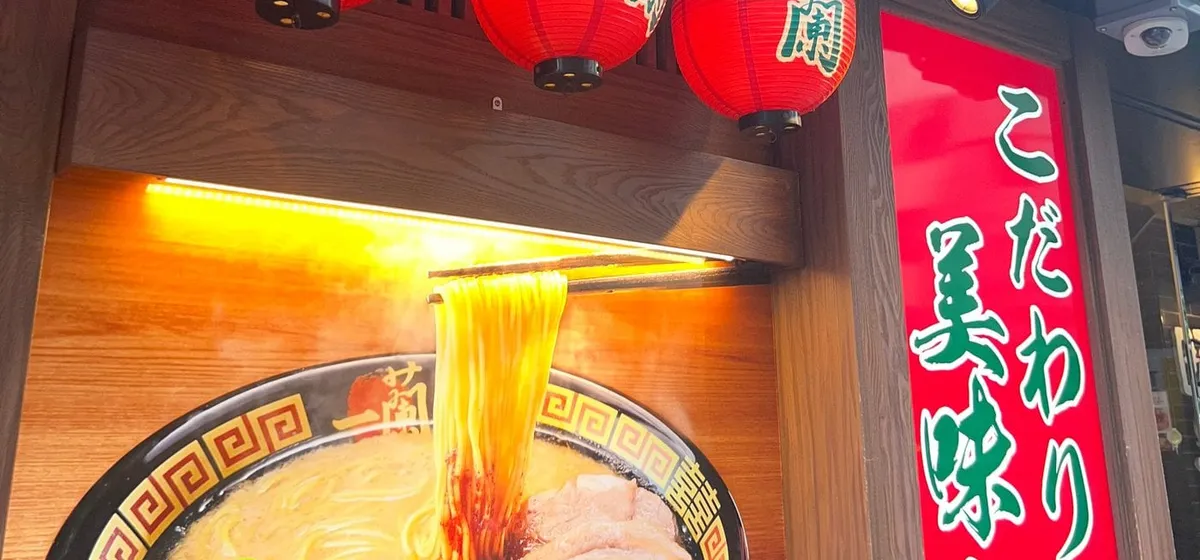
Ichiran Natural Tonkotsu Ramen: The Solo Booth, the Order Sheet, and the Red Sauce
There are ramen shops where the master watches you eat. Ichiran (一蘭) is the opposite. Here you sit in a small wooden booth, a bamboo screen is lowered, and for a few minutes there is nothing in the world but your bowl.
It is one of the easiest first ramen experiences a visitor can have in Japan — no conversation is required at all — and it is also, quietly, one of the most particular.
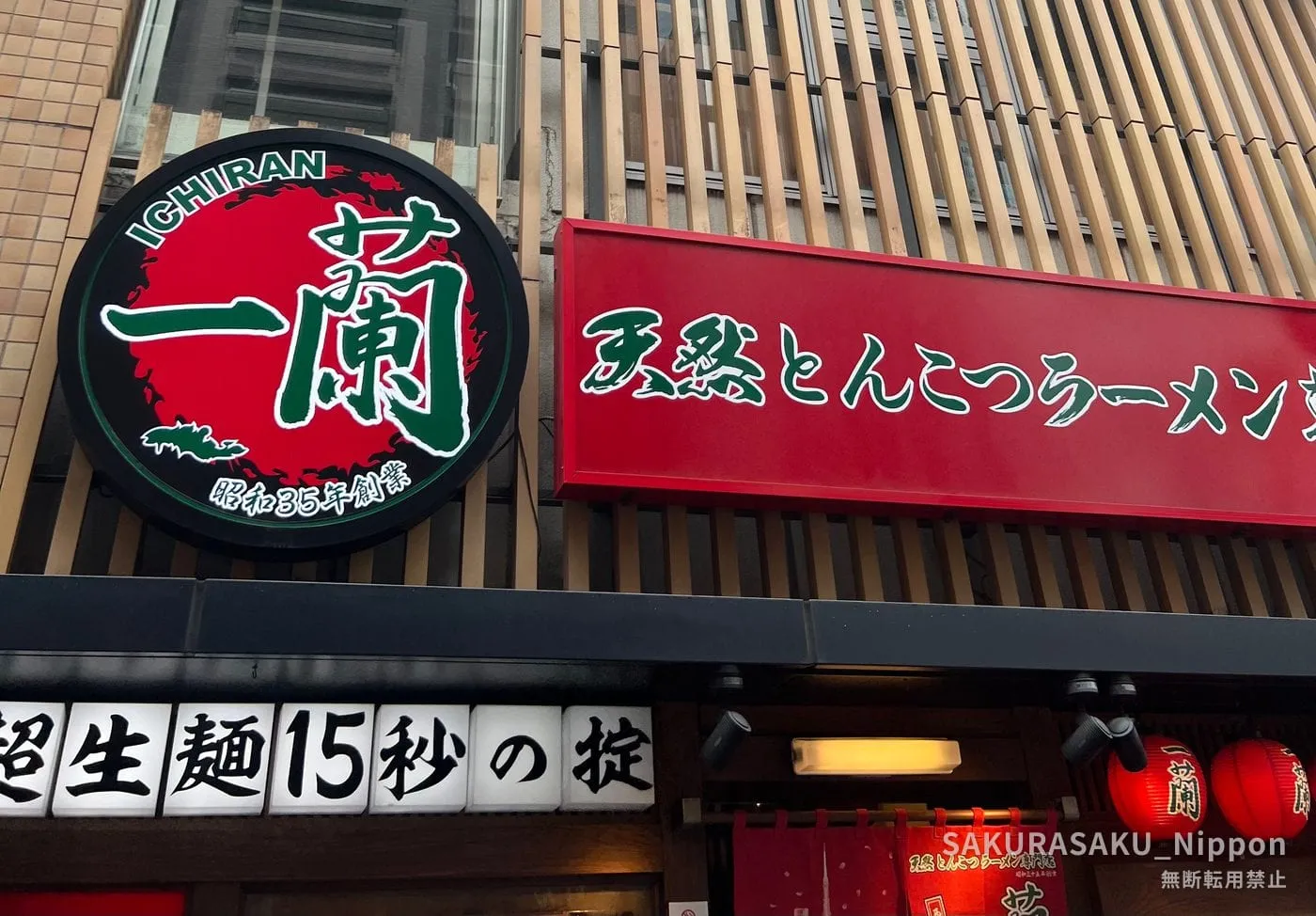
Five Things Ichiran Claims to Have Invented
The company traces its style back to 1960, and describes five things as its own originals. Together they explain the whole experience.
1. The red secret sauce. A spoonful of deep red paste is set in the centre of your bowl. It is made from more than thirty ingredients, and the recipe is said to be known by only four people in the entire company. You choose how much you want — or none at all.
2. Tonkotsu broth without the smell. Pork-bone broth is famous for its richness, and sometimes for its heaviness. Ichiran’s is boiled to keep the depth but lose the odour, which is why people who thought they disliked tonkotsu often change their minds here.
3. The Flavour Concentration Booth. Aji-shūchū counter — a row of individual booths, each with side panels, so nothing distracts you from the bowl. It also means you may eat entirely alone, comfortably, which is one reason the shops are popular with solo diners and women travelling by themselves.
4. The order sheet. Rather than saying anything, you tick a paper form: seven choices, including the richness of the broth, the strength of the garlic, the amount of red sauce, and how firm you would like your noodles. The sheet is also printed in English, Korean and Chinese, so there is no language barrier at all.
5. Kaedama — the noodle refill. Still hungry? Press the button, hand over your ticket, and a fresh portion of noodles arrives for your remaining broth. The noodles are boiled for a matter of seconds, so they arrive at their best.
The Wall of Toilet Paper
One more detail, which delights everyone who notices it. In many branches, the wall of the washroom is fitted with row upon row of toilet-roll holders — a whole wall of them.
It looks eccentric until you understand the reasoning: a guest should never, ever find the paper has run out. It is a very Japanese kind of hospitality — solving a small, undignified problem so thoroughly that it can never happen. Once you have seen it, you understand the rest of the shop rather better.
How to Order, Step by Step
- Buy a ticket from the vending machine at the entrance (or, in some shops, order at the counter).
- Check the seating board — lit panels show which booths are free.
- Sit down. A cup and water are already there; the tap is under the counter.
- Fill in the order sheet with the pencil provided. If you are unsure, “basic” for everything is a perfectly good bowl.
- Press the call button and pass the sheet through the low window. The screen comes down.
- Eat. For kaedama, put the ticket on the dish and press the button again.
Where to Find One
This is the other great advantage: Ichiran is everywhere. There are around eighty shops across Japan, and roughly ten more overseas — in Tokyo alone you are rarely far from one, and many branches stay open very late.
For the current, complete list, please see the official shop directory.
Ichiran is the easiest bowl to begin with, but it is one style among many. If you would like to know what else is worth queueing for, and how ticket machines work at the smaller shops:
→ Related: Best Ramen in Tokyo: An Honest Guide by a Local
Taking Ichiran Home
The bowl cannot travel, but a very good approximation can. Two things are worth carrying home.
The first is Ichiran’s Umakara Koku-mashi — a bottled version of that red sauce, sold with a sachet of the red powder. It is not only for ramen: a small spoonful lifts fried rice, soup, gyoza, even pasta. You can buy it at the shop when you order your ramen, or online.

Ichiran Umakara Koku-mashi red sauce (200 ml)
View Ichiran Umakara Koku-mashi (200 ml) on Amazon.jp
View Ichiran Umakara Koku-mashi (200 ml) on Rakuten (Japanese site)
Price and stock may change. Figures are from the time of writing.
The second is the take-home ramen kit — the thin, straight Hakata noodles with the broth and sauce, so you can build the bowl in your own kitchen.

Ichiran ramen take-home set (5 servings, Kyushu limited)
View the Ichiran ramen set (5 servings) on Amazon.jp
View the Ichiran ramen set (5 servings) on Rakuten (Japanese site)
Price and stock may change. Figures are from the time of writing.
A tip for ordering to your hotel. Amazon.co.jp can usually deliver to a Tokyo hotel — put the hotel’s address in the delivery field and your own name with the room number. Please do ask the hotel first, as some will not accept parcels for guests. And if the Japanese site is difficult, the language toggle sits at the top right of the screen, which switches everything to English.
There is a separate article on this kit — what is actually in the box, the official cooking method, and what to check before carrying it out of Japan.
→ Taking Ichiran Home: The Hakata Thin Noodle Set, Five Servings
Practical Information
- Name: Ichiran — Natural Tonkotsu Ramen (天然とんこつラーメン 一蘭)
- Style: Hakata-style tonkotsu, in individual booths
- Since: 1960
- Branches: Around 80 in Japan, about 10 overseas — official list
- Order sheet languages: Japanese, English, Korean, Chinese
- Good for: Solo diners, late nights, a first ramen with no language worries
- Typical price: Around ¥1,000 for a bowl, plus extras (at the time of writing)
Who Is This For?
Anyone eating alone and glad of it; anyone nervous about ordering in Japanese; and anyone who would like their ramen exactly, precisely, to their own taste. Tick the boxes, let the screen come down, and give the bowl your full attention. That, after all, is the entire idea.
Note: Prices, menus and shop locations change. Please check the official site before visiting.
Affiliate note: This article contains Amazon and Rakuten affiliate links. As an Amazon Associate, we earn from qualifying purchases at no extra cost to you.