Ashikaga Gakkō: Japan's Oldest School, and the Best Detour from the Wisteria
If you are travelling to Ashikaga Flower Park to see the great wisteria lit up at night — and you should — then you have an afternoon to fill first. Please do not spend it waiting.
Twenty minutes away, in the same city, there is a walled compound of thatched halls, old pines and raked gravel that is known as the oldest school in Japan. It is called Ashikaga Gakkō (足利学校), and standing inside it feels far closer to Kyoto or Nara than to a small city in Tochigi.
The Gate That Says “School”
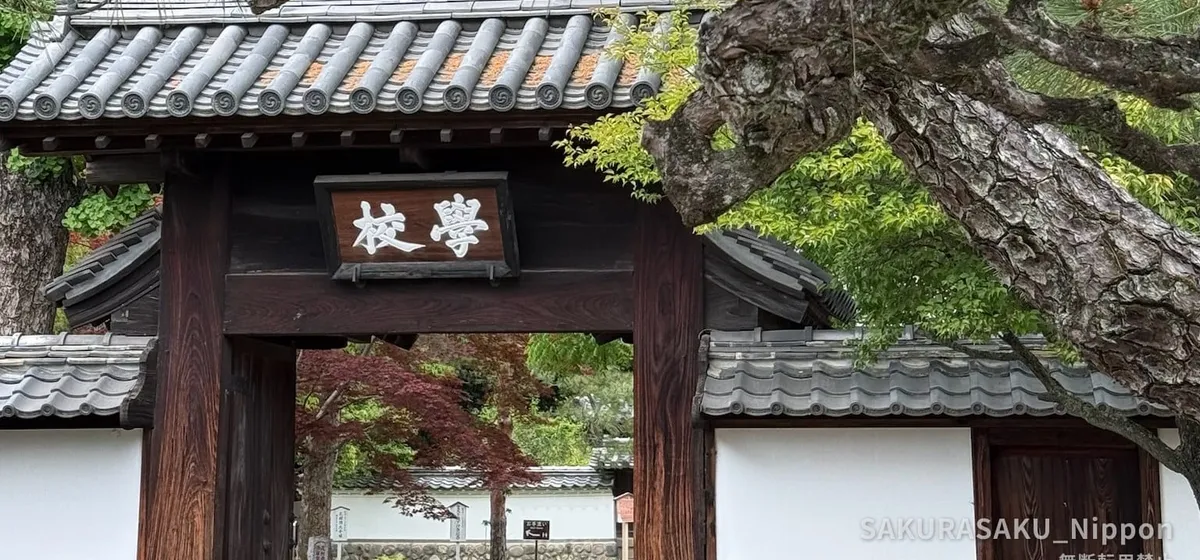
The first thing you meet is the Gakkō-mon, the School Gate, with a plaque above it bearing two characters: 學校 — gakkō, “school.”
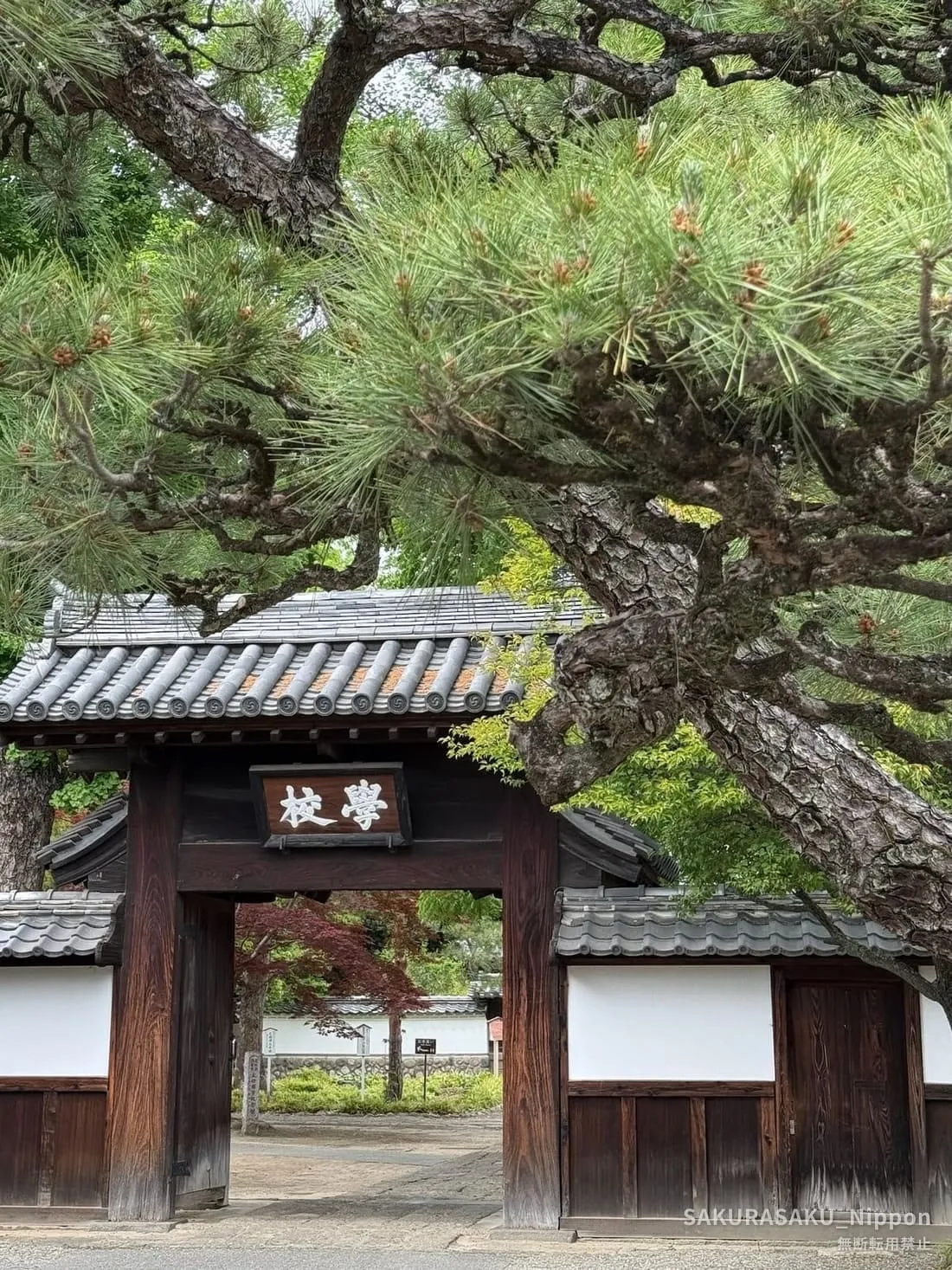
It is a strange and rather moving thing to stand under. This is not a museum sign. It is a gate that has announced itself as a school for centuries — arguably the oldest such declaration in the country still standing where it belongs.
Nobody Knows How Old It Is
Here is the honest version, because it is more interesting than the tidy one.
The founding date is genuinely unknown. There are three long-standing theories, and Japanese scholarship has not settled between them:
- that it descends from the Nara-period provincial school system (8th century)
- that it was founded by the courtier Ono no Takamura in the Heian period (9th century)
- that it was founded by Ashikaga Yoshikane in the Kamakura period (12th century)
What is documented is the revival. In the fifteenth century, Uesugi Norizane, the Kantō deputy of the shogunate, rebuilt the school properly — endowing it with books, appointing a head (shōshu), and turning it into a serious place of study. From then it flourished, and at its height it is said to have taught thousands, drawing students from across the country to study the Chinese classics, divination, medicine and military science.
A Jesuit missionary in the sixteenth century described it to Europe as “the largest and most famous university in all Japan.” That sentence is why foreign visitors sometimes arrive here expecting something larger — it was a school of national reputation, in a quiet provincial town.
The site was designated a National Historic Site in 1921, and it now forms part of the Japan Heritage grouping “Modern Japan’s Educational Heritage — the Source of the Spirit of Learning and Courtesy.”
What There Is to See
It is not big, and that is part of its charm. You can walk the whole thing in an hour, and the pleasure is in the quality of the quiet.
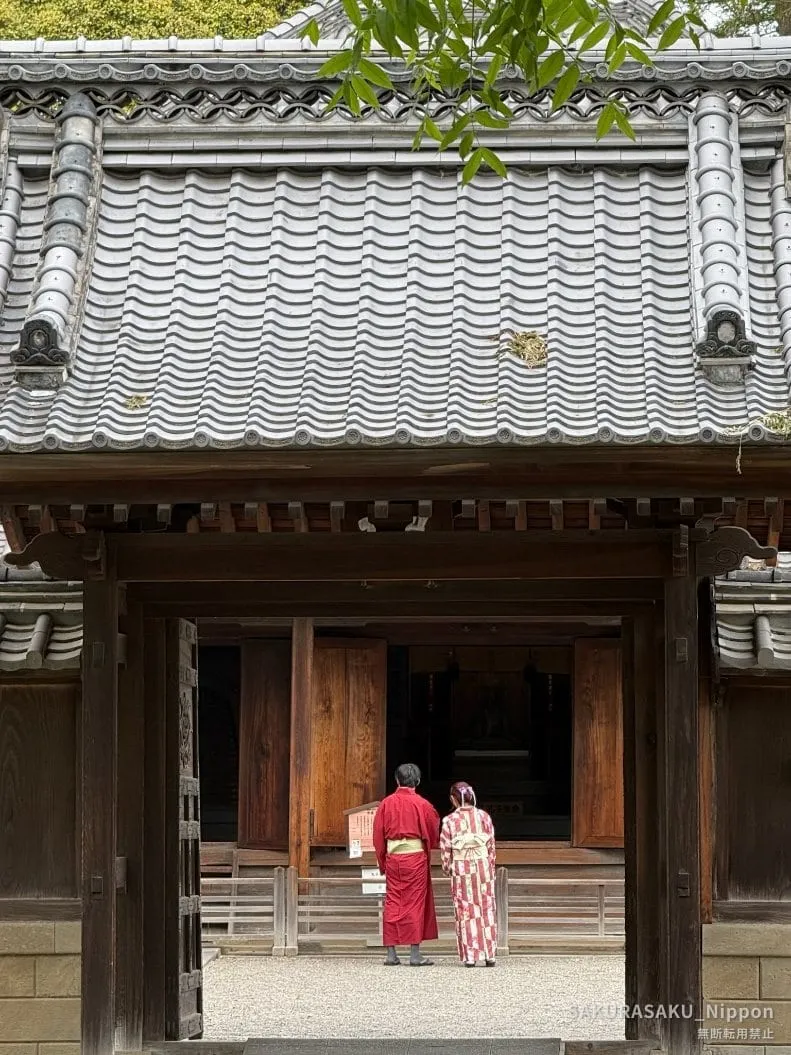
The hōjō, the main hall, is a low building under a deep thatched roof. Inside, the shōji screens are drawn back so that the garden becomes part of the room — an old, simple idea that still works perfectly.
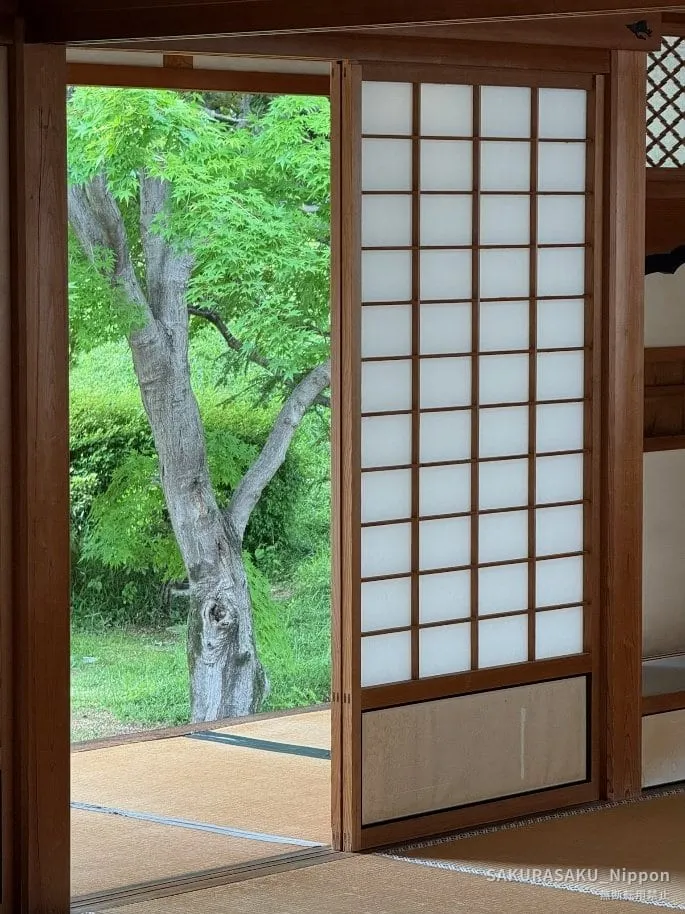
Sit for a moment on the tatami. There is nothing to do here but look, which is rather the point.
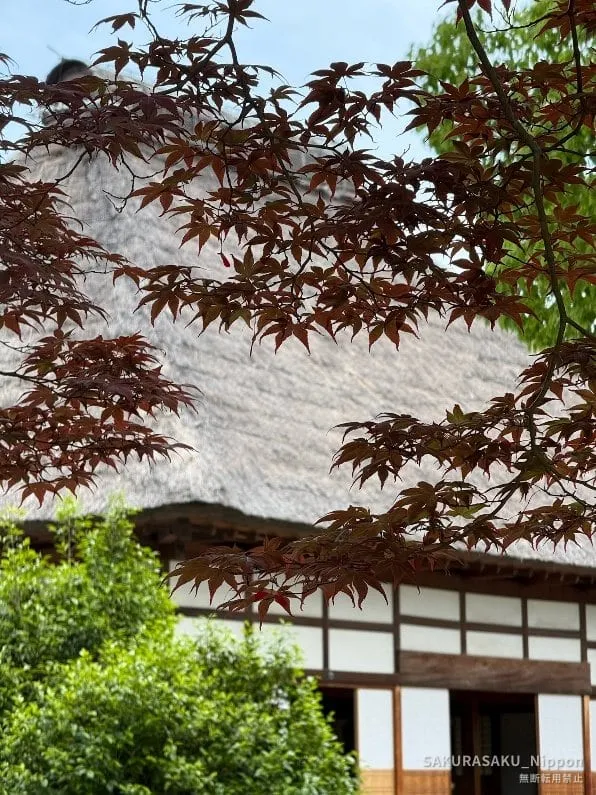
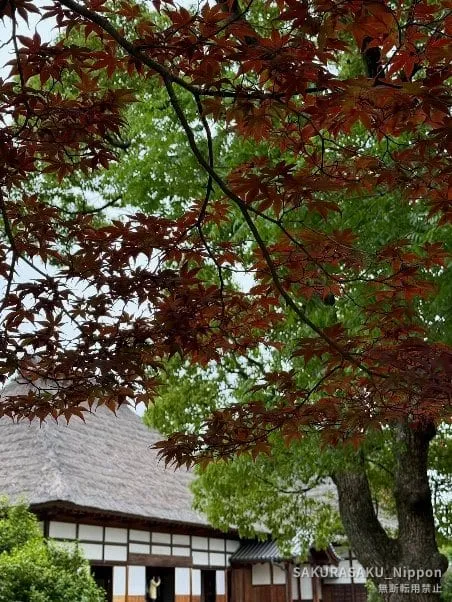
The maples are the other reason to come. Some are the deep-red variety that hold their colour all summer, so the grounds are good in any season — a fresh green in early summer, and properly spectacular in late November.
Where It Sits — and the Flower Park
This is the practical bit. Ashikaga Gakkō and Ashikaga Flower Park are in the same city, both on the JR Ryōmō Line, about twenty minutes apart by train.
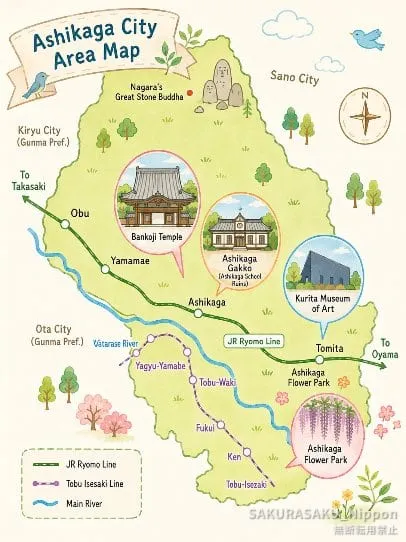
That is a genuinely useful piece of planning. The wisteria illumination at the Flower Park does not begin until dusk, so the natural shape of the day is:
- Arrive at Ashikaga Station in the early afternoon
- Ashikaga Gakkō, and the great temple Ban’na-ji five minutes away
- Train down to Ashikaga Flower Park Station
- The wisteria, into the evening, lit
Bicycles and Souvenirs
Ashikaga is flat, small and pleasant to cycle. Right by the school is Taiheiki-kan (太平記館), the city’s tourist centre: souvenirs, information, a café, free parking — and rental bicycles, including electric-assist ones. Open 9:00–17:00.
If you would rather move under your own steam, that is the place to start.
Practical Information
- Name: Ashikaga Gakkō (史跡足利学校) — “Japan’s oldest school”
- Where: Ashikaga, Tochigi — about 5 minutes on foot from JR Ashikaga Station, 10 from Tōbu Ashikaga-shi Station
- Admission: around ¥480 for adults, ¥240 high-school students, free for pre-school children (at the time of writing)
- Closed: the third Wednesday of each month (the following day if that is a holiday), and 29–31 December
- Allow: about an hour
- Nearby: Ban’na-ji temple (5 min), Taiheiki-kan tourist centre and cycle hire
- To the Flower Park: about 20 minutes on the JR Ryōmō Line
You Do Not Buy a Ticket. You Enrol.
This is the detail that made me laugh out loud, and then rather love the place.
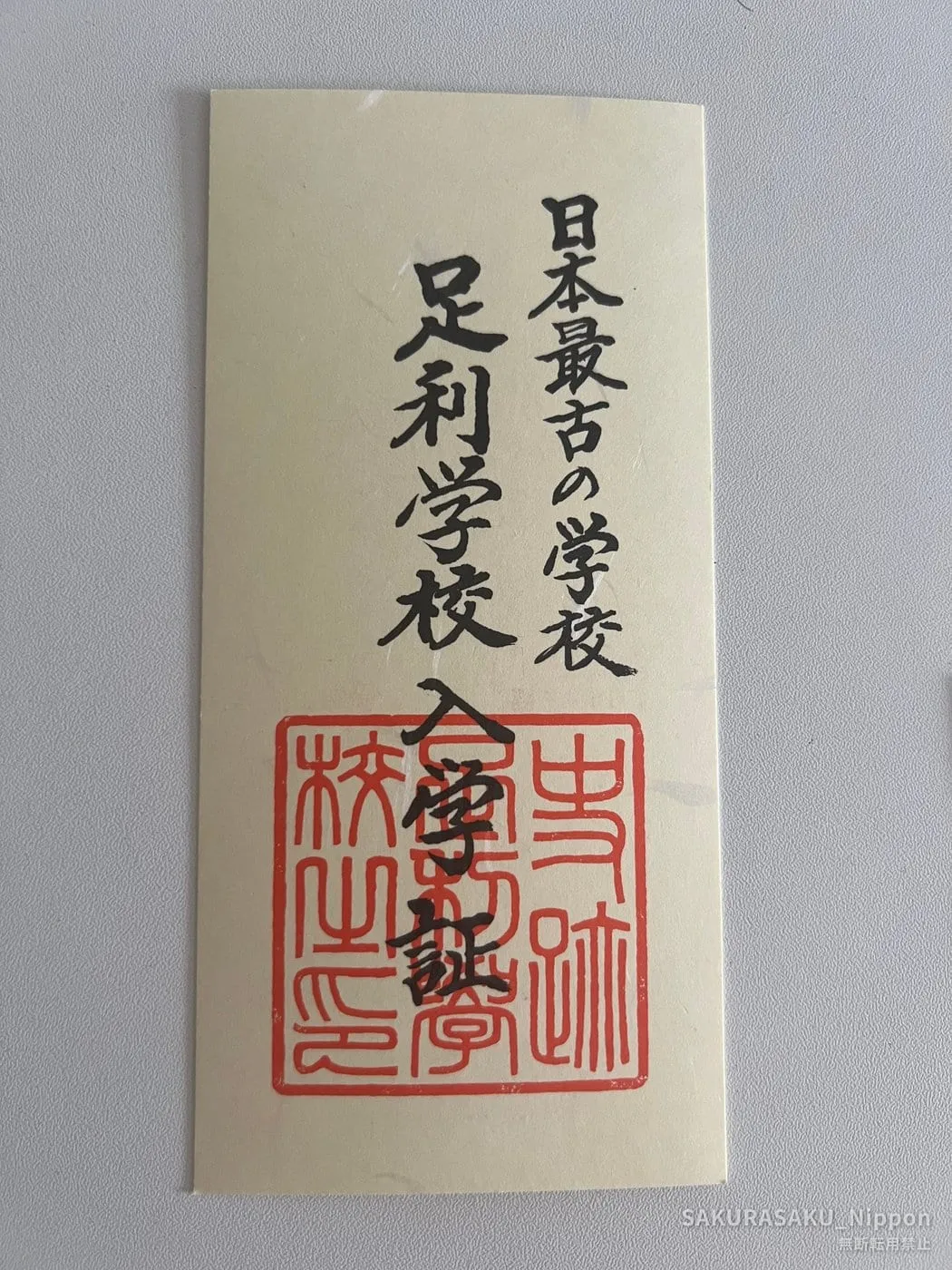
Hand over your money at the entrance and you are not given a ticket. You are given an admission certificate — nyūgaku-shō, the same word a Japanese student receives on entering a school. Brushed characters, a red seal, and above them the line “the oldest school in Japan.”
And then they give you a student ID.
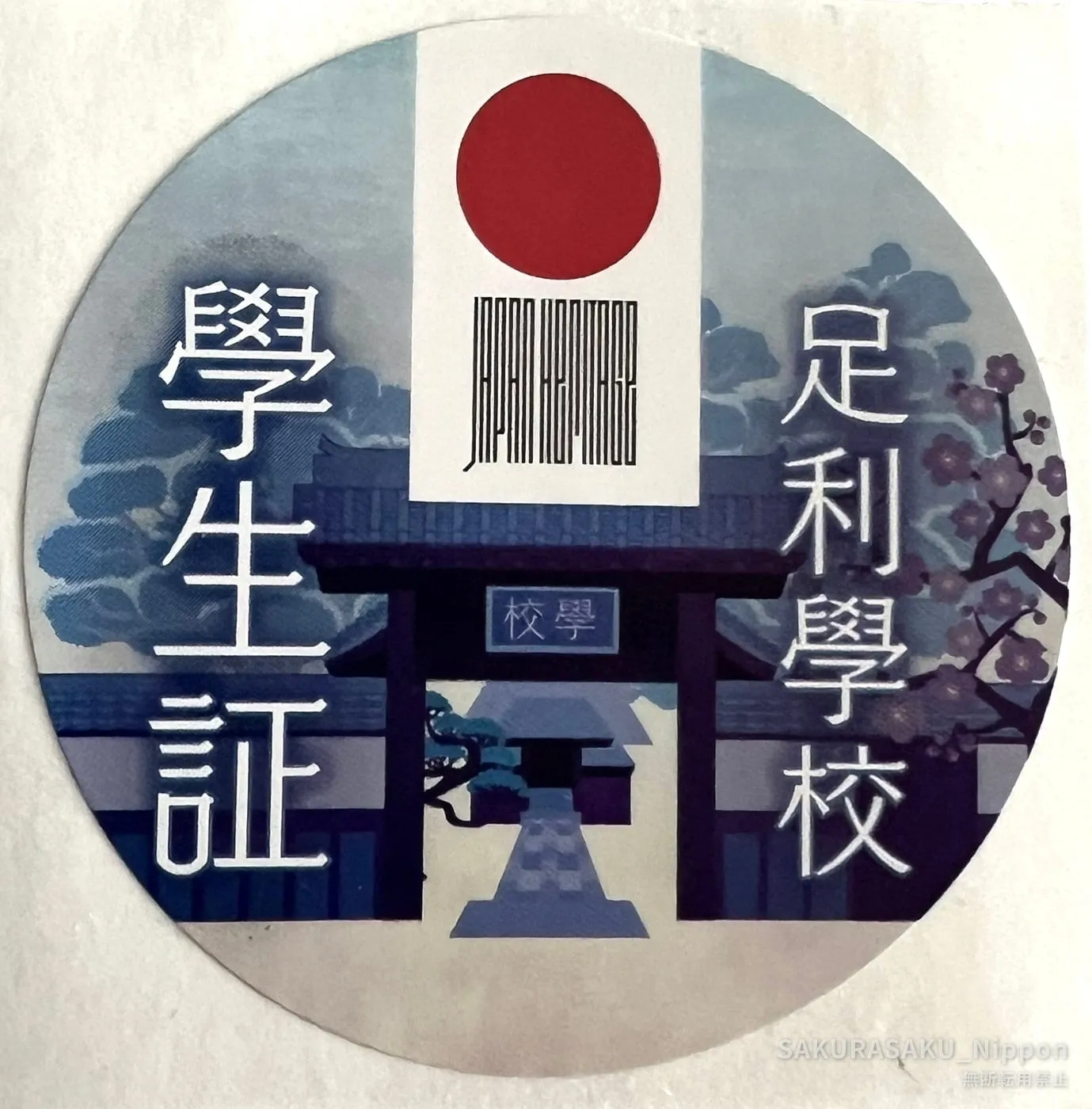
It is a small round sticker — gakusei-shō — printed with the School Gate, plum blossom, and the Japan Heritage mark. Keep it in your wallet and you are, in the gentlest possible sense, a student of the oldest school in Japan.
Nobody makes a fuss about this. There is no sign explaining the joke. It is simply how the place has decided to receive its visitors, and it tells you more about Ashikaga Gakkō than any information panel could.
A Quiet Request
This is a preserved historic site with tatami rooms and a Confucian shrine, not a theme park. Take your shoes off where you are asked to, keep your voice low indoors, and follow the notices about photography inside the halls.
It is a school. It still behaves like one — and now, so are you.
Taking a Little of Ashikaga Home
One small thing, if you want it.
Tsukiboshi Foods, an Ashikaga company, makes a fruit sauce gift set that is genuinely useful at home: yuzu-and-honey, strawberry and mango, over ice cream, yoghurt, pancakes, or stirred into hot water. The set holds five bottles across the three flavours.

Tsukiboshi fruit sauce gift set — 5 bottles, 3 flavours (strawberry, mango, yuzu & honey)
View the Tsukiboshi fruit sauce gift set on Amazon.jp
View the Tsukiboshi fruit sauce gift set on Rakuten (Japanese site)
Price and stock may change. Figures are from the time of writing.
→ More on the fruit sauces in a separate article.
Who Is This For?
Anyone going to the Flower Park who does not want to arrive at four o’clock with nothing to do. Anyone who likes the idea of a school older than most countries’ universities. And anyone who enjoys a place that has been quietly getting on with the same purpose for six hundred years, in a town that has never made a fuss about it.
Note: Admission, opening days and facilities change. Please check the official Ashikaga City site before visiting.
Affiliate note: This article contains Amazon and Rakuten affiliate links. As an Amazon Associate, we earn from qualifying purchases at no extra cost to you.