
Ashikaga Flower Park: The Great Wisteria, and Nights from the World of Demon Slayer
Some gardens are beautiful. A few are unforgettable. Ashikaga Flower Park (あしかがフラワーパーク), in Ashikaga, Tochigi, belongs firmly to the second kind — and for a few short weeks each spring, it may be one of the most beautiful places in all of Japan.
One Tree, an Impossible Sky of Flowers
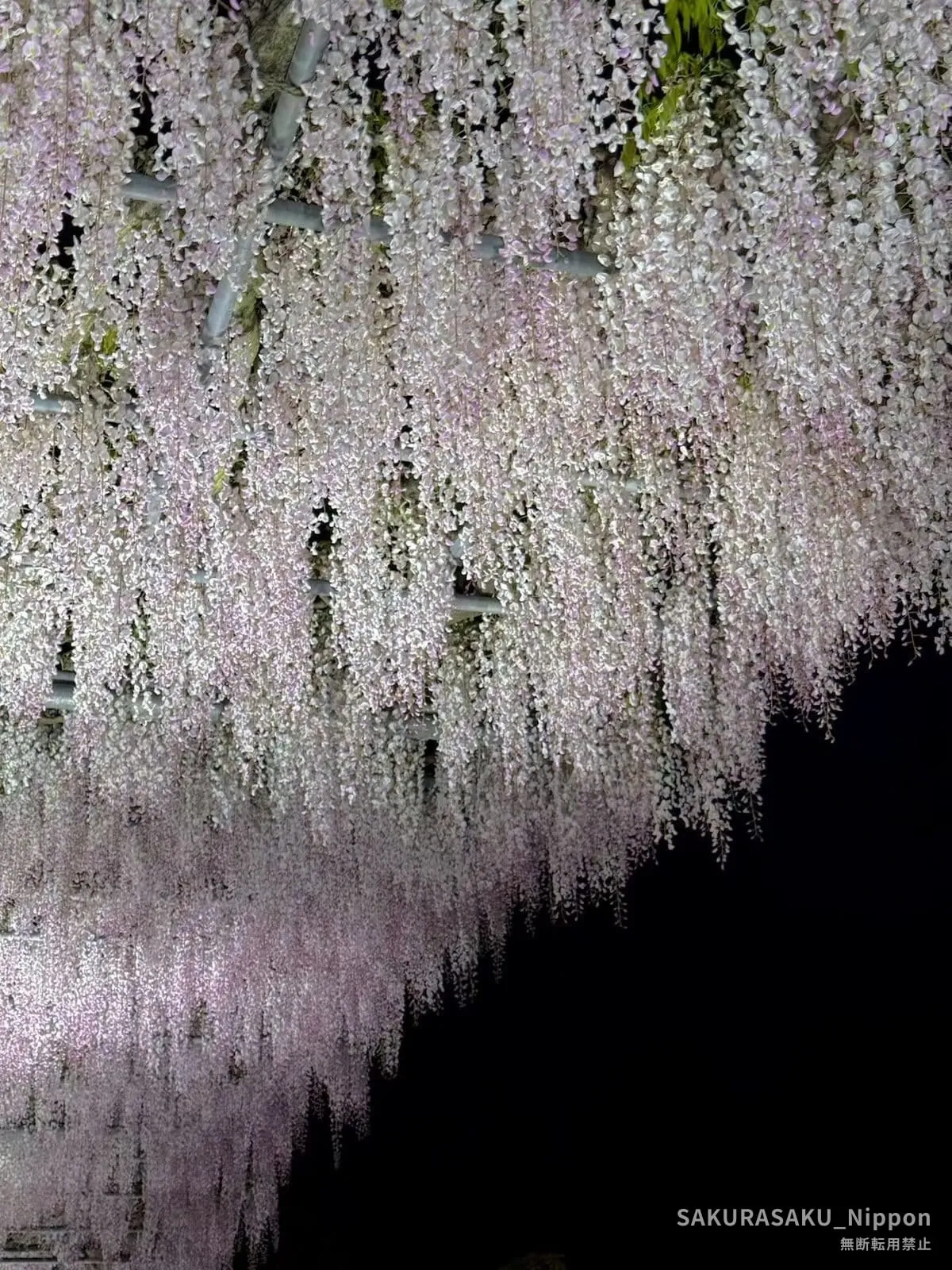
The heart of the park is the Great Wisteria (大藤, ō-fuji), and the first surprise is this: the vast, floating ceiling of blossom grows from a single tree, more than 150 years old. Through generations of the most patient and delicate care, one trunk has been trained across an overhead trellis until its flowers spread above an area of more than a thousand tatami mats. You do not stand beside it — you stand beneath it, inside a sky made of flowers.
Beneath the Wisteria
Step under the trellis, and two things happen at once. First a fragrance — fresh, green, and gentle, quite unlike any bottled perfume. Then the movement: countless long flower clusters, swaying together in the smallest breeze, until the air itself seems to be made of soft, pale light. It is difficult to describe, and quite impossible to forget.
The Night Illumination — a Scene from Demon Slayer
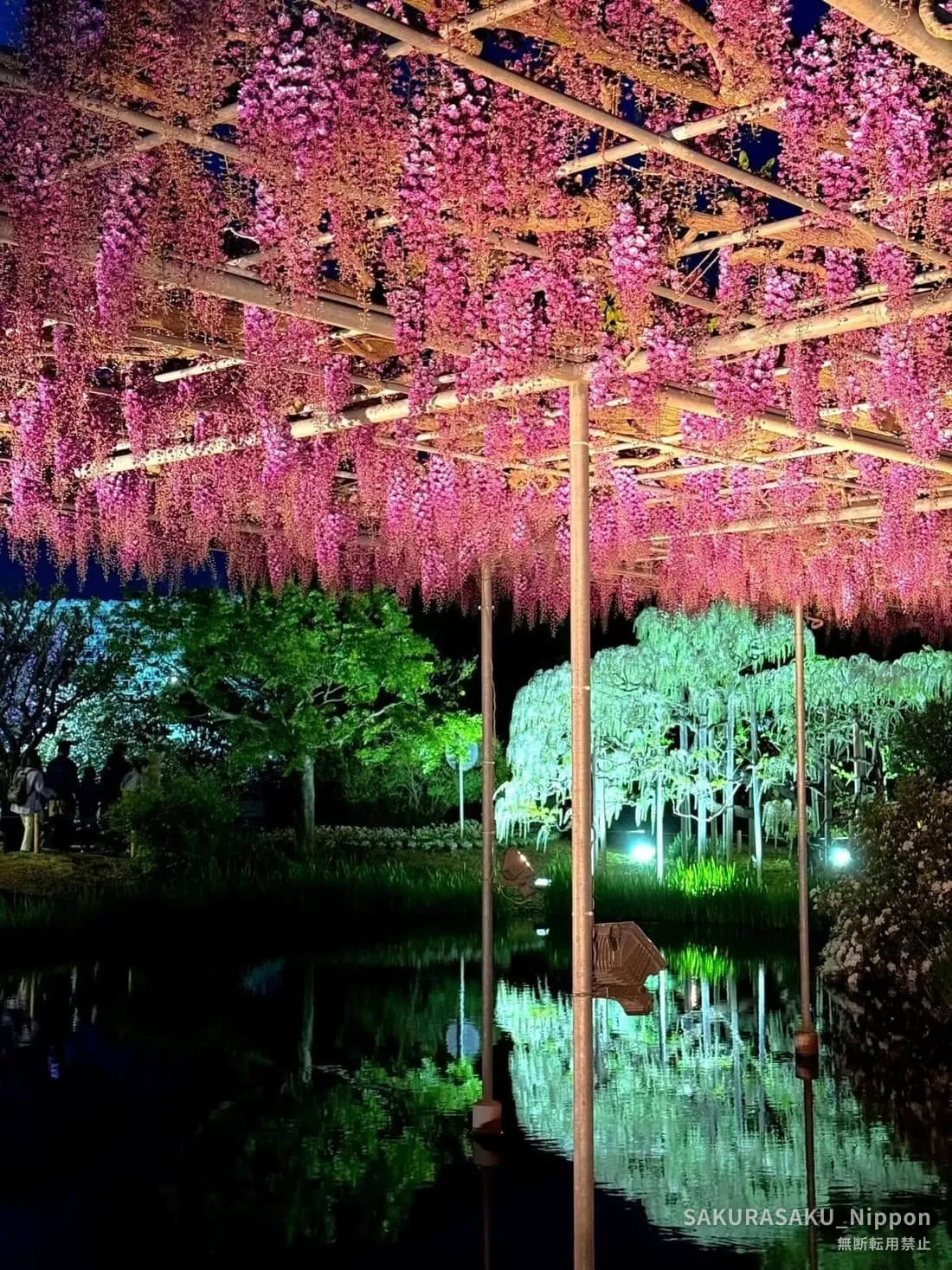
As the sky darkens and the park is lit, the wisteria becomes something else entirely. Cascades of purple, white, and pink glow against the black night; the flowers are doubled in the still water of the pond; and if the world of Demon Slayer (Kimetsu no Yaiba) — with its wisteria that keeps demons away — ever felt real, it feels real here. The evening illumination is so admired that CNN once counted the park among its dream destinations in the world.
Wisteria, a Flower Woven into Japanese Tradition
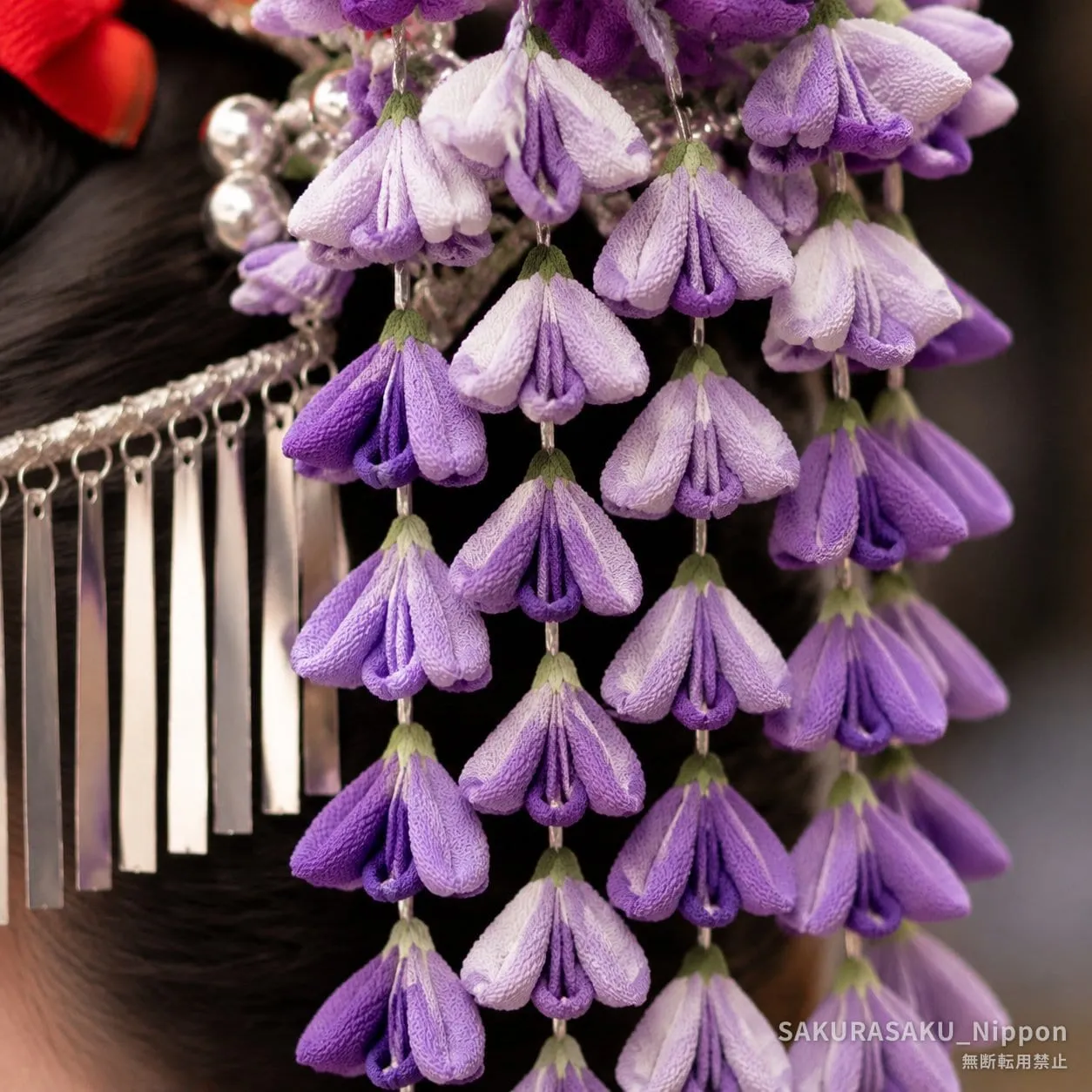
The wisteria’s trailing clusters are a much-loved motif in Japan. Among the loveliest examples are the hana-kanzashi, the seasonal flower hairpins worn by maiko (apprentice geisha): delicate wisteria of dyed silk that cascade from the hair exactly as the real flowers fall from the trellis. To see the flower and to know the ornament is to understand a little more of the Japanese feeling for the seasons.
The Bloom Is Brief — Please Check Before You Go
This is the one piece of advice I would ask you not to skip. Wisteria has a very short season — roughly mid-April to mid-May — and the true peak lasts only a handful of days, arriving a little earlier or later each year with the weather. The park even adjusts its admission according to the flowers’ condition. So before you set your date, please check the official bloom report:
→ Ashikaga Flower Park — official site
Practical Information
- Name: Ashikaga Flower Park (あしかがフラワーパーク)
- Where: Ashikaga, Tochigi Prefecture
- Nearest station: Ashikaga Flower Park Station (JR Ryōmō Line) — about a 3-minute walk
- From Tokyo: take a JR line toward Oyama, then change to the JR Ryōmō Line; seasonal direct services and tour buses also run during the wisteria season. Allow roughly two hours.
- Wisteria season: around mid-April to mid-May (the peak shifts year to year — check the official site)
- Night illumination: held during the wisteria season, into the evening
- Admission: varies with the flowers’ condition — please see the official site
Nearby: The Ashikaga School
If you have the time, do walk a little further into the town. Ashikaga is home to Ashikaga Gakkō (足利学校), regarded as the oldest school in Japan — its quiet halls and old library a complete change of mood from the flowers: history instead of colour, stillness instead of crowds. The two together make a lovely, unhurried day out from Tokyo.
Who Is This For?
Anyone who loves flowers, photography, or simply a scene they will remember for years. Come during the short wisteria weeks, check the bloom first, and if you possibly can, stay until the lights come on — for that is when Ashikaga becomes a dream.
Note: Seasons, opening hours, illumination dates, and admission all change from year to year and with the flowers. Please check the official site before your trip.