Kusatsu Onsen: Japan's Greatest Hot Spring, and How to Reach It by Bus from Tokyo
Ask people in Japan to name the country’s best hot spring, and one answer comes back again and again: Kusatsu Onsen. For years it has topped the national onsen rankings, and once you stand beside its steaming yubatake, you understand why.
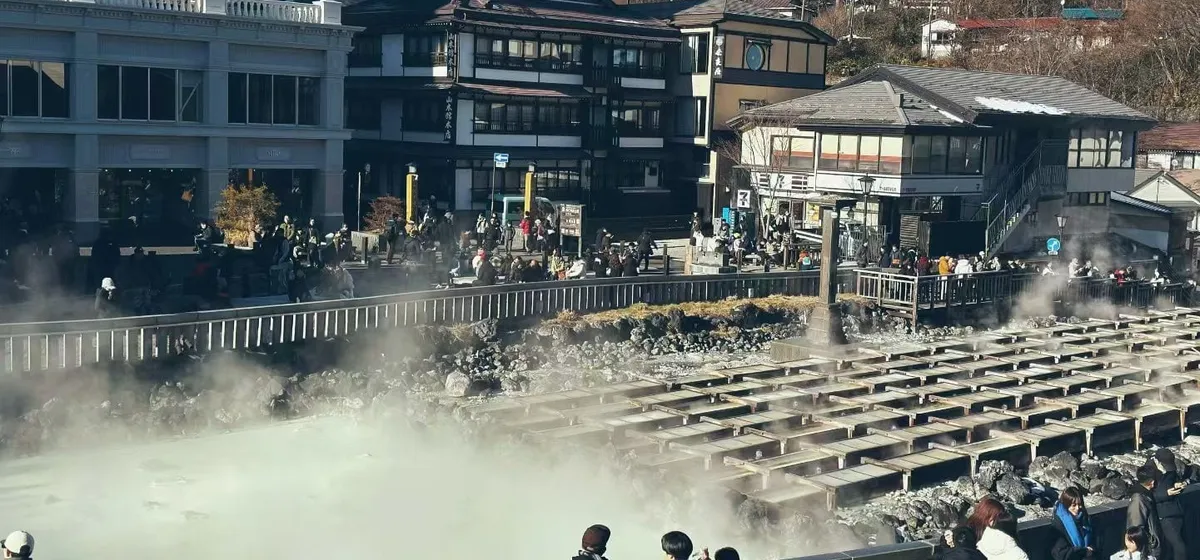
Kusatsu sits high in the mountains of Gunma, north of Tokyo. At its center is the yubatake (“hot water field”) — a large hot spring source where nearly 4,000 liters of water rise every minute, sulfurous and steaming, cooled as it runs through long wooden channels. In winter, with snow on the rocks and steam glowing in the low sun, it is one of the most beautiful sights in Japan.
It is a little far for a rushed day trip — so if you can, I truly recommend staying one night. But the journey itself is simple, because one bus takes you the whole way.
Getting There: The Direct Bus from Tokyo
The easiest way from Tokyo is the Joshu Yumeguri-go (上州ゆめぐり号), a highway bus run by JR Bus Kanto. It goes directly to the Kusatsu Onsen Bus Terminal — no transfers at all.
- From: Tokyo Station (Yaesu South Exit) and Busta Shinjuku (above Shinjuku Station)
- Time: about 4 hours from Shinjuku, a little longer from Tokyo Station
- Fare: from around ¥2,850 one way (the price changes with the date)
- Seats are reserved, so please book online in advance — the bus fills up on weekends and holidays
- There is a toilet on board, and one rest stop at a highway service area along the way
(There is also a train route — a limited express to Naganohara-Kusatsuguchi Station, then a local bus — but for most travelers the single direct bus is simpler and cheaper.)
The Kusatsu Onsen Bus Terminal
All buses arrive at the Kusatsu Onsen Bus Terminal, which is only about a 5-minute walk from the yubatake. It is a genuinely useful little hub, not just a bus stop. Inside you will find:
- A tourist information counter (English maps and advice)
- Coin lockers — important, because the ¥100 town bus cannot carry large luggage (more on that below)
- A foot bath, restaurants, and souvenir shops
- A convenience store and an ATM, and even a small “onsen library”
If you arrive with a suitcase, please leave it in a coin locker here before exploring on foot.
Getting Around: The ¥100 Town Bus
Kusatsu is small and lovely to walk, but the streets are hilly. For tired legs there is a wonderful local secret: the ¥100 town circulation bus (a “one-coin bus”).
- It costs a flat ¥100 (tax included), no matter how far you ride
- It leaves from stops #8 and #9 at the bus terminal
- There are four loop routes covering the town and its main sights
- The buses themselves are charming — two are retro, European-style green buses, and one is a barrier-free bus for wheelchairs
- It runs as a community service for the town, so please ride it gently and politely
One important note: large luggage is not allowed on the ¥100 bus (nothing over about 1 meter long or 10 kg). This is exactly why the coin lockers at the terminal matter — store your suitcase first, then hop on with just a small bag.
The Yubatake
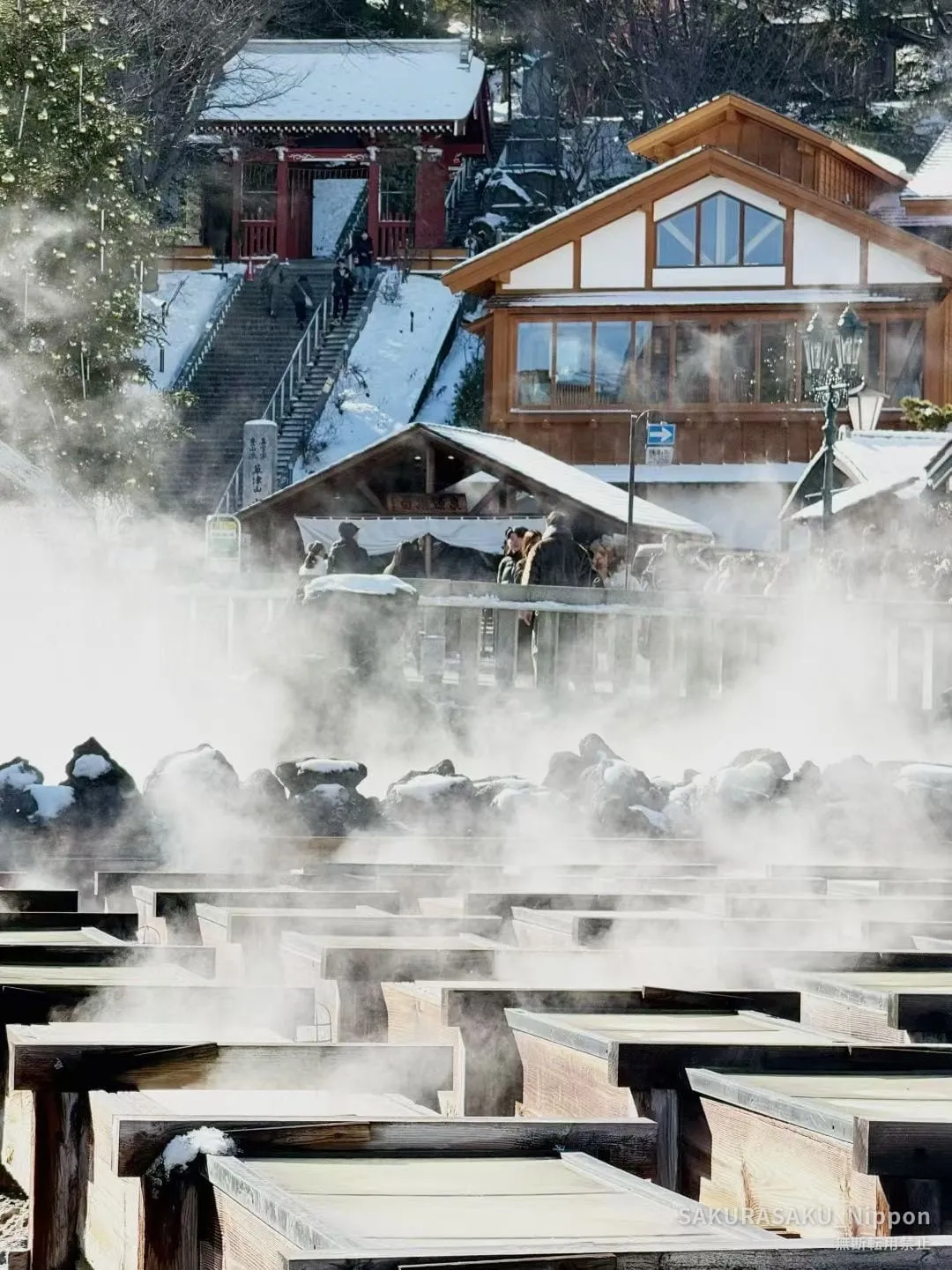
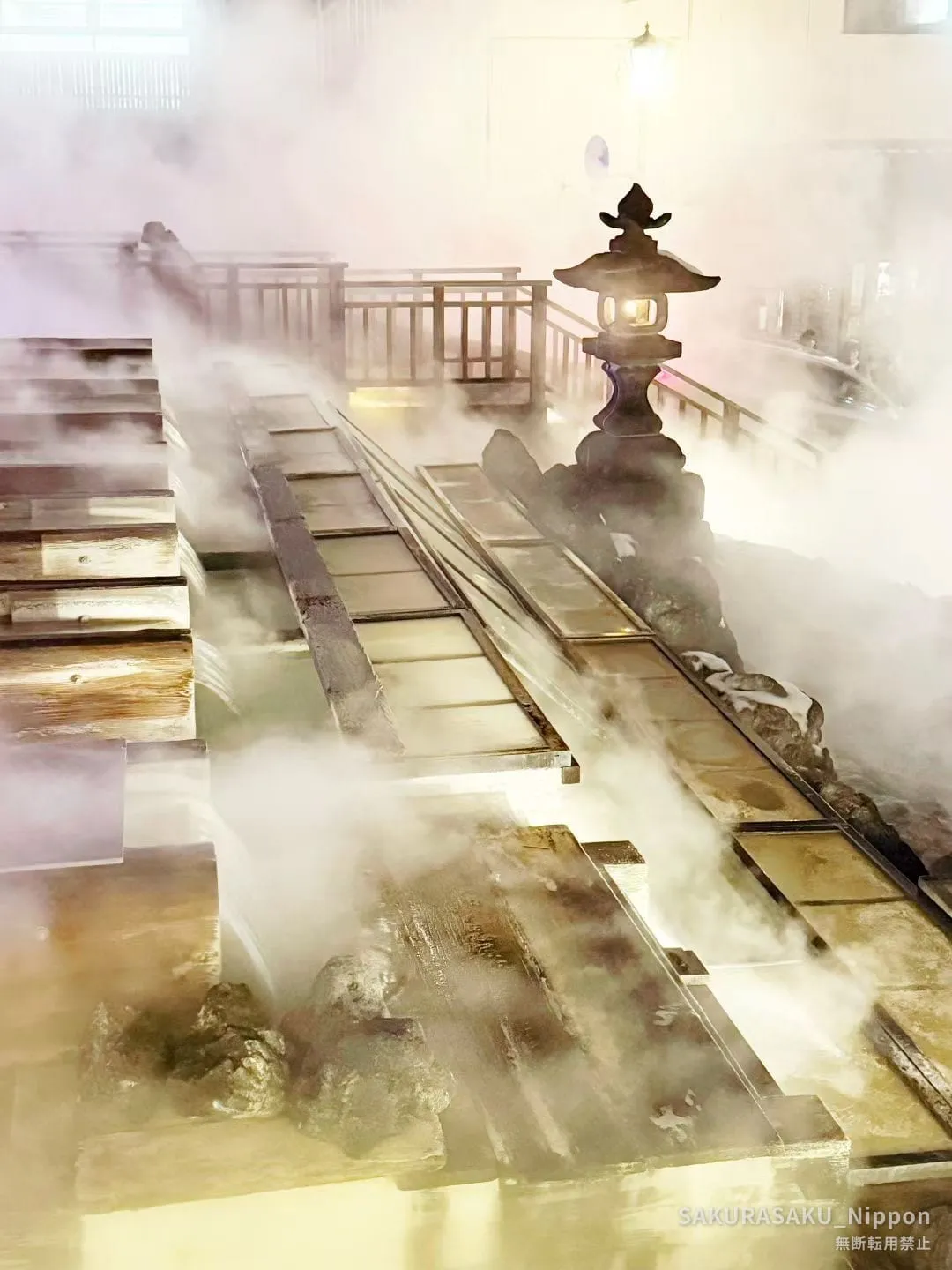
The yubatake is the heart of everything. Wooden channels carry the hot spring water back and forth to cool it before it reaches the baths, and mineral deposits paint the wood in soft yellows and greens. A stone lantern stands in the middle of the steam, and at night the whole field is lit — quiet, otherworldly.
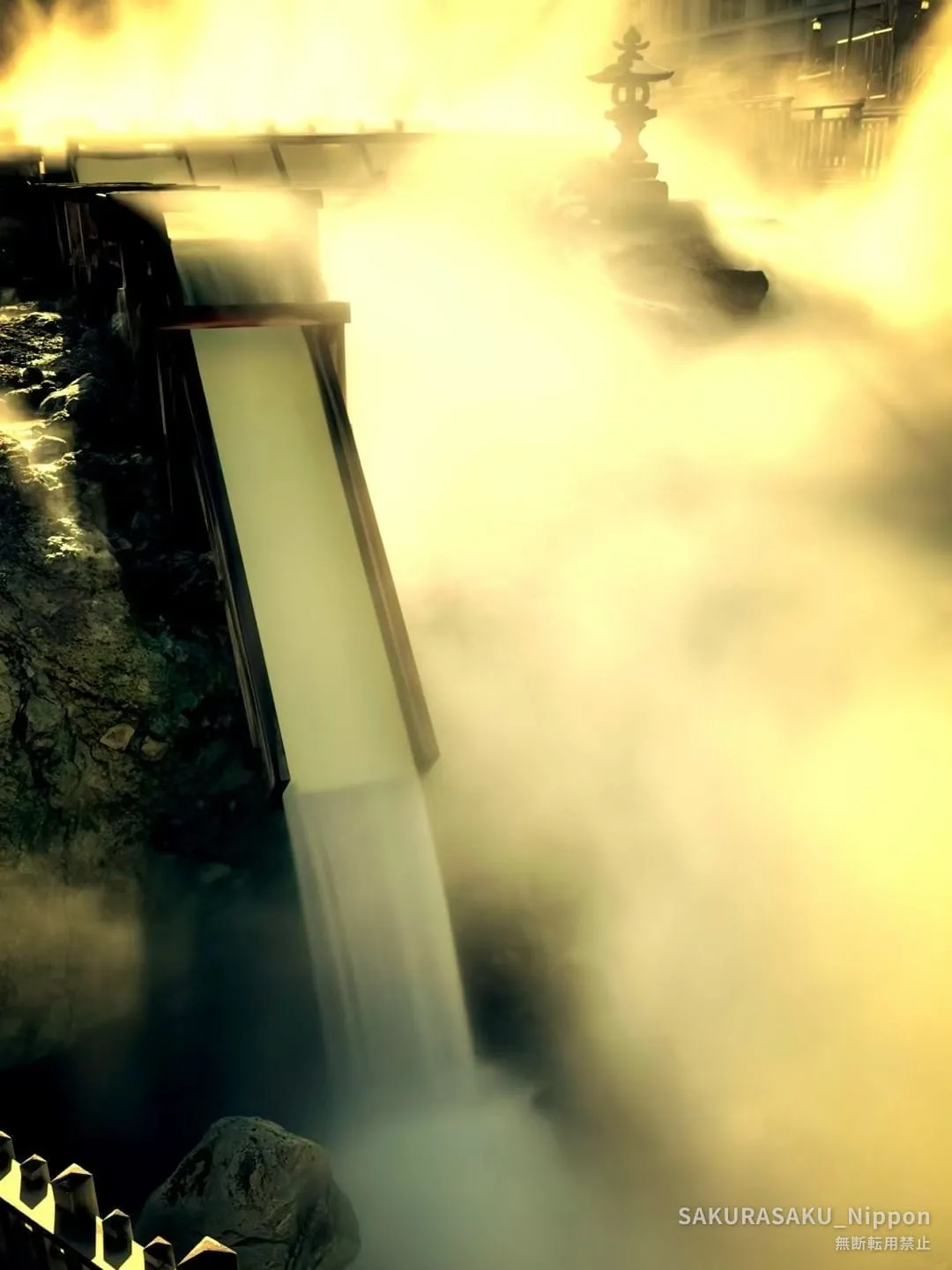
At one end, the cooled water pours over a small hot waterfall. Please take your time here; every few steps gives a different view, and the steam changes the light from moment to moment.
Sainokawara Park
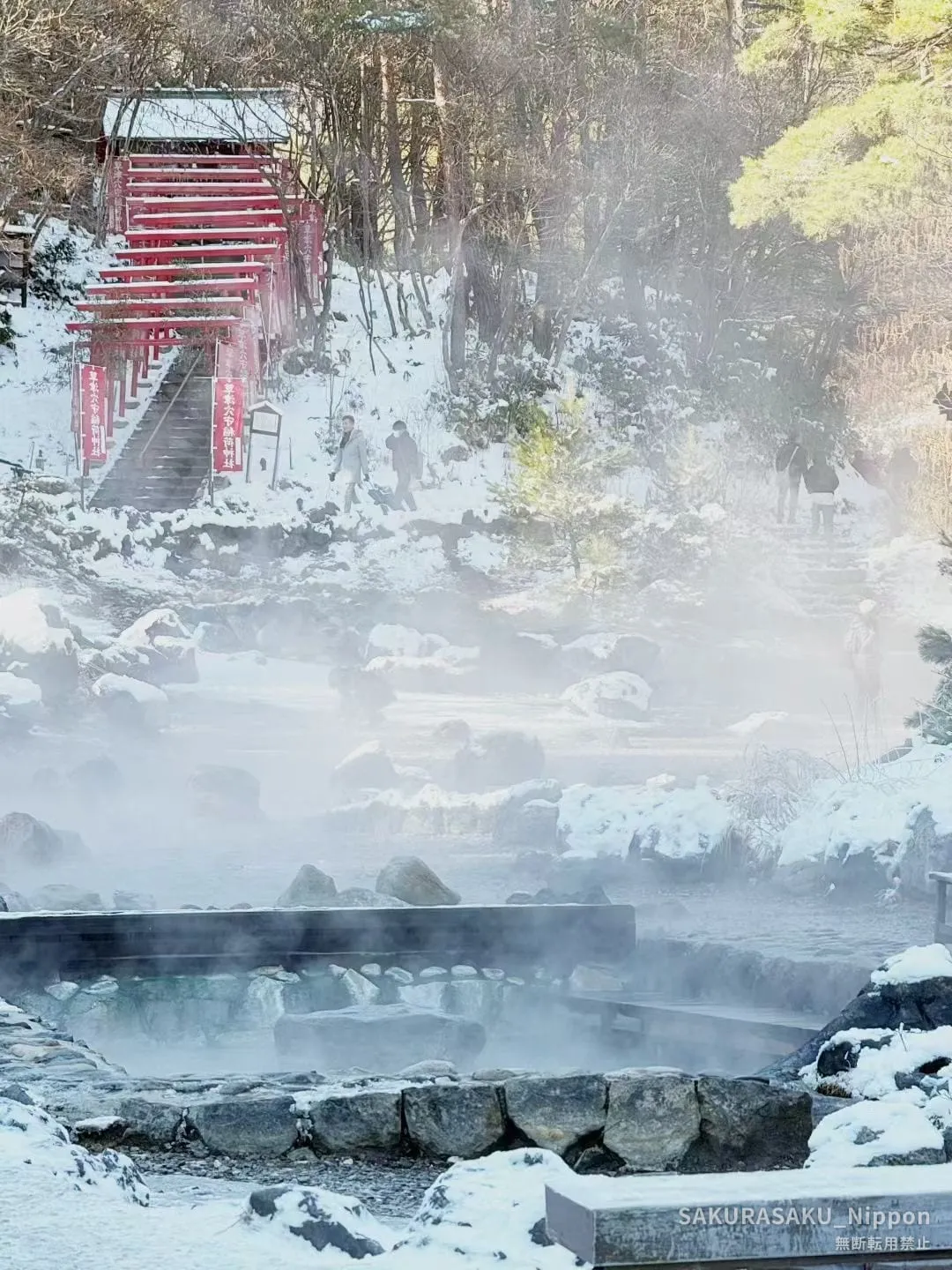
A ten-minute walk up from the yubatake leads to Sainokawara Park, where hot water runs through a snowy riverside valley and a line of red torii gates climbs the hillside. At the top of the park is a large open-air public bath — bathing outdoors while snow falls around you is an experience you will not forget.
Free Baths and Foot Baths
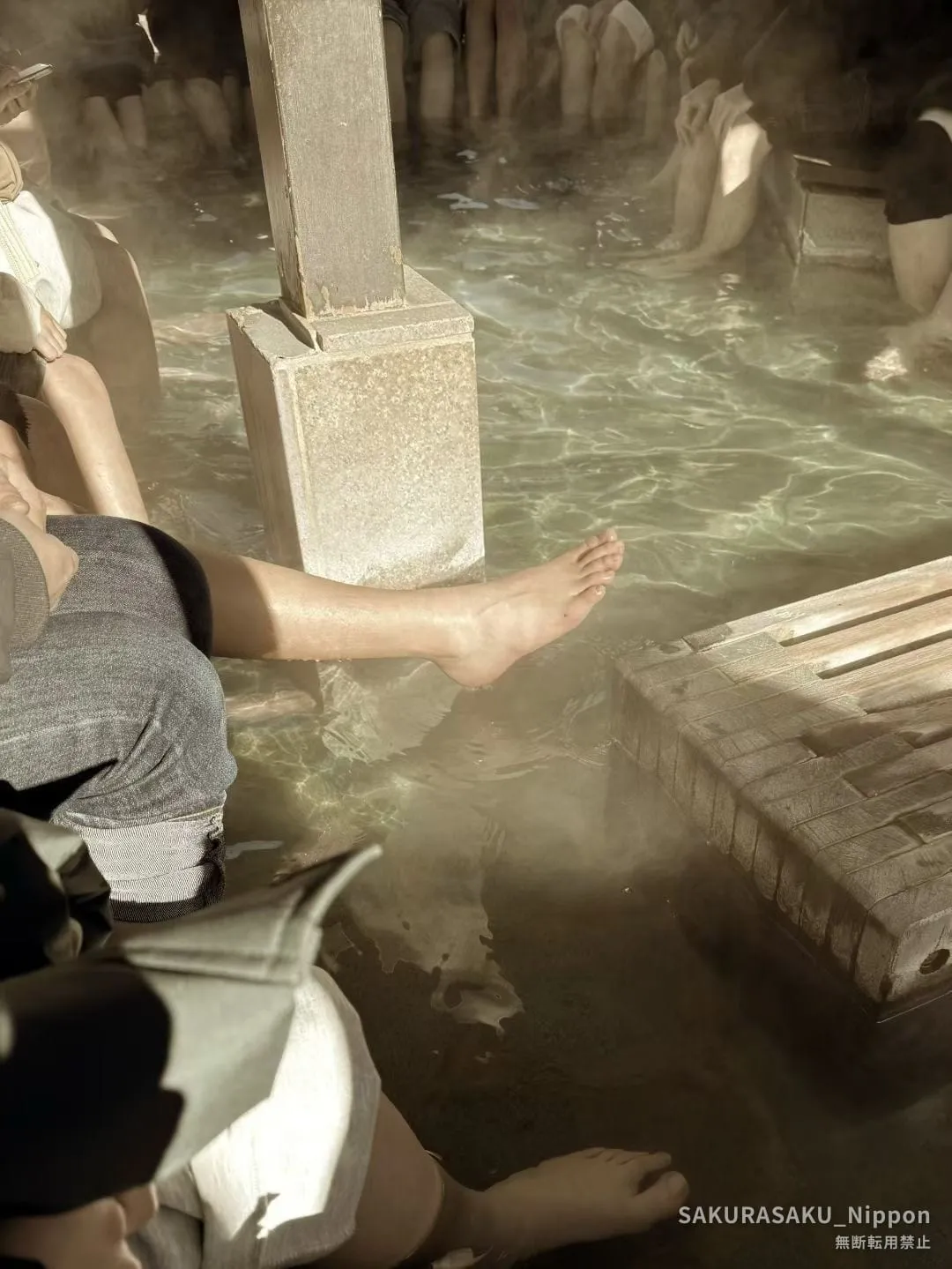
Kusatsu is generous with its water. There are small free public bathhouses scattered through the town (used mainly by locals — please follow the etiquette quietly), and several foot baths where you can rest your feet in the hot spring for free. After a long bus ride, a foot bath by the yubatake is the perfect welcome.
When to Go
Kusatsu is wonderful all year, but winter is when it becomes magical — the contrast of white snow and rising steam is unforgettable, and the cold makes the hot water feel even better. Please bring proper shoes for snow and ice if you visit in the coldest months. Spring, summer, and autumn are gentler and less crowded.
Practical Info
- Name: Kusatsu Onsen (草津温泉), Gunma Prefecture
- From Tokyo: Direct highway bus (Joshu Yumeguri-go, JR Bus Kanto) from Tokyo Station or Busta Shinjuku — about 4 hours, from around ¥2,850, reserved seats
- Arrival point: Kusatsu Onsen Bus Terminal (about 5 minutes’ walk to the yubatake)
- Getting around: ¥100 town bus (stops #8–#9), or simply on foot
- Luggage: Use the coin lockers at the terminal — large bags are not allowed on the ¥100 bus
- Best season: Beautiful all year; magical in winter snow
- Suggested length: One night is ideal (it is a little far for a comfortable same-day return)
Taking a Hot Spring Home
Kusatsu’s water is strongly acidic and cannot be bottled or bought — it has to be stood in.
If you would like the nearest honest equivalent for your own bathtub, it comes from a different hot spring altogether: yunohana, the mineral crust that volcanic steam leaves behind, farmed in thatched huts at Beppu in Kyushu by a method Japan has designated an Important Intangible Folk Cultural Property. It turns a plain bath milky and properly sulphurous.
One important condition: it is only suitable for a simple, non-circulating bathtub — the maker advises against reheating systems, and it will stain a tub.
→ Yunohana: real hot-spring crystals for your bath at home
Who Is This For?
Anyone who wants to feel the real, steaming heart of a Japanese onsen town — not a modern spa, but a place built entirely around its water for hundreds of years. The bus ride is long, but it drops you right in the middle of it, and the first sight of the yubatake makes every minute worth it.
Note: Fares, timetables, and services may change. Please check the official sites (JR Bus Kanto and Kusatsu Onsen Tourism) before your trip.