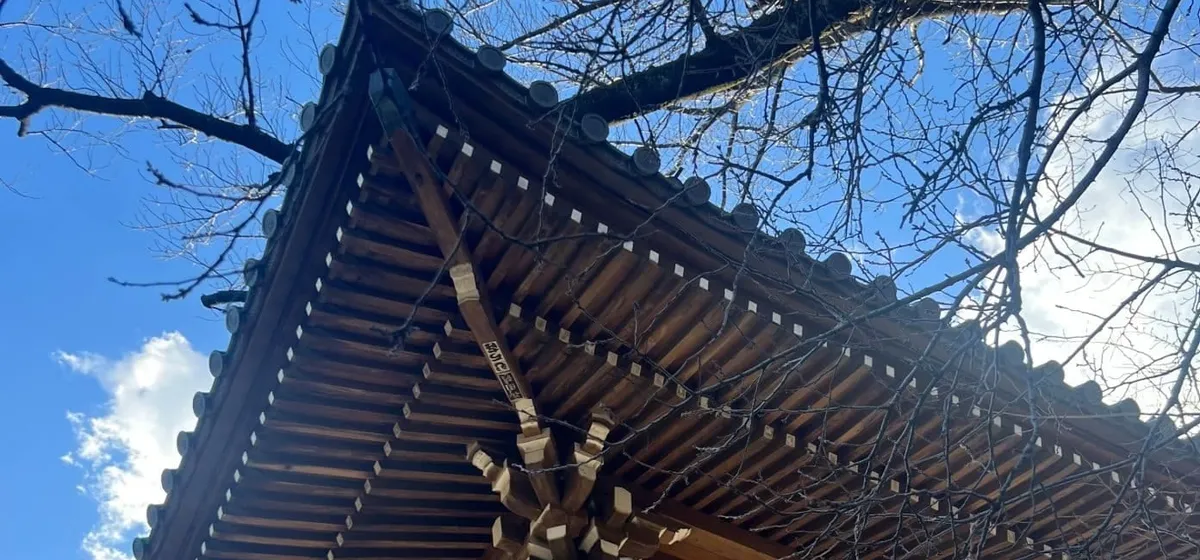
Fukuzōin: A Quiet Neighbourhood Temple, and the Meaning of Its Bell
Not every temple worth visiting is famous. Some of the loveliest are the small neighbourhood temples where daily life and a quiet, living faith still meet. Fukuzōin (福蔵院), in the Shirasagi district of Nakano, Tokyo, is exactly this kind of place — a temple you are more likely to reach on your own two feet than to find on a list of sights.
A Temple Older Than the Town
Fukuzōin is a temple of the Shingon Buzan school, founded in 1521 — more than five hundred years ago. It is a quiet, working temple, one of the stops on the historic Gofunai 88 Sacred Places pilgrimage, and for centuries it cared for the neighbouring Saginomiya Hachiman Shrine.
There is a lovely detail here. The temple’s mountain name is Hakuro-zan — “White Heron Mountain” — and the district all around it, Shirasagi (白鷺, “white heron”), took its name from the temple, and not the other way around. You are, in a small way, standing at the origin of the neighbourhood.
The Bell Tower, and the Meaning of the Bell
To the right of the main hall stands the bell tower (shōrō), sheltering a bronze temple bell — a bonshō — that was cast in 1749.
Please remember that this is a solemn place of living faith, not a tourist attraction — please visit quietly. The bell tower may not be climbed, and visitors are not permitted to touch or ring the bell. In Buddhist teaching, the bell carries a profound religious and spiritual meaning.
In a Japanese Buddhist temple, the bell is not an instrument of music. Its single, deep, slowly fading tone is a call — to prayer, to stillness, to awareness. The sound is felt to reach every living being, and to offer a moment of release from suffering. To hear it is meant to settle the heart.
Nowhere is this felt more than on New Year’s Eve, in the ritual of joya no kane — “the bell of the passing night.” Across Japan, temples strike the great bell 108 times as the old year ends and the new one begins. The number is not chosen at random: in Buddhist teaching, the human heart is troubled by 108 earthly desires (bonnō) — the passions, attachments, and delusions that give rise to suffering. With each stroke of the bell, one of these is said to be released, so that we may enter the new year with a clear and quiet heart. By custom, 107 strokes fall in the old year, and the final, 108th stroke rings out just after midnight.
Plum Blossom, and Its Fragrance
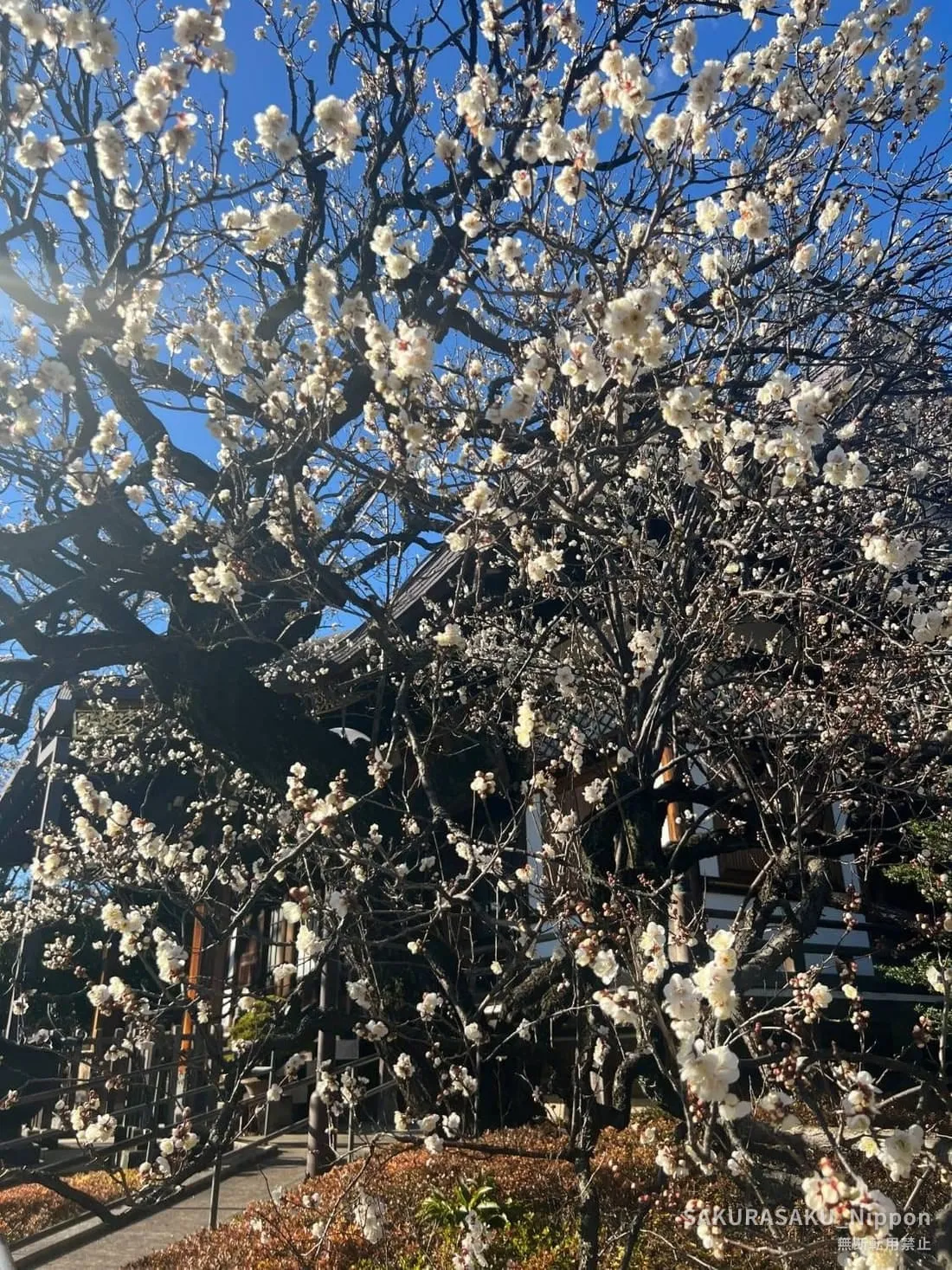
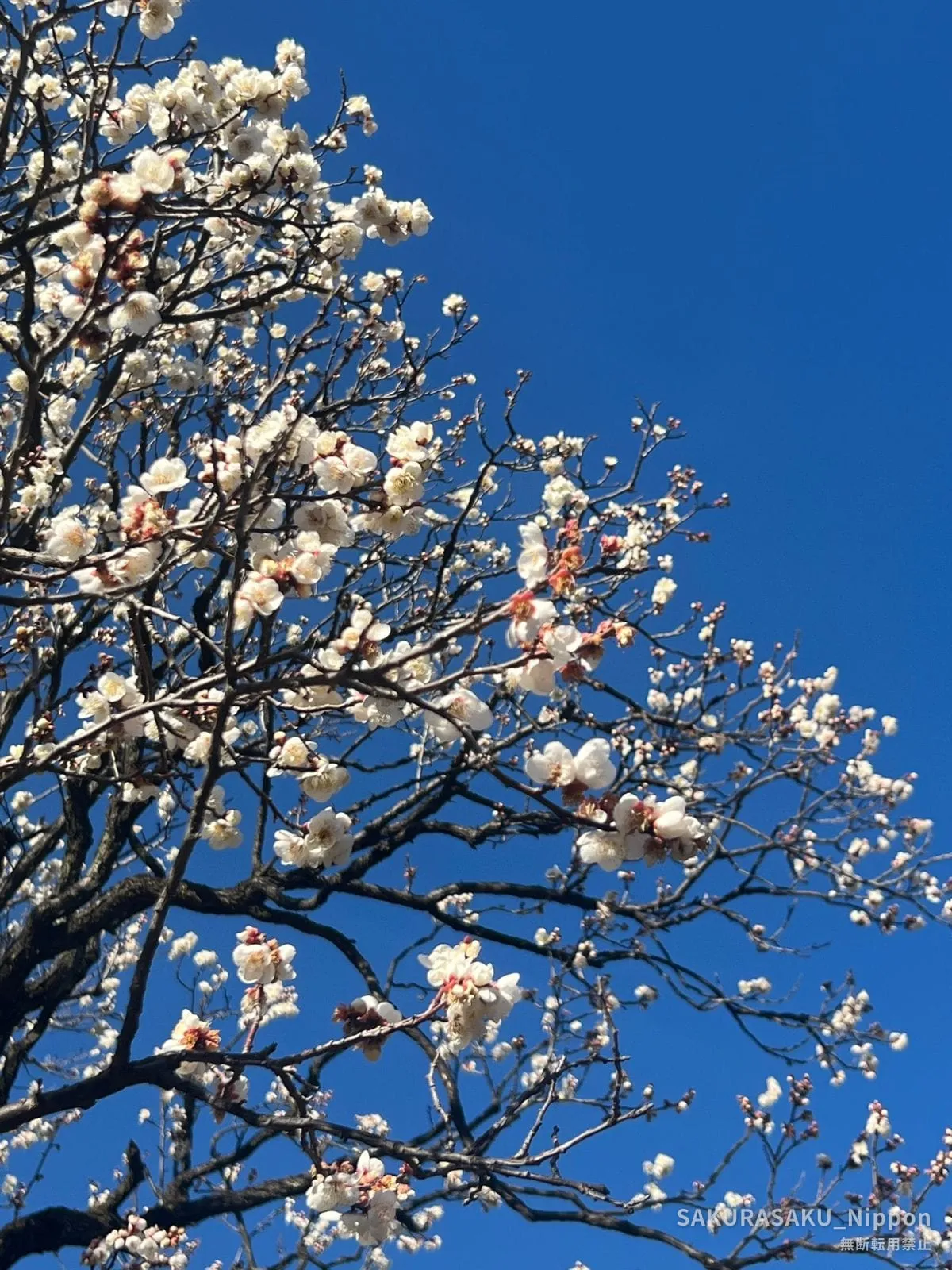
Fukuzōin is perhaps at its loveliest in late winter, when the plum blossom (ume) opens against the dark, sweeping curve of the temple roof. The plum flowers well before the cherry, at a time when almost nothing else is in bloom.
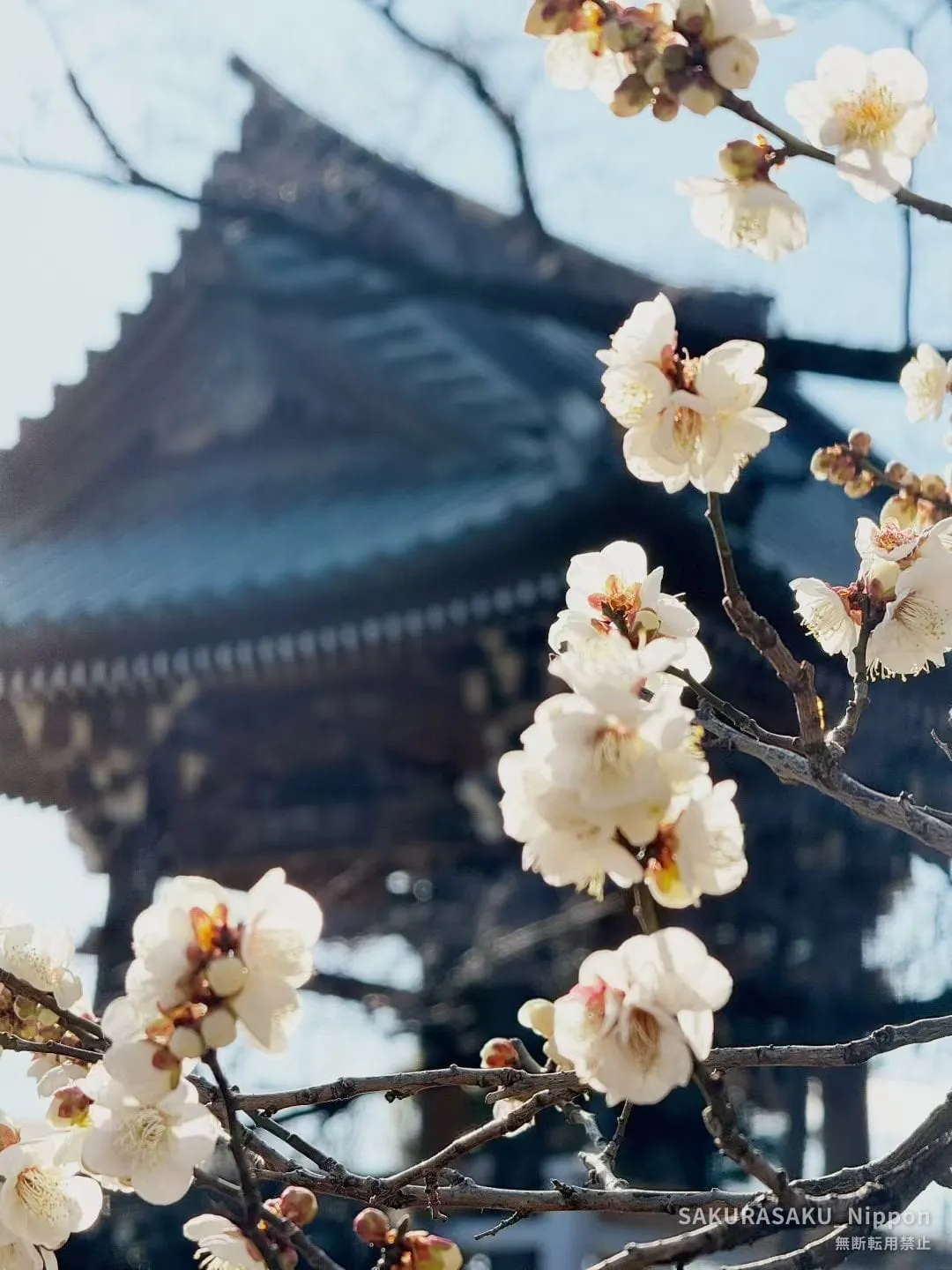
And here is the one thing a photograph can never carry: the scent. The cherry blossom is almost without fragrance, but the plum gives off a clear, sweet, faintly spiced perfume that drifts across the whole temple ground on a cold, still morning. In Japan the plum has always been the flower you notice first with your nose, and only then with your eyes — the old poets wrote of its fragrance a thousand years ago. Stand here on a bright winter day, and you will understand them at once.
Quiet Treasures on the Grounds
Look a little closer and the temple offers its smaller gifts. Among them is a row of Thirteen Buddhas (jūsanbutsu) — stone figures from the Edo period, each one watching over a particular memorial day of the departed. Nearby you will also find a small Ema hall, where wooden prayer plaques are hung, and a little Mitake shrine standing among the trees.
If you are visiting Japan for the first time, that last one may puzzle you: a Shintō shrine, inside a Buddhist temple. In fact this is quite ordinary here. For most of Japanese history the two faiths were not rivals but neighbours, woven together in a tradition called shinbutsu-shūgō — and Fukuzōin itself once served as the administrative temple of the Hachiman shrine next door. Many Japanese people still visit both without seeing any contradiction at all. The small shrine under the trees is a living trace of that long companionship.
These are places of prayer rather than exhibits; a small bow and a quiet moment are the right way to meet them.
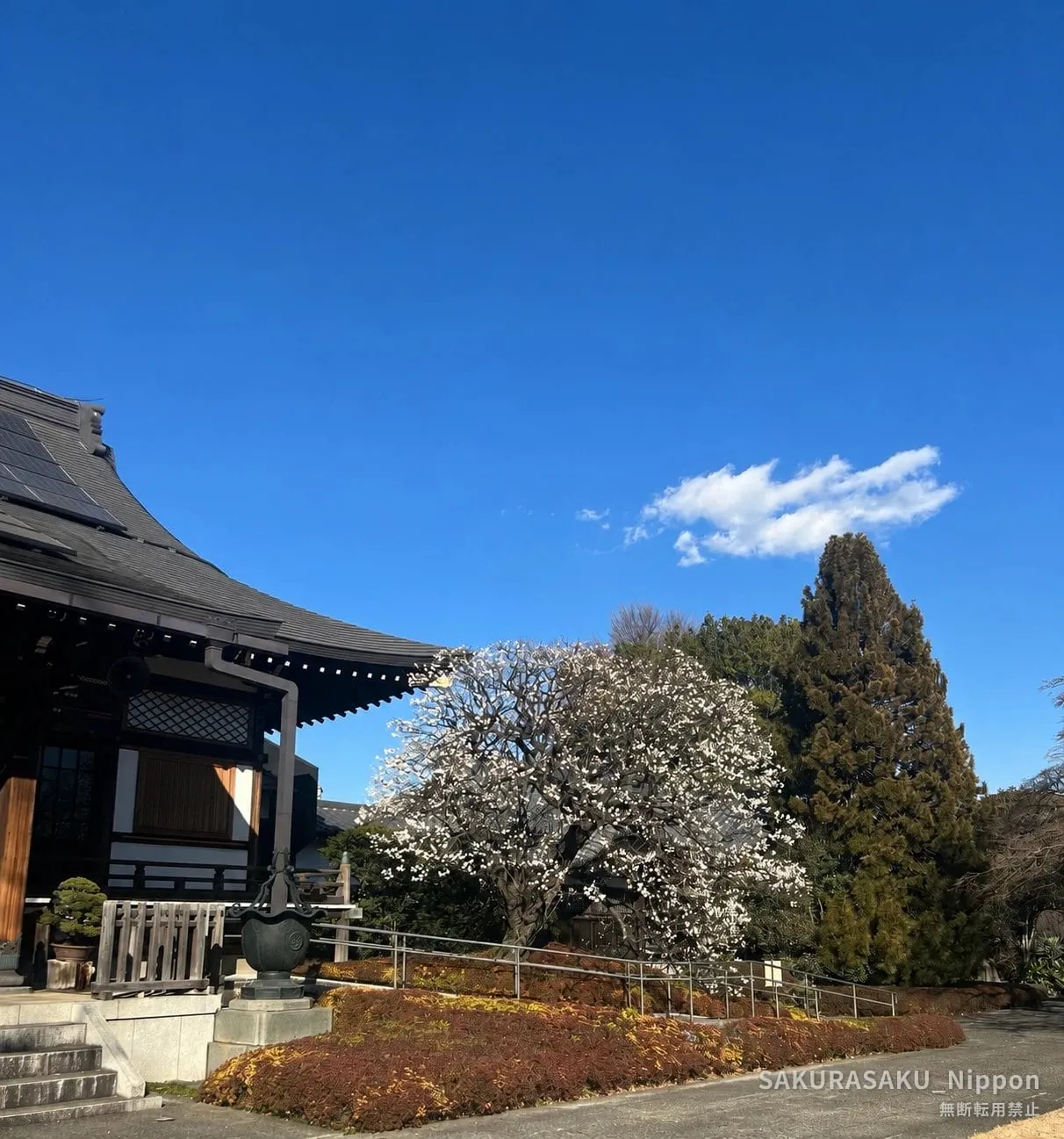
On a bright, cold morning the whole place has this quality: a sweeping tiled roof, a flowering tree, a clipped hedge, and almost no one about. It is five minutes from a station, and it feels a very long way from the city.
The Other Scent of a Temple
If the plum is the fragrance of the temple garden, incense is the fragrance of the temple itself. Step inside any Japanese hall of worship and you meet it at once — and unlike the plum, this is a scent you can take home.
For a temple as quiet as this one, white sandalwood (byakudan) is the note to look for: soft, dry, faintly sweet, and without the heavy smoke of cheaper incense. It is the smell that most Japanese people would recognise instantly as “temple”.
Incense is close to the perfect souvenir, if you think about it: flat, light, inexpensive, and it does not sit on a shelf gathering dust — it gets used, and for a few minutes at a time it puts you back in a quiet hall in Tokyo.
Practical Information
- Name: Fukuzōin (福蔵院) — Shingon Buzan school
- Address: 1-31-5 Shirasagi, Nakano-ku, Tokyo 165-0035
- Nearest station: Saginomiya Station (Seibu Shinjuku Line) — about a 2-minute walk
- A quiet request: this is a living temple used by local people every day, not a tourist attraction. Please visit softly, keep your voice low, and follow any notices on the grounds.
Who Is This For?
The traveller who likes to step off the well-worn path — who finds, in a quiet neighbourhood temple, something that the famous sights cannot quite give: a slow, ordinary, five-hundred-year-old calm, and a bell whose meaning is older still. Come gently, and leave the place as quiet as you found it.
Note: Fukuzōin is an active place of worship. Please be respectful of those who come to pray, and check for any posted guidance when you visit.
Affiliate note: This article contains Amazon affiliate links. As an Amazon Associate, we earn from qualifying purchases at no extra cost to you.