Nezu Museum: A Quiet Masterpiece in the Middle of Aoyama
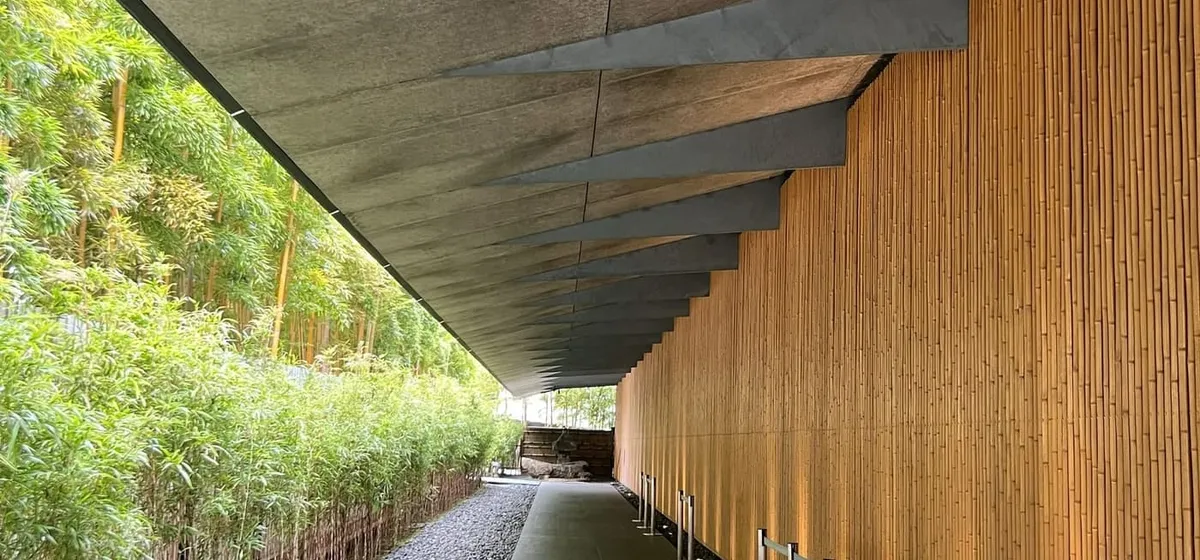
A few minutes from the boutiques of Omotesando, there is a long, quiet corridor lined with bamboo. As you walk along it, the sound of the city fades behind you, step by step. By the time you reach the entrance, Tokyo feels far away.
This is the approach to the Nezu Museum — and I think it is one of the most beautiful ways to enter any building in Japan.
A Museum in a Garden
The Nezu Museum began with the private collection of Nezu Kaichirō, a railway businessman with a deep love of tea ceremony and East Asian art. The museum opened in 1941, and in 2026 it celebrates its 85th anniversary.
Today the collection holds more than 7,000 works of pre-modern Japanese and East Asian art — paintings, calligraphy, ceramics, bronzes, and tea utensils — including a number of National Treasures. The building itself, redesigned by the architect Kengo Kuma in 2009, is a calm composition of dark roof lines, glass, and that unforgettable bamboo corridor.
Exhibitions change about six times a year, each drawn from the collection around a single theme. From August 15 to October 12, 2026, the museum presents “A Ceramic Travelogue,” a journey through the ceramics of China, Japan, and the Korean Peninsula.
The Famous Irises
If you are in Tokyo between mid-April and mid-May, please mark this museum in your plans. That is the only season when the museum shows its most celebrated treasure: the Irises folding screens by Ogata Kōrin, a National Treasure of dazzling gold and deep blue.
And here is the graceful part — at exactly the same time, real irises bloom in the garden pond below the museum. Art upstairs, the living subject downstairs. Very few museums anywhere can offer such a moment.
The Garden
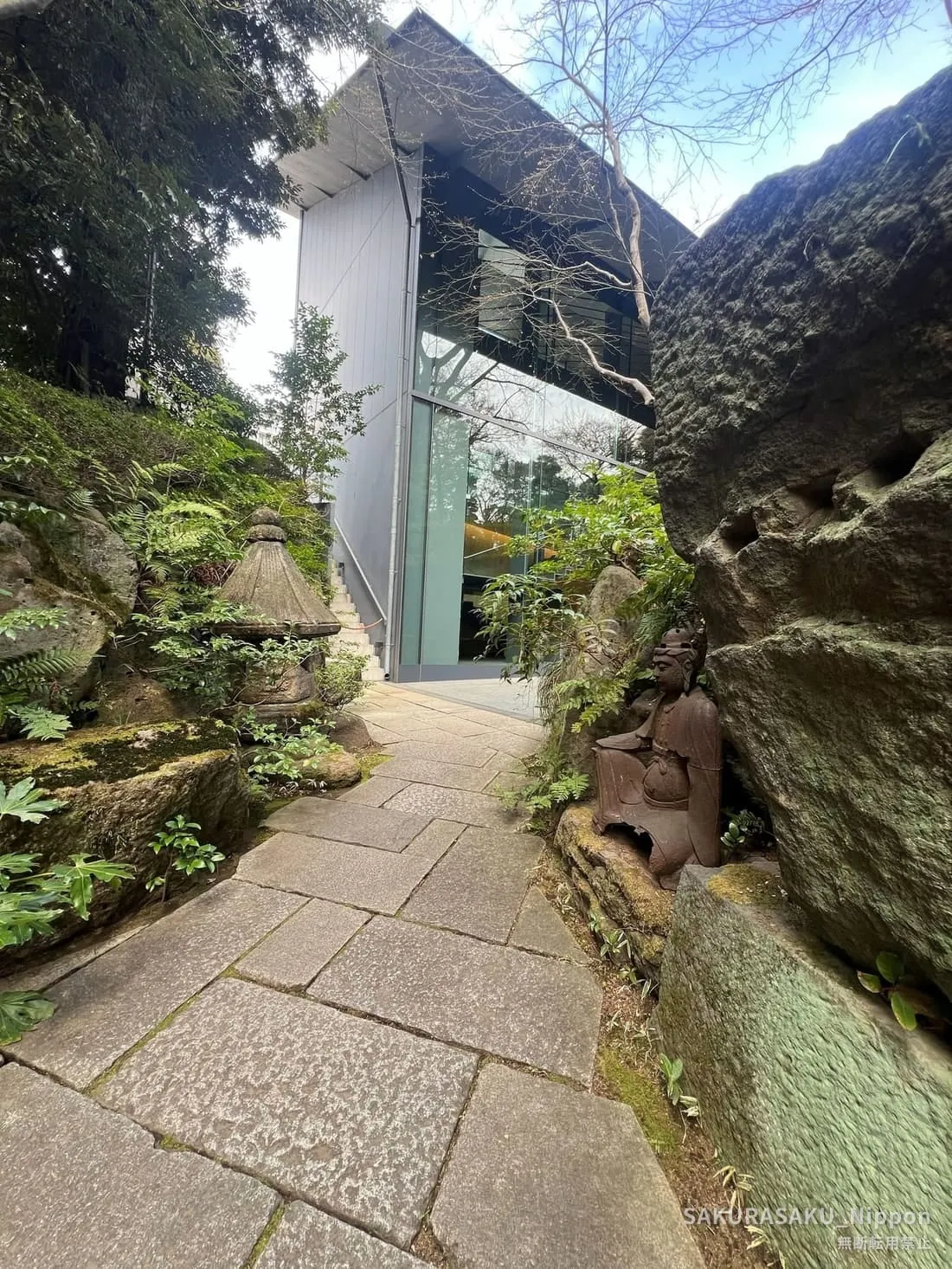
Behind the building, an ancient hillside garden of about 17,000 square meters falls away toward a quiet pond. Stone lanterns stand among the trees, moss covers the rocks, and small tea houses appear along the winding paths.
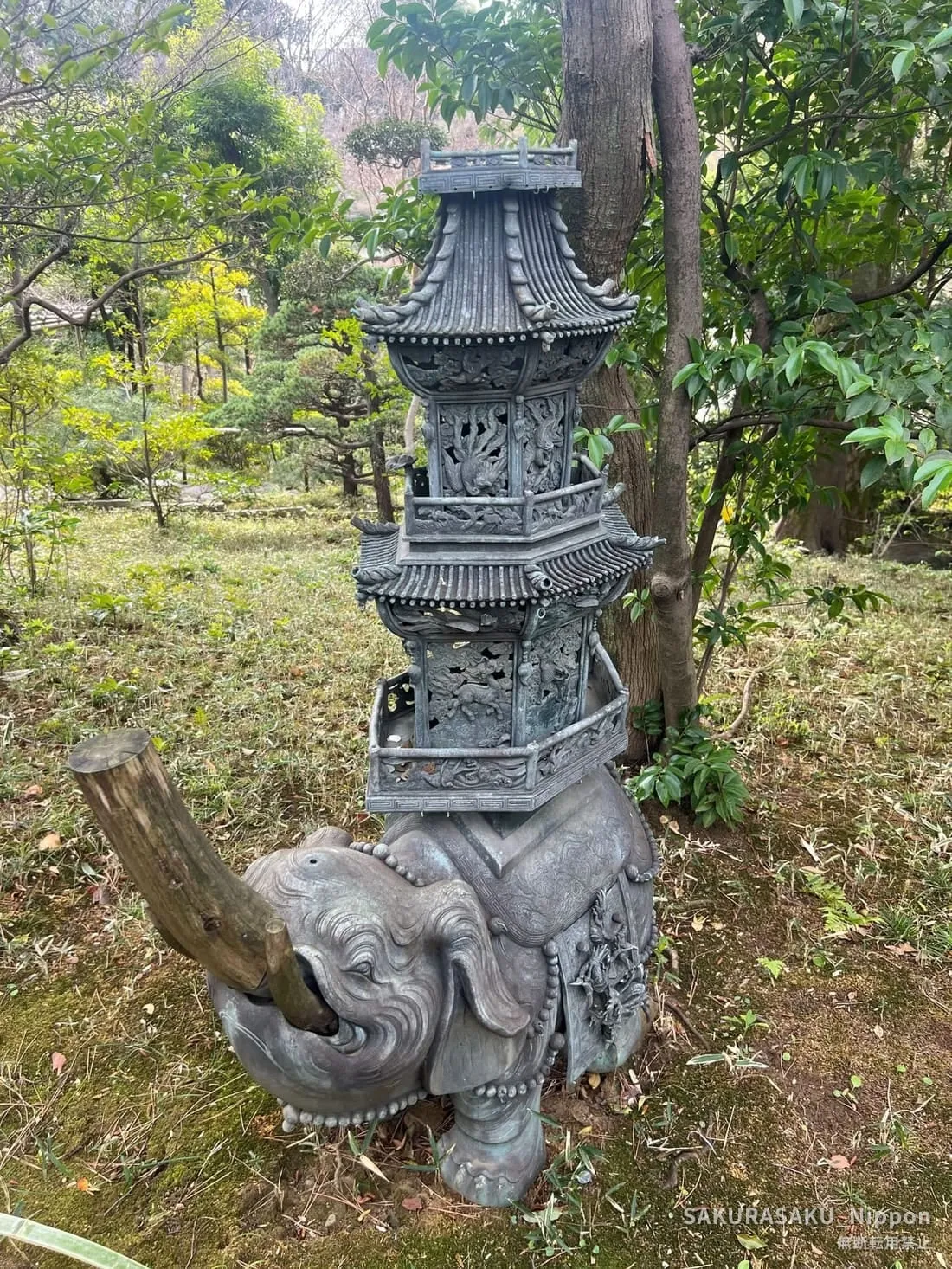
Please walk slowly here. The garden is scattered with stone Buddhas, bronze figures, and carvings — including elephants, if you look carefully — collected over a lifetime. It is a world apart from the city just steps away.
NEZUCAFÉ, a glass-walled cafe inside the garden, serves coffee and light meals with a view of the green. On a clear afternoon, it is difficult to leave.
Before You Go (Please Read)
- The museum closes between exhibitions, sometimes for several weeks. Please always check the schedule on the official site before visiting. (For example, it is closed from mid-July to mid-August 2026, before the ceramics exhibition begins.)
- Online timed tickets are available and recommended — spring (Irises season) sells out quickly
- The garden, shop, and cafe can only be used with museum admission
Practical Info
- Name: Nezu Museum (根津美術館)
- Address: 6-5-1 Minami-Aoyama, Minato-ku, Tokyo
- Hours: 10:00–17:00 (last entry 16:30)
- Closed: Mondays (or the following Tuesday when Monday is a holiday), and between exhibitions
- Admission: Around ¥1,300–1,600 depending on the exhibition (online reservation recommended)
- Visit time: 1.5–2 hours (please leave time for the garden)
- Getting there: About 8 minutes on foot from Omotesando Station, Exit A5
Make It an Afternoon
The museum sits at the quiet end of Omotesando, so it pairs naturally with a slow walk through Aoyama — architecture, small galleries, and coffee on the way back to the station. A few more photos from my visit are on our Instagram.
Who Is This For?
Anyone who suspects that Tokyo has a quieter, older heart beneath the neon — and would like to spend two hours inside it. If you have only one museum afternoon in Tokyo and Ghibli tickets are gone, this is the one I would suggest.
Note: Hours, exhibitions, and prices may change. Please check the official site (nezu-muse.or.jp) before your visit.